
Introduction: Bridging the Gap with Text-to-SQL
Writing SQL queries is a barrier for many professionals who need to extract insights from databases. Product managers, support agents, and even junior developers often know precisely what information they need but lack the technical expertise to formulate the correct SQL statements. This is the exact problem that Text-to-SQL systems aim to solve: enabling users to ask questions in natural language and receive relevant data directly from a database.
This article details the construction of a functional Text-to-SQL AI agent using Hugging Face's smolagents library. We will explore why an agent-based approach offers greater reliability than a simple pipeline of LLM-generated SQL execution. The process involves real code examples and crucial security considerations before connecting to your data.
Why an Agent, Not Just a Pipeline?
A naive Text-to-SQL approach might involve a Large Language Model (LLM) directly translating a natural language question into an SQL query, which is then executed against the database. While simple, this method is prone to errors and security risks. The LLM might generate syntactically incorrect SQL, miss critical nuances in the user's request, or worse, produce queries that expose sensitive data or compromise the database integrity.
An agent-based system, however, introduces a layer of intelligence and control. It acts as an intermediary that not only translates the request but also validates the generated query, plans the execution, and handles potential errors. This multi-step process, orchestrated by the agent, mimics a human expert's careful approach to data querying. Smolagents, designed for building such agents, provides the tools to define states, transitions, and tool usage, making complex agentic behavior manageable.
Core Components of the Smolagents Text-to-SQL Agent
Building this agent involves several key components, primarily defined within the smolagents framework:
- Database Schema Representation: The agent needs to understand the structure of your SQL database – tables, columns, data types, and relationships. This information is crucial for generating accurate queries.
- Natural Language Understanding: The initial step is to parse the user's question in natural language.
- SQL Generation: The core task is translating the understood question into a valid SQL query, leveraging the database schema.
- Query Validation: Before execution, the generated SQL query must be validated for correctness and safety.
- Query Execution: Safely executing the validated query against the target database.
- Result Presentation: Formatting and returning the query results to the user in an understandable format.
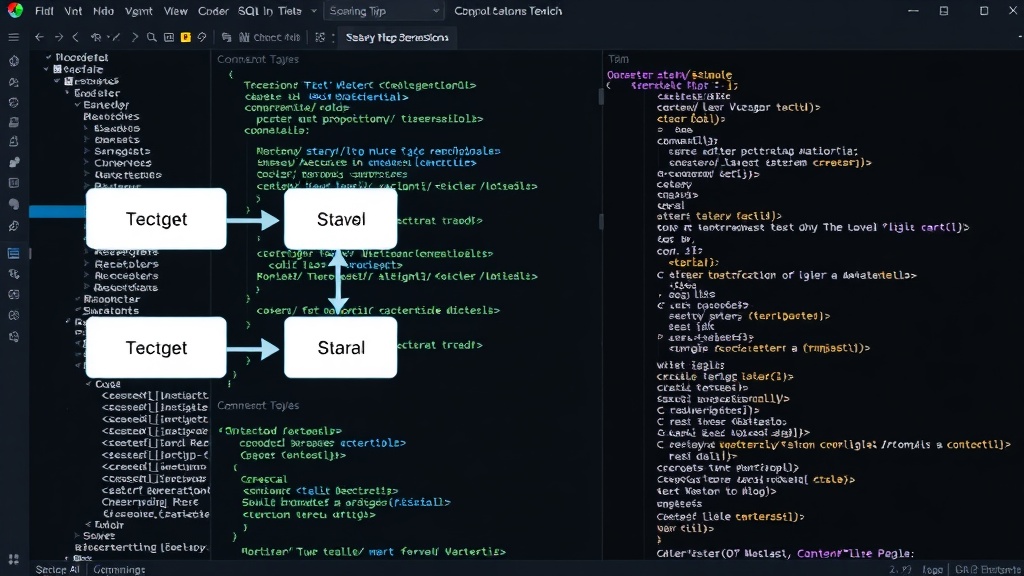
Smolagents facilitates this by allowing you to define a state machine where each state represents a step in the process (e.g., `waiting_for_question`, `generating_sql`, `executing_query`). Transitions between states are triggered by the agent's logic and the output of its tools.
Practical Implementation with Smolagents
Let's consider a practical example. Suppose we have a simple `products` table with columns like `product_id`, `name`, `price`, and `category`. A user might ask: “What are the names and prices of all products in the ‘electronics’ category?”
The agent would first need to be initialized with the database schema. This schema can be provided as a string or loaded dynamically. Then, using a tool designed for SQL generation (which itself might leverage an LLM like Llama 3 or Mistral), the agent attempts to create the SQL query:
SELECT name, price FROM products WHERE category = 'electronics';The surprising detail here is not the complexity of the LLM, but how smolagents structures the interaction. Instead of a single monolithic call, the agent breaks this down. It might first identify the intent and required tables, then generate the SELECT clause, and finally the WHERE clause. Each step can be logged, validated, and potentially corrected.
smolagents allows defining custom tools. For Text-to-SQL, you'd create tools for:
generate_sql_from_question(question: str, schema: str) -> strvalidate_sql(sql_query: str, schema: str) -> boolexecute_sql(sql_query: str) -> list[dict]format_results(results: list[dict]) -> str
The agent's state machine would then define the flow: receive question -> call `generate_sql_from_question` -> call `validate_sql` -> if valid, call `execute_sql` -> call `format_results` -> return to user. If validation fails, the agent might retry generation or inform the user of the issue.
Security Considerations: The Critical Layer
Connecting an AI agent directly to a database introduces significant security risks if not handled properly. A malicious or poorly designed query could lead to data breaches, data corruption, or denial-of-service attacks.
Key security measures include:
- Least Privilege Principle: The database user account used by the agent should have only the minimum necessary permissions. It should not have rights to drop tables, modify data, or access sensitive system tables unless absolutely required. Read-only access is often sufficient.
- Query Sanitization and Validation: As mentioned, robust validation of generated SQL is paramount. This involves checking for common injection patterns (like SQL injection), ensuring queries only target permitted tables, and preventing unexpected operations.
smolagentscan be configured to use validation tools that go beyond simple syntax checking. - Input Validation: The natural language input itself should be treated with caution. While less direct than SQL injection, complex natural language prompts could potentially be crafted to exploit LLM vulnerabilities or lead to denial-of-service by generating extremely resource-intensive queries.
- Rate Limiting and Monitoring: Implement rate limiting on agent requests to prevent abuse. Actively monitor database logs for suspicious query patterns or excessive resource consumption originating from the agent.
- Schema Abstraction: Consider exposing only a subset of the database schema to the agent, hiding sensitive tables or columns that are not relevant to the agent's intended use case.
Think of this less like giving a smart assistant direct access to your filing cabinet and more like giving them a carefully curated set of index cards with specific instructions on how to retrieve information, with a security guard watching over their shoulder.
Beyond Basic Queries: Advanced Capabilities
A well-built agent can go beyond simple `SELECT` statements. With appropriate tools and LLM capabilities, it can handle:
- Joins: Understanding relationships between tables to construct queries involving multiple tables.
- Aggregations: Performing operations like `SUM`, `AVG`, `COUNT` based on user requests.
- Data Interpretation: Not just returning raw data, but interpreting trends, identifying anomalies, or summarizing findings.
- Iterative Refinement: If a query fails or returns unexpected results, the agent can ask clarifying questions to the user or attempt to reformulate the query.
The surprising detail here is how quickly an agent can evolve from a simple query tool to a sophisticated data analysis assistant, provided the underlying agent framework and LLMs are capable.
Conclusion: Empowering Data Access
Building an AI agent to interact with SQL databases using smolagents offers a powerful solution to democratize data access. By abstracting away the complexities of SQL, it empowers a wider range of users to leverage their data effectively. The agent-based architecture, with its emphasis on validation and controlled execution, provides a more robust and secure alternative to naive Text-to-SQL pipelines. As these systems mature, they will undoubtedly become indispensable tools for data-driven organizations.