The Genesis of Compile and Chill
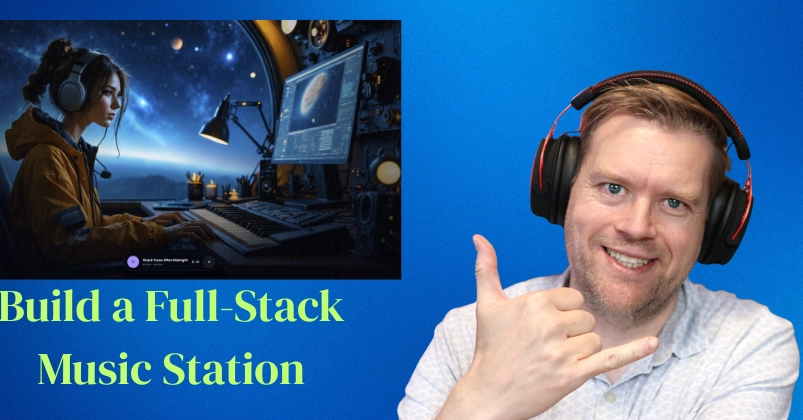
In the zone of deep coding, where hours vanish like minutes, music often serves as the catalyst. This is the origin story of Compile and Chill, a personal Lo-Fi music server designed to enhance focus and productivity. The project's core functionality revolves around generating unique, dynamic music streams, powered by a combination of cutting-edge AI services and a robust web framework.
The system comprises three distinct radio stations, each offering a unique audio-visual experience. These stations leverage Amazon Bedrock for generating 16:9 visual scenes, ElevenLabs for composing instrumental loops, and OpenRouter for transforming illustrations into short video clips. All generated assets are stored in private Amazon S3 buckets, with the Nuxt server serving them directly to the browser. An added Stream Deck API interface provides an extra layer of control for users.
Technical Architecture: Orchestrating AI and Frontend
The full-stack music station is a sophisticated interplay of several key technologies. At its heart, the project utilizes the power of Large Language Models (LLMs) and generative AI to create unique content on demand. The architecture can be broken down into several critical components:
Visual Generation with Amazon Bedrock
Amazon Bedrock serves as the foundation for visual content creation. Specifically, it's employed to generate 16:9 aspect ratio scenes. This involves leveraging generative AI models available through Bedrock to produce imagery that complements the music. The process likely involves prompting the LLM with specific aesthetic parameters or thematic elements related to the music being generated, resulting in a visual backdrop that adapts to the audio stream.
Audio Composition with ElevenLabs
For the audio component, ElevenLabs is integrated to compose instrumental loops. This AI-powered voice synthesis and audio generation platform is capable of creating musical elements, likely focusing on ambient or Lo-Fi styles to match the project's theme. The system prompts ElevenLabs to generate short, looping instrumental tracks that form the backbone of the music stations. This ensures a continuous, non-repetitive audio experience.
Video Synthesis via OpenRouter
OpenRouter acts as an intermediary, enabling the transformation of static illustrations into dynamic six-second video clips. This process likely involves using an image-to-video generation model accessible through OpenRouter. The system takes an illustration (potentially generated or provided) and animates it for a brief duration, adding a visual flourish to the music. This feature adds a layer of dynamic visual storytelling to each station.
Backend and Storage: Nuxt and Amazon S3
The entire application is built on Nuxt, a popular Vue.js framework, providing the full-stack capabilities. Nuxt handles server-side rendering, API routes, and serving the generated content. All final generated files – the visual scenes, audio loops, and video clips – are stored in private Amazon S3 buckets. This ensures secure and scalable storage for the media assets. The Nuxt server then retrieves these files from S3 and streams them to the end-user's browser, creating a seamless playback experience.
Stream Deck Integration: Enhanced User Control
A notable addition to the Compile and Chill project is the integration of a Stream Deck API interface. This allows users to control various aspects of the music station directly from a physical Stream Deck device. Such controls could include starting/stopping stations, adjusting volume, skipping tracks (if applicable), or even triggering specific visual or audio elements. This integration transforms the application from a passive listening experience into an interactive one, catering to users who appreciate tactile control over their digital environments.
Deployment and Scalability Considerations
Deploying such a system involves several considerations. The Nuxt application can be deployed on various platforms, including serverless options like AWS Lambda via Vercel or Netlify, or on containerized services like AWS Fargate. Amazon S3 provides a highly scalable and cost-effective solution for media storage. The generative AI services (Amazon Bedrock, ElevenLabs, OpenRouter) are typically accessed via APIs, meaning their scalability is managed by the respective providers. The primary challenge for the developer lies in managing the API call quotas, costs, and orchestrating the asynchronous generation processes efficiently. For a production-ready service, implementing robust error handling, monitoring, and potentially caching strategies would be crucial.
The 'Compile and Chill' Experience
The result is a personalized, AI-driven music streaming experience. Each station offers a unique blend of generated audio and visuals, creating an immersive environment for coding, working, or relaxing. The project showcases how readily available AI tools can be combined with modern web development frameworks to create novel and engaging applications. It's a testament to the power of generative AI in content creation and the flexibility of cloud infrastructure in delivering these creations to users.