The Need for Client-Side Privacy
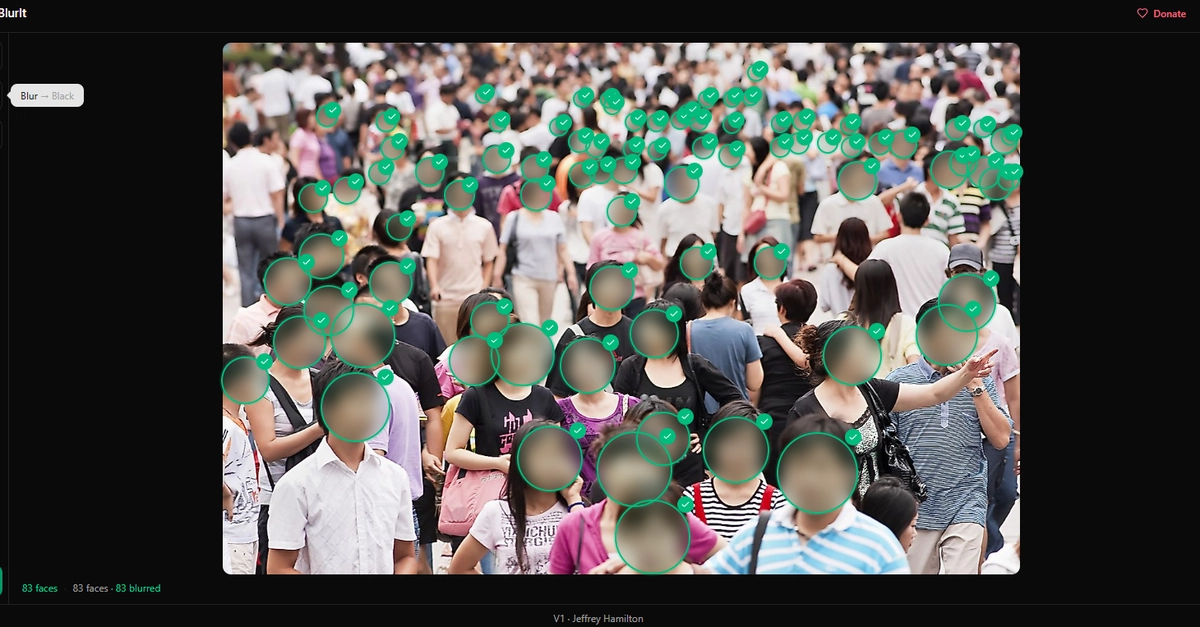
In an era where every shared photo can potentially reveal more than intended – from the faces of children and background strangers to sensitive information like license plates or addresses on envelopes – the demand for privacy-preserving tools is growing. Many existing solutions force users to upload their images to remote servers, a non-starter for those prioritizing data security. Jeffrey Hamilton, a developer, recognized this gap and built BlurIt, a free, open-source application designed to handle these privacy concerns entirely within the user's browser.
BlurIt aims to automate the process of obscuring sensitive visual information, offering a solution that is both effective and respectful of user privacy. The tool’s core functionality revolves around detecting and blurring faces, but it also extends to identifying and anonymizing text elements like license plates and watermarks. Crucially, all processing happens client-side, meaning no user data ever leaves their device.
How BlurIt Detects and Blurs
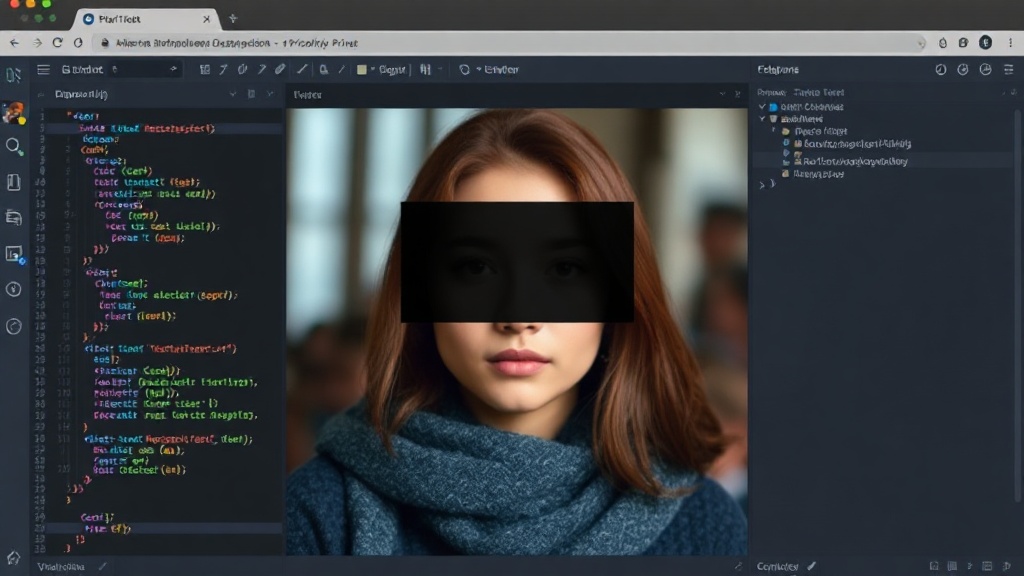
The effectiveness of BlurIt hinges on sophisticated, yet browser-compatible, machine learning models. For face detection, the tool employs SSD MobileNet V1, a multi-scale single-shot detector implemented via TensorFlow.js. This model is adept at identifying faces across various sizes and orientations, including those that are small, distant, or partially obscured, even in complex crowd scenes. To further enhance detection accuracy, particularly for faces that might be missed by a single pass, Hamilton implemented multi-scale quadrant detection. This involves running the detection model not only on the full image but also on four overlapping, zoomed-in quadrants of the image. This technique significantly increases the chances of catching subtle or background faces that a standard detection algorithm might overlook.
Text detection in BlurIt leverages Tesseract.js v7, a robust optical character recognition (OCR) engine that runs in the browser. To improve the accuracy of Tesseract.js, especially with varied image quality and text sizes, the application incorporates an image preprocessing pipeline. This pipeline includes a 2x upscaling step to enlarge text for better recognition, followed by a conversion to grayscale, which simplifies the image data and often aids OCR performance. The combination of these preprocessing steps with Tesseract.js allows BlurIt to reliably detect and identify text elements within an image, which can then be targeted for blurring or redaction.
Technical Implementation and Performance
The choice of TensorFlow.js and Tesseract.js is pivotal to BlurIt's functionality. These libraries enable complex AI models to run directly within the web browser, eliminating the need for server-side processing. This client-side approach is the cornerstone of BlurIt's privacy-first design. Users can upload an image, and the detection and blurring processes occur locally on their machine. The results are then displayed, and the user can download the anonymized version. This circumvents the risks associated with data breaches on remote servers and ensures that personal photos remain private.
While client-side processing offers significant privacy benefits, it can sometimes present performance challenges, particularly with large images or complex scenes. Hamilton's implementation of multi-scale quadrant detection and image preprocessing for text detection are strategies to balance accuracy with performance. The use of SSD MobileNet V1, known for its efficiency on mobile devices, further suggests an optimization for broader accessibility. The tool is designed to be 100% free, further lowering the barrier to entry for users seeking to protect their visual data.
Accessibility and Future Potential
BlurIt’s commitment to working on mobile devices is a critical feature. Many users primarily access the internet and share photos via smartphones, making mobile compatibility essential for a widely adopted privacy tool. By running entirely in the browser, BlurIt sidesteps the need for app store submissions and complex installations, offering a universally accessible solution through a web interface. This approach makes sophisticated privacy features available to anyone with a modern web browser, regardless of their device.
The project’s open-source nature also invites community contribution and scrutiny, fostering trust and allowing for continuous improvement. Developers can examine the code, suggest enhancements, or even adapt the technology for other applications. This transparency is key for a tool that handles sensitive personal data. While the current version focuses on faces and common text elements, the underlying technologies – TensorFlow.js and Tesseract.js – are capable of much more. Future iterations could potentially detect and blur other sensitive information, such as specific objects, personal identifiers in documents, or even copyrighted material, further expanding its utility as a comprehensive privacy shield for online content.
The success of BlurIt highlights a growing trend towards privacy-preserving technologies that empower users without compromising their data. By bringing advanced AI detection capabilities directly to the user's device, Hamilton has created a practical and accessible tool that addresses a significant real-world privacy concern.