From Digital Design to Tangible Bricks
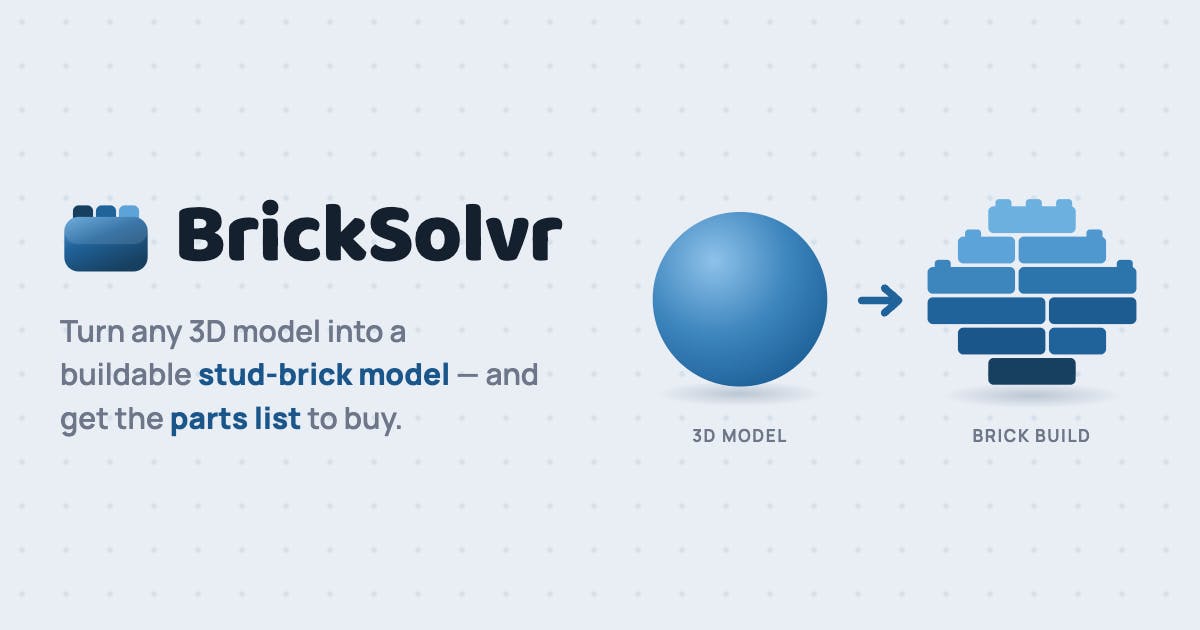
BrickSolvr emerges as a novel tool aimed at bridging the gap between digital 3D modeling and the tactile world of construction bricks. The platform promises to take any existing 3D model and translate it into a set of instructions for building a physical replica using standard construction bricks. This capability taps into a significant niche, appealing to hobbyists, designers, educators, and even professional model makers who have long sought a more direct pathway from digital to physical manifestation with modular building blocks.
The core functionality of BrickSolvr lies in its ability to parse complex 3D geometry and systematically break it down into a sequence of brick placements. This process is not merely about replication; it involves an intelligent interpretation of the 3D model's structure to ensure it is buildable with the constraints of interlocking bricks. This means the software must consider factors like structural integrity, brick orientation, and the available range of brick types and colors. The output is expected to be a set of detailed instructions, potentially including step-by-step visual guides, that allow users to meticulously assemble their brick creation.
Consider the process less like a simple 3D print and more like a highly detailed architectural blueprint for a Lego-style construction. The software doesn't just output a static object; it generates a process, a sequence of actions that, when followed, results in the desired physical object. This iterative transformation from a continuous digital volume to discrete, interlocking units is the crux of BrickSolvr's innovation.
Unlocking Creative Possibilities
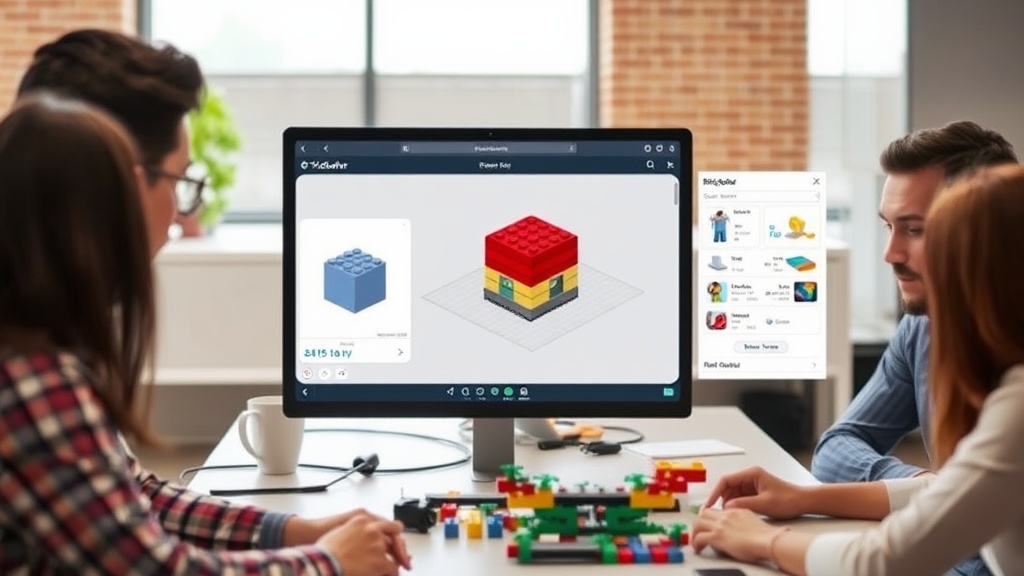
The implications for creators are substantial. For 3D artists and designers, BrickSolvr offers a unique medium for physicalizing their digital work. Imagine taking a character model, a piece of abstract art, or an architectural visualization and turning it into a tangible desk ornament or display piece, all constructed from bricks. This could foster new forms of artistic expression and prototyping. For educators, the tool presents an engaging way to teach concepts in geometry, spatial reasoning, and engineering. Students could design objects in 3D software and then use BrickSolvr to see their designs come to life physically, reinforcing learning through hands-on experience.
Hobbyists and fans of existing brick-building systems will find a powerful new avenue for customization. Instead of being limited to official sets or manual brick-by-brick design, users can import their own designs, fan art, or even real-world objects scanned into 3D models. This could lead to a surge in personalized brick creations, from custom vehicles and buildings to intricate sculptures and portraits. The ability to transform existing digital assets into buildable brick models democratizes the creation of complex physical objects that were previously only achievable through extensive manual design or expensive custom manufacturing.
The technical challenge lies in the algorithmic interpretation of 3D meshes. Converting a smooth, continuous surface into a collection of discrete, faceted blocks requires sophisticated algorithms. These algorithms must not only tessellate the surface but also ensure that the resulting brick structure is stable and aesthetically coherent. This involves identifying optimal brick types, colors, and orientations to best approximate the original form while remaining physically constructible. The software must also manage the complexity of generating clear, unambiguous building instructions.
The Future of Brick-Based Creation
BrickSolvr’s entry into the market signals a growing trend towards tools that facilitate the translation of digital creativity into physical reality. As 3D scanning technology becomes more accessible and 3D modeling software becomes more powerful, the demand for sophisticated conversion tools like BrickSolvr is likely to increase. The platform could find applications in rapid prototyping for product designers, creating unique merchandise for content creators, or even in the development of custom architectural models.
The surprising detail here is not the novelty of converting 3D models to physical objects, which has been explored through 3D printing, but the specific focus on *brick* construction. This choice of medium offers a unique aesthetic and a different kind of tactile experience compared to extruded plastic. It leverages an existing, widely recognized, and beloved construction system, making the output instantly familiar and appealing to a broad audience. The challenge for BrickSolvr will be in the detail and accuracy of its conversions, ensuring that the resulting brick models are faithful to the original digital designs and are genuinely enjoyable to build.
What remains to be seen is the extent to which BrickSolvr can handle highly complex or organic shapes. Current 3D modeling software allows for an incredible range of forms, from sharp-edged machinery to flowing organic sculptures. The ability of BrickSolvr's algorithms to faithfully represent these diverse geometries using only the constraints of available bricks will be a key determinant of its success. Furthermore, the user experience in generating and interpreting the building instructions will be critical. A clunky or confusing instruction set could quickly deter users, regardless of the power of the underlying conversion engine.
BrickSolvr is positioned to empower a new wave of creators who can now bring their digital visions into the physical world with an accessible and engaging medium. The tool democratizes the creation of custom brick models, moving beyond the limitations of pre-designed kits and into a realm of limitless personal expression.