
Introducing Brainless: A UI Component Library for AI Aesthetics
Developers seeking to imbue their applications with the sleek, modern look of leading AI interfaces now have a new tool. Brainless, a project spearheaded by developer Victor Sverdlow, provides a collection of pre-built UI components designed to mimic the visual styles of prominent AI models like Anthropic's Claude, OpenAI's Codex, and xAI's Grok.
The project's core premise is to offer developers a shortcut to achieving a specific, high-fidelity AI-centric design language without the need for extensive custom styling. This can be particularly valuable for startups or teams aiming to quickly prototype or launch products that feel familiar and contemporary within the rapidly evolving AI landscape. The components are built upon the popular shadcn/ui library, ensuring a solid foundation of accessibility, theming, and component architecture.
Brainless is not an AI model itself, nor does it integrate with any AI services. Instead, it focuses purely on the presentation layer. The goal is to allow developers to easily integrate components that evoke the feeling of interacting with sophisticated AI tools, making their own applications appear more polished and aligned with current design trends in the AI space.
Component Design and Inspiration
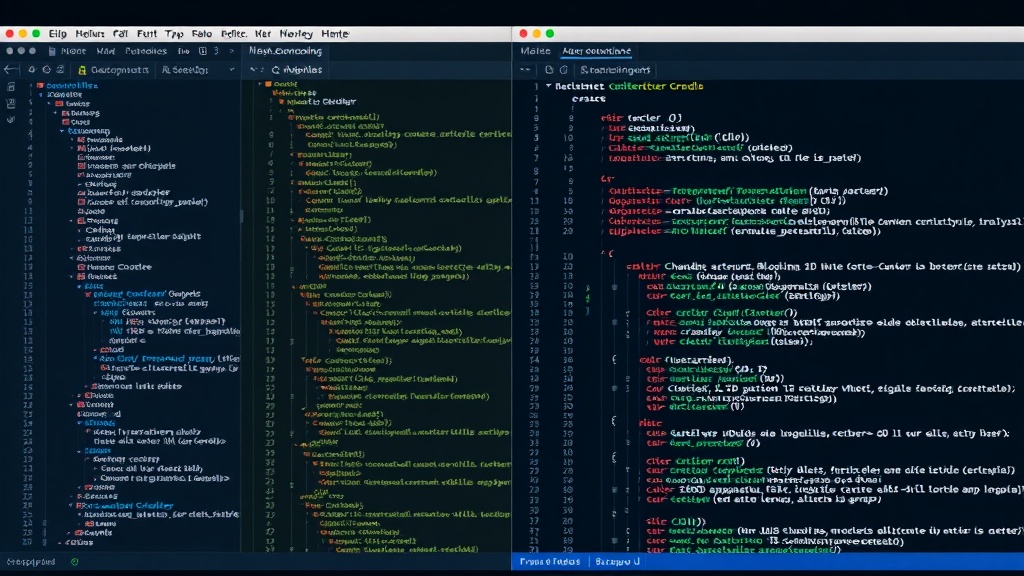
Each set of components within Brainless is meticulously crafted to capture the essence of its namesake. For instance, the Claude-inspired components likely feature the minimalist, often monochromatic color schemes and subtle typography that characterize Anthropic's web interface. These might include chat input fields, message bubbles, and sidebar elements that mirror the clean, user-friendly design of Claude.
The Codex-inspired components would aim to replicate the code-centric design language associated with OpenAI's developer tools. This could translate to syntax highlighting elements, code block styling, and perhaps even integrated terminal-like interfaces or code snippet displays. The emphasis here is on clarity, readability, and a developer-focused aesthetic.
Grok, known for its more opinionated and sometimes distinct visual flair, might inspire components that feature bolder color accents, unique iconography, or specific layout patterns. The goal is to translate Grok's personality into reusable UI elements that developers can adopt.
By abstracting these design patterns into reusable components, Brainless allows developers to focus on their application's logic and functionality while still achieving a professional and on-brand user experience. This approach democratizes access to sophisticated UI design, enabling smaller teams or individual developers to compete visually with larger, more design-resourced organizations.
Technical Foundation: Shadcn/UI and Radix UI
The choice of shadcn/ui as the underlying library is significant. Shadcn/ui itself is not a component library in the traditional sense, but rather a collection of reusable components built on top of Radix UI primitives and Tailwind CSS. This approach allows developers to copy and paste components directly into their projects, customize them extensively, and benefit from a headless, unstyled foundation.
This means that the Brainless components, while offering pre-defined styles, retain the flexibility and customization potential inherent in shadcn/ui. Developers can tweak colors, spacing, typography, and even component behavior to better suit their specific application needs, all while leveraging the underlying accessibility and theming capabilities provided by Radix UI and Tailwind CSS.
The use of Radix UI primitives is particularly important. Radix UI provides low-level, unstyled UI components that are highly accessible and performant. By building on top of these primitives, Brainless inherits a strong foundation for building robust and user-friendly interfaces. This technical underpinning ensures that the visually appealing components are also built with best practices in mind.
Implications for AI Product Development
The emergence of projects like Brainless signals a growing trend: the standardization of design language within the AI product space. As users interact with more AI tools, they develop expectations for how these interfaces should look and feel. Consistency across different AI applications can reduce cognitive load and improve user adoption.
For founders, offering an interface that feels familiar to users of established AI products can provide a competitive advantage. It suggests a level of polish and understanding of the current AI ecosystem. This can be achieved more rapidly and cost-effectively using pre-built component libraries like Brainless, allowing teams to allocate resources to core AI development rather than extensive UI engineering.
However, the reliance on established design patterns also raises questions about differentiation. While mimicking popular interfaces can aid adoption, it might also lead to a sea of visually similar AI applications. The true innovation will likely come from how developers integrate these components and build unique functionalities on top of them, rather than just replicating the look and feel.
What remains to be seen is how actively these component libraries will be maintained as the design trends of major AI players evolve. The AI landscape is moving at an unprecedented pace, and UI aesthetics can shift quickly. Projects like Brainless will need to adapt to stay relevant, potentially requiring frequent updates or new collections to reflect the latest design directions from companies like OpenAI, Anthropic, and others.
Conclusion: A Visual Shortcut for AI-Centric Apps
Brainless offers a compelling solution for developers aiming to capture the contemporary AI interface aesthetic. By leveraging the power and flexibility of shadcn/ui and Radix UI, it provides a set of visually distinct components that can significantly accelerate the design and development process for AI-focused applications. It’s a practical tool for anyone looking to make their product feel more at home in the current AI-driven digital landscape.