The Challenge of AI Agent Persistence and Collaboration
Artificial intelligence agents, especially those designed for complex tasks, often struggle with memory and collaboration. Without a persistent state or a shared environment, agents operate in silos, forgetting previous interactions and unable to build upon each other's work. This limitation hinders their ability to tackle multi-step problems, learn from experience, or engage in sophisticated teamwork. Traditional file systems, while robust for human-computer interaction, are not inherently designed for the dynamic, programmatic access patterns and data formats that AI agents require.
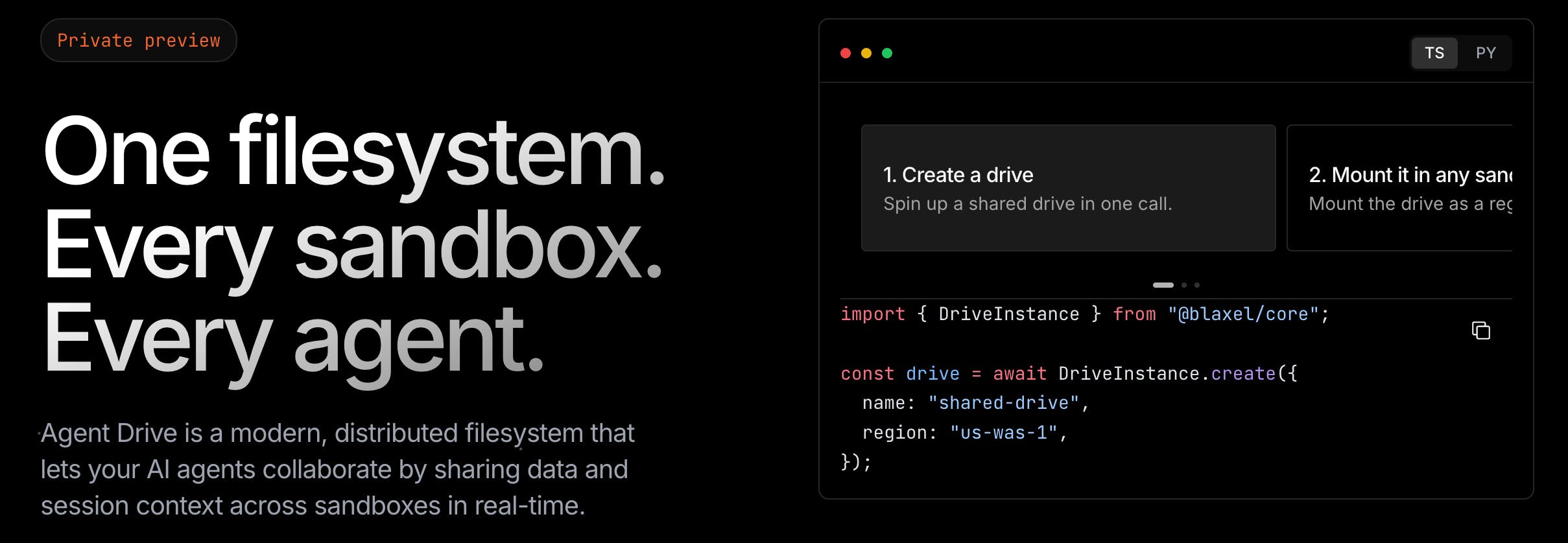
Blaxel Agent Drive emerges as a solution to this fundamental challenge. It positions itself as a shared filesystem specifically architected for the needs of AI agents. This means providing a structured, accessible, and persistent layer where agents can store, retrieve, and share data. Think of it less like a traditional cloud storage service and more like a shared whiteboard and notebook combined, specifically designed for a team of highly specialized, non-human collaborators. The core problem it addresses is the ephemeral nature of many AI agent executions – once a process ends, its knowledge and outputs often vanish unless explicitly saved. Agent Drive aims to make this saving and sharing seamless and integrated.
Core Functionality: Persistent Storage and Shared Access
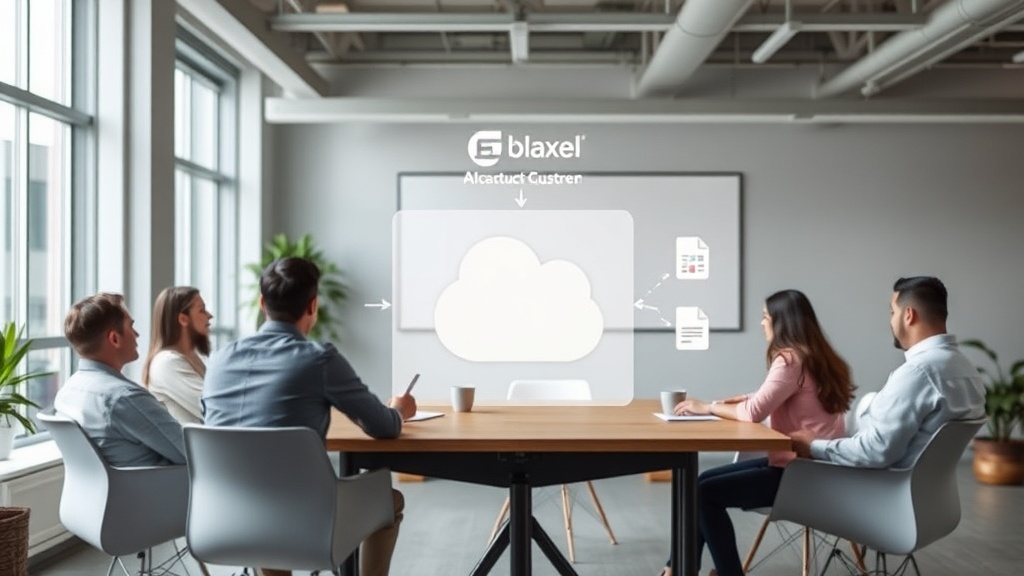
At its heart, Blaxel Agent Drive provides a unified, persistent storage layer for AI agents. This allows agents to maintain context across different sessions, enabling them to pick up where they left off or to reference past findings. For instance, an agent tasked with market research could store its initial findings, competitor analyses, and customer sentiment data in Agent Drive. A subsequent agent, or even the same agent in a later session, could then access this stored data to perform deeper analysis, identify trends, or generate reports without needing to re-execute the initial data gathering steps.
The 'shared' aspect is critical. Agent Drive facilitates collaboration by allowing multiple agents to read from and write to the same storage space. This is particularly valuable in multi-agent systems where different agents might specialize in various sub-tasks. One agent might be responsible for data ingestion and cleaning, another for model training, and a third for generating natural language summaries. Agent Drive acts as the common ground where the output of the first agent becomes the input for the second, and so on. This shared access enables complex, sequential workflows that would be difficult or impossible to manage with individual agent memory alone.
Addressing the AI Agent Workflow Gap
The current landscape of AI agent development often involves custom scripting and complex orchestration to manage data flow between agents. This can be brittle and time-consuming. Blaxel Agent Drive aims to abstract away much of this complexity. By providing a familiar filesystem interface, it allows developers to integrate agents more easily into existing workflows and build new ones with greater confidence. The goal is to make the data interaction layer for agents as straightforward as using `ls`, `cd`, `cp`, or `mv` commands for human users, but with semantics tailored for AI-driven operations.
This abstraction is key for scalability. As more agents are deployed and more complex tasks are undertaken, managing the data dependencies becomes a significant bottleneck. Agent Drive offers a standardized way to handle these dependencies, potentially reducing the engineering overhead associated with building and deploying sophisticated multi-agent applications. It’s designed to be an infrastructure component, akin to a database or a message queue, but optimized for the specific needs of distributed AI intelligence.
Potential Use Cases and Future Implications
The implications of a robust shared filesystem for AI agents are far-reaching. Consider autonomous software development: an agent could write code, store it, have another agent test it, and then have a third agent iterate on it based on test results, all within Agent Drive. In scientific research, agents could collaborate on analyzing large datasets, sharing intermediate results and hypotheses. For creative applications, agents could co-author content, with each agent contributing different styles or elements, all managed through a shared creative space.
The surprising detail here is not just the concept of shared storage, but the potential for AI agents to develop emergent collaborative behaviors that are difficult to program explicitly. If agents can reliably share and build upon information, they might discover more efficient problem-solving strategies or identify novel connections in data that human oversight might miss. This moves beyond simple task execution towards a more dynamic and adaptive form of artificial intelligence collaboration. The challenge ahead will be in how well Agent Drive scales and integrates with the diverse array of AI agent frameworks and models currently in development.