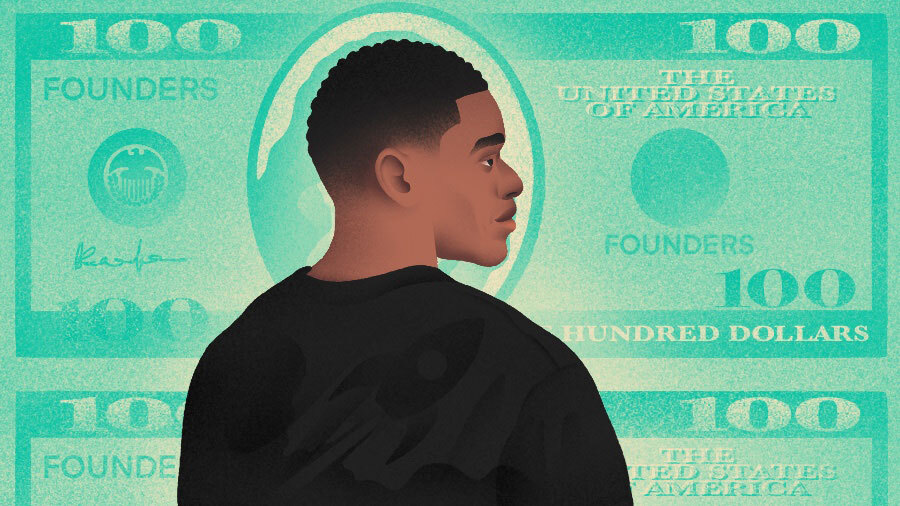
The Series A Bottleneck for Black Founders
The landscape for Black founders in the AI era presents a complex picture. While 2026 has shown encouraging signs for Black-founded startups, with approximately $643 million raised by late May – the strongest quarter since mid-2022 – this surge was largely driven by a handful of unusually large financings. This masks a persistent and significant challenge: the Series A funding gap. For many Black entrepreneurs, securing that critical Series A round remains the next great opportunity, and a formidable hurdle.
James Norman and Sean Green, co-founders of Black Operator Ventures, a firm dedicated to supporting Black founders, emphasize that the path to Series A is often more arduous for this demographic. "We're seeing progress, but it's concentrated in a few outlier deals," Norman states. "The systemic issues that create a funding gap at the seed stage often amplify when companies need to scale into their Series A. Investors at this stage are looking for clear traction, a predictable growth trajectory, and a strong market position – factors that can be harder to demonstrate when you've faced disproportionate headwinds in earlier funding rounds."
Navigating the Series A Landscape
The Series A round is a pivotal moment for any startup. It signifies a transition from early-stage validation to scalable growth. For Black founders, however, this transition is often complicated by a lack of established networks, historical underinvestment, and implicit biases that can influence investor decisions. Green notes that the narrative often shifts at Series A. "It's no longer just about the potential of an idea or a strong founding team. Investors are scrutinizing unit economics, customer acquisition costs, and market share with a fine-tooth comb. If a company is starting from a deficit in terms of initial capital or network access, catching up to meet these expectations becomes a significant challenge."
Black Operator Ventures, along with other organizations and funds focused on underrepresented founders, is actively working to address this gap. Their strategy involves not only providing capital but also offering crucial mentorship, strategic guidance, and access to investor networks. "We need to ensure that Black founders have the same opportunities to build and scale as their counterparts," Green asserts. "This means proactive engagement with VCs, helping founders refine their pitch decks to highlight scalable metrics, and educating investors on the immense untapped potential within the Black founder community."
The recent funding uptick, while positive, underscores the need for sustained, systemic change rather than relying on a few large rounds to move the needle. The challenge for Black founders is to not only secure this crucial Series A funding but to do so on terms that reflect the true value and potential of their ventures. This requires a multi-pronged approach involving founders, investors, and the broader venture capital ecosystem.
Strategies for Closing the Gap
Norman and Green outline several key strategies for Black founders aiming to successfully navigate the Series A funding landscape. Firstly, building robust, data-driven traction is paramount. This means meticulously tracking key performance indicators (KPIs) that demonstrate market demand and scalability. "Investors at Series A are making a bet on future growth, but they need to see concrete evidence today," says Norman. "This could be strong user engagement, significant revenue growth, or clear customer acquisition patterns. Founders need to be relentless in collecting and analyzing this data."
Secondly, leveraging and expanding networks is critical. "The venture capital world is heavily network-driven," Green explains. "It's not enough to have a great product; you need warm introductions and trusted advocates. We encourage our portfolio companies to actively cultivate relationships with other founders, angel investors, and VCs, even before they are actively fundraising." This involves attending industry events, participating in accelerator programs, and seeking out mentors who can open doors.
A third crucial element is narrative and storytelling. Founders must be able to articulate a compelling vision that resonates with investors. This includes clearly defining the problem being solved, the size of the market opportunity, the competitive advantage, and the long-term strategy. "For Black founders, it's also about challenging preconceived notions and presenting a confident, data-backed case for their company's success," Norman adds. "This isn't about overcoming prejudice; it's about presenting an undeniable business case that transcends any bias."
Finally, seeking out investors who are specifically committed to diversity and inclusion, or those with a track record of investing in underrepresented founders, can be a strategic advantage. While the goal is to secure funding from any reputable source, aligning with investors who understand and value diverse perspectives can lead to more supportive partnerships and a smoother funding process.
The AI Era's Unique Opportunity
The rise of AI presents a unique inflection point. As AI technologies become more integrated into various industries, the demand for innovative solutions is soaring. This creates a fertile ground for startups, including those founded by Black entrepreneurs, to develop cutting-edge products and services. "AI is democratizing innovation in many ways," says Green. "The barriers to entry for developing sophisticated AI-powered solutions are lowering. This means Black founders can leverage these tools to build businesses with significant potential, attracting the attention of VCs looking for the next big thing in AI."
However, this opportunity is intrinsically linked to the ability to secure Series A funding. Without it, promising AI startups may struggle to scale their operations, hire top talent, and capture market share. The challenge, therefore, is to ensure that the AI boom benefits all entrepreneurs, not just those who have historically had easier access to capital. The recent funding gains are a step, but the real opportunity lies in systematically closing the Series A gap, enabling a broader range of innovators to contribute to and benefit from the AI revolution.
The focus must remain on creating sustainable pathways to growth for Black founders. This involves a concerted effort to dismantle systemic barriers, foster inclusive investment practices, and empower founders with the resources and networks they need to succeed. The AI era offers a powerful backdrop for this effort, presenting unprecedented opportunities for innovation and market disruption.