
Bittlex-Sim: A New Frontier for Robot Programming
Petoi, known for its open-source quadruped robots like the BittleX, has launched Bittlex-Sim, an in-browser simulator designed to democratize robot programming. This move targets developers, students, and hobbyists by removing the traditional barriers to entry: expensive hardware, complex setup, and specialized software environments. The simulator runs entirely within a web browser, making it accessible from any internet-connected device without requiring installation or powerful local hardware.
The core innovation lies in its ability to replicate the physical environment and behaviors of the Petoi BittleX robot. Users can write code, compile it, and observe its execution in a virtual space that mirrors the robot's kinematics, sensors, and actuators. This allows for rapid prototyping, debugging, and learning of robot control algorithms. The simulator supports C/C++ and Python, the primary programming languages for the BittleX, ensuring a seamless transition from simulation to real-world deployment.
Bittlex-Sim aims to foster a community around Petoi's robots by providing a low-friction platform for experimentation. This is particularly valuable for educational institutions looking to integrate robotics into their curriculum. Students can learn fundamental concepts of robotics, including inverse kinematics, gait generation, and sensor fusion, without the risk of damaging expensive hardware. The browser-based nature also facilitates collaborative projects and remote learning environments.
Key Features and Functionality
The simulator offers a robust set of features tailored for robot development. It includes a realistic 3D environment where users can visualize the BittleX's movements. The simulation accurately models the robot's joints, motors, and sensors, providing feedback that closely approximates real-world conditions. This includes simulating sensor readings from the accelerometer, gyroscope, and optional LiDAR or depth cameras, allowing developers to test perception and navigation algorithms.
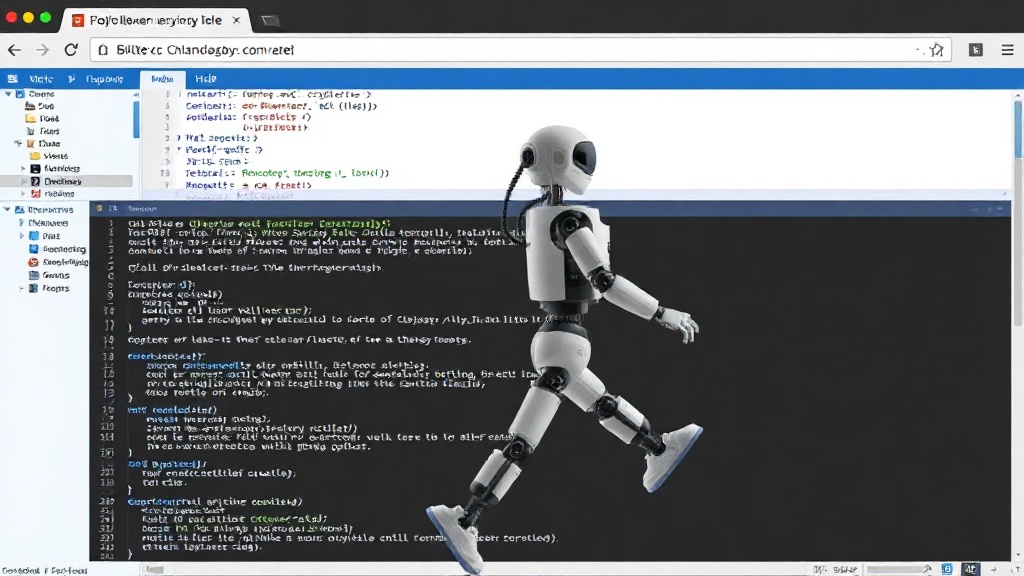
Code editing and compilation are integrated directly into the browser interface. Users can write their code in a familiar editor, manage project files, and initiate compilation and simulation runs with a single click. The simulator supports the full range of BittleX functionalities, from basic motor control to complex behaviors like balancing, walking, and interacting with virtual objects. Error messages and debugging output are displayed in real-time, aiding in the identification and resolution of code issues. This integrated development environment (IDE) approach simplifies the workflow considerably.
One of the most significant advantages of Bittlex-Sim is its support for multiple programming paradigms and libraries. Developers can leverage existing C/C++ or Python libraries that are compatible with the BittleX. The simulator also provides a simplified API abstraction layer, making it easier to interact with the robot's hardware components. This allows developers to focus on the logic and algorithms rather than getting bogged down in low-level hardware details, especially during the initial development and testing phases.
Accessibility and Educational Impact
Petoi's decision to build a browser-based simulator is a strategic one, lowering the barrier to entry for a wide audience. Unlike traditional robotics simulators that require significant computational resources and complex installation procedures, Bittlex-Sim is accessible to anyone with a modern web browser and an internet connection. This inclusivity is crucial for expanding the reach of robotics education and development. Schools, coding bootcamps, and individual learners can now engage with sophisticated robot programming without substantial upfront investment.
The simulator acts as a powerful educational tool. It provides a safe sandbox for students to experiment with code and observe the consequences of their programming choices. This hands-on experience, even in a virtual environment, is invaluable for understanding core robotics concepts. Furthermore, the ability to share simulation projects and code snippets can foster a more collaborative learning atmosphere. Instructors can easily share example code, assignments, and demonstrations, streamlining the teaching process.
The implications for Petoi's ecosystem are substantial. By making programming more accessible, Petoi can attract a larger developer community. This, in turn, can lead to a richer library of open-source code, more innovative applications, and increased adoption of their hardware. The simulator effectively serves as a gateway drug for aspiring roboticists, offering a taste of the BittleX experience before committing to a physical purchase.
The Future of In-Browser Robotics Development
Bittlex-Sim represents a growing trend in software development: shifting complex applications and environments to the cloud and the browser. This approach offers scalability, accessibility, and lower maintenance overhead compared to traditional desktop applications. For robotics, this means more accessible learning tools and faster iteration cycles for developers.
The success of Bittlex-Sim could pave the way for similar browser-based simulators for other robotic platforms. As hardware becomes more specialized and expensive, virtual environments offer an increasingly attractive alternative for initial development and training. The ability to test complex behaviors, AI algorithms, and control systems in a simulated environment before deploying to physical hardware can save significant time and resources, while also reducing the risk of damage to costly equipment.
What remains to be seen is how closely the simulator's performance and sensor fidelity will match the real BittleX robot over time. As Petoi updates its hardware and firmware, keeping the simulator synchronized will be an ongoing challenge. However, the foundational step of providing an accessible, in-browser platform for programming and testing is a significant achievement, promising to lower the barrier to entry for the field of quadruped robotics.