
The Problem: Unseen Costs in a Service Business
Many small businesses, especially those reselling government or utility services, operate on a simple model: charge a customer a fee, pay a smaller cost to the portal or vendor, and keep the difference. This is the reality for cyber cafés and Common Service Centers (CSCs) across India, which handle everything from Aadhaar updates and PAN card applications to bill payments and exam form submissions.
The core challenge for these businesses isn't tracking incoming cash. It's accurately calculating profit. This requires subtracting varying portal costs for each individual service and transaction. For a small business owner, especially at the end of a long day, performing these calculations mentally becomes an insurmountable task, leading to a fuzzy understanding of actual profitability.
This is precisely the problem faced by the father of a developer who runs such a service shop. The inability to easily determine profit per transaction meant the business was likely leaving money on the table or mismanaging its finances due to a lack of clear profit data.
Introducing Khata: Real-Time Profit Tracking
To solve this, the developer built 'Khata' – a custom-built bilingual profit tracker. The name itself, 'Khata,' translates to 'ledger' in Hindi and Bengali, directly reflecting its purpose. The application automates the complex subtraction of service costs from customer charges, providing real-time profit calculations for each transaction.
Khata's design prioritizes ease of use for business owners who may not be tech-savvy. It allows for the definition of each service offered, including its name in English, Hindi, and Bengali, an associated emoji icon for visual recognition, and a default customer charge. This foundational setup enables the system to automatically apply the correct pricing and calculate profit margins as transactions occur.
Technology Stack and Design Decisions
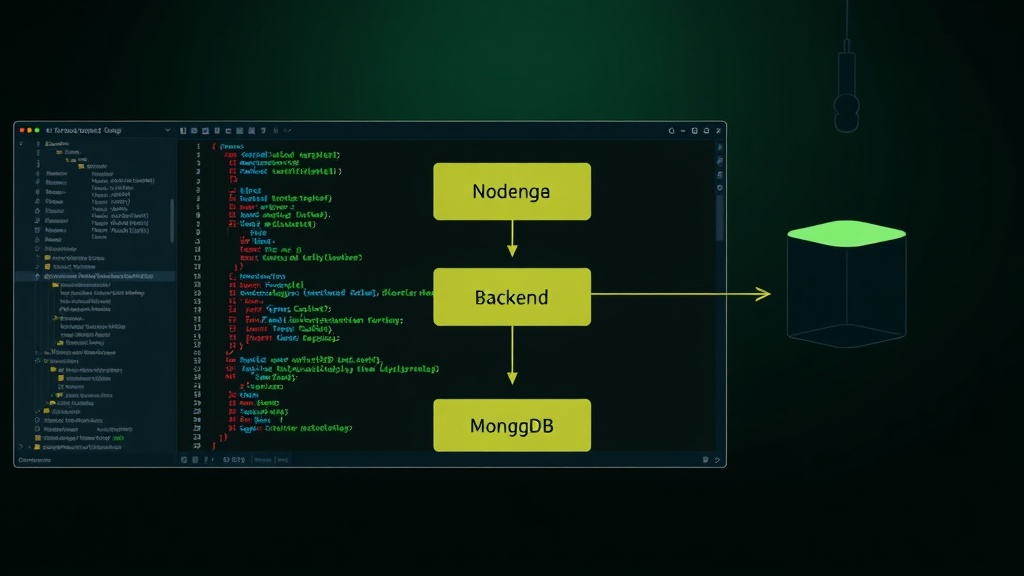
The developer opted for a modern, yet accessible, technology stack to build Khata. The backend is powered by Node.js, a JavaScript runtime environment known for its efficiency and suitability for I/O-bound applications, which is common in transaction processing.
For the database, MongoDB was chosen. Its NoSQL nature and flexible schema make it ideal for applications where data structures might evolve or where rapid development is a priority. This is particularly useful for a small business application where new services or pricing tiers might be added over time without requiring complex database migrations.
On the frontend, React was used. This popular JavaScript library allows for the creation of dynamic and interactive user interfaces. The use of React enables Khata to provide a responsive and user-friendly experience, crucial for a tool intended for daily use by a business owner.
Key design decisions included:
- Bilingual Support: Integrating Hindi and Bengali alongside English for service names and potentially user interface elements directly addresses the multilingual environment of the target users. This is not just a feature but a core requirement for accessibility and usability in India.
- Service Definition Modularity: Allowing services to be defined once with all their parameters (name, icon, default charge) creates a scalable system. New services can be added, and existing ones updated, without modifying core application logic.
- Real-time Calculation: The system processes each transaction as it happens, providing immediate feedback on profit. This contrasts sharply with manual end-of-day calculations.
- Simplified UI: The use of emojis as icons and clear labeling aims to make the application intuitive, reducing the learning curve for non-technical users.
Broader Implications for Small Service Businesses
Khata is more than just a personal project; it represents a blueprint for how accessible technology can empower small, often family-run, businesses in emerging markets. The ability to accurately track profit margins, even with complex and varied service costs, can lead to:
- Improved Financial Management: Business owners gain a clear understanding of their most profitable services and where costs are highest.
- Strategic Pricing: Data-driven insights allow for better pricing strategies, ensuring services are priced competitively while maximizing profit.
- Operational Efficiency: Automating calculations frees up the business owner's time, allowing them to focus on customer service and other critical business aspects.
- Scalability: As the business grows, Khata can adapt, providing consistent financial oversight without the need for manual intervention.
The project highlights a gap in the market for simple, localized, and effective business management tools. While larger enterprises have sophisticated ERP systems, micro and small businesses often rely on manual methods or generic, non-localized software. Khata fills this niche by being tailored to the specific operational realities and linguistic needs of its users.
Future Potential and Customization
The current iteration of Khata focuses on core profit tracking. However, its modular design opens avenues for future expansion. Potential enhancements could include:
- Expense Tracking: Incorporating a module for tracking operational expenses (rent, electricity, supplies) to provide a more holistic view of net profit.
- Customer Management: Basic CRM features to track customer history and preferences.
- Reporting and Analytics: Generating daily, weekly, or monthly profit reports with visual charts and graphs.
- Inventory Management: For cafés that also sell consumables like snacks or stationery.
- Payment Gateway Integration: Potentially integrating with local digital payment solutions.
The developer's decision to build Khata demonstrates the power of understanding a specific, real-world problem and applying appropriate technology to solve it. It's a testament to how even a seemingly simple application can have a significant impact on the viability and growth of a small business.