
The Unseen AI Infrastructure Bill
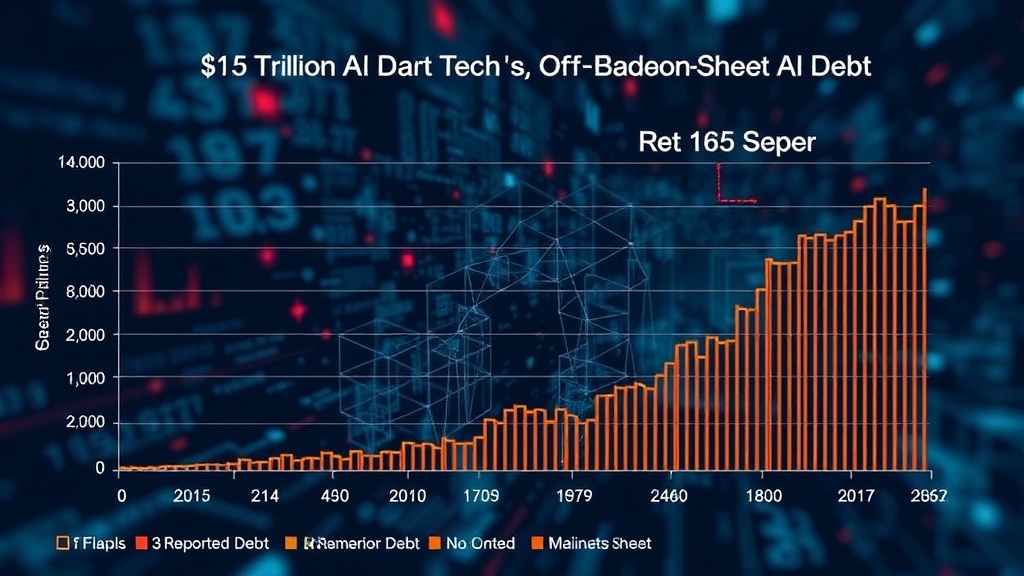
The relentless pursuit of artificial intelligence dominance by Big Tech companies is creating a hidden financial burden. Analysis suggests that major technology firms are leveraging complex, off-balance-sheet financial structures to account for the colossal investments in AI infrastructure, potentially masking up to $1.65 trillion in debt. This practice, while not necessarily illegal, raises significant questions about financial transparency and the true cost of the AI race.
These off-balance-sheet arrangements often involve entities like special purpose vehicles (SPVs) or intricate leasing agreements for vast data centers, specialized hardware like GPUs, and the associated energy consumption. By structuring these deals in ways that don't appear directly on their main balance sheets, companies can maintain the appearance of lower leverage and higher profitability. This allows them to continue aggressive AI development and deployment without immediately facing the scrutiny that would come with overtly reported debt.
The sheer scale of AI development necessitates enormous capital expenditure. Training cutting-edge large language models (LLMs) and deploying AI services globally requires fleets of powerful servers, specialized AI accelerators, and immense amounts of electricity. These are not one-time purchases but ongoing, substantial operational costs. Companies like Google, Microsoft, Amazon, and Meta are estimated to be at the forefront of this hidden debt accumulation.
Consider the analogy of building a city. A company might overtly report the cost of building its headquarters (on-balance-sheet). However, if it leases vast tracts of land for future expansion, enters into long-term, complex contracts for utilities, and finances the construction of numerous satellite offices through separate, less transparent entities, the true cost of its urban sprawl remains obscured. This is akin to how Big Tech is handling its AI infrastructure. The core AI models and services are the visible city center, but the sprawling, expensive infrastructure supporting them is being financed through less visible means.

Why Off-Balance Sheet Financing?
Several factors drive Big Tech's reliance on off-balance-sheet financing for AI infrastructure. Firstly, it allows companies to manage their debt-to-equity ratios more favorably. Lenders and investors often look at a company's reported debt levels when assessing financial health and creditworthiness. By keeping significant liabilities off the books, companies can appear less risky, potentially securing better borrowing terms for other parts of their business or maintaining higher stock valuations.
Secondly, these structures can offer tax advantages. Depending on the jurisdiction and the specifics of the financial arrangement, leasing equipment or using SPVs can sometimes result in more favorable tax treatment compared to outright ownership and depreciation. This is particularly relevant for capital-intensive industries like AI, where hardware costs are astronomical.
Thirdly, it provides flexibility. AI technology and hardware evolve rapidly. Long-term leases or SPV structures might offer more agility to upgrade or change infrastructure compared to owning assets outright, which can become obsolete or require costly write-downs. This flexibility is crucial in a field moving at breakneck speed.
The Stakes: Transparency and Risk
The primary concern arising from this practice is a lack of transparency. Investors, analysts, and regulators may not have a clear picture of the full financial commitments a company has made. This opacity can obscure the true financial risk profile of these tech giants. If a significant portion of their operational capacity is tied to complex financial instruments that carry inherent risks (e.g., interest rate fluctuations, default clauses, or unexpected termination fees), the company's stability could be more precarious than publicly reported.
Furthermore, this hidden debt could impact the perceived value and sustainability of AI initiatives. The reported profitability of AI services might not fully account for the long-term costs associated with the underlying infrastructure. This could lead to mispricing of services or an underestimation of the capital required to maintain AI leadership.
What nobody has addressed yet is what happens if these off-balance-sheet commitments come due simultaneously, or if a major financial institution or regulatory body decides to reclassify these liabilities. The ripple effect on the market, the availability of credit for other tech ventures, and the trajectory of AI development could be substantial.
Looking Ahead
As AI continues its integration into every facet of business and society, the financial structures supporting it will become increasingly critical. Investors and analysts will need to develop more sophisticated methods for assessing the true financial health of companies heavily invested in AI. Regulators may also need to examine existing accounting standards to ensure they adequately capture the full scope of liabilities associated with AI infrastructure development.
The $1.65 trillion figure, while an estimate, serves as a stark warning. It highlights that the AI revolution is not just about algorithms and data; it is also a massive, complex financial undertaking. Understanding the true cost, both on and off the balance sheet, is essential for a realistic assessment of the AI landscape and the companies driving it.