The Allure of Speed: Why Developers Reach for Redis
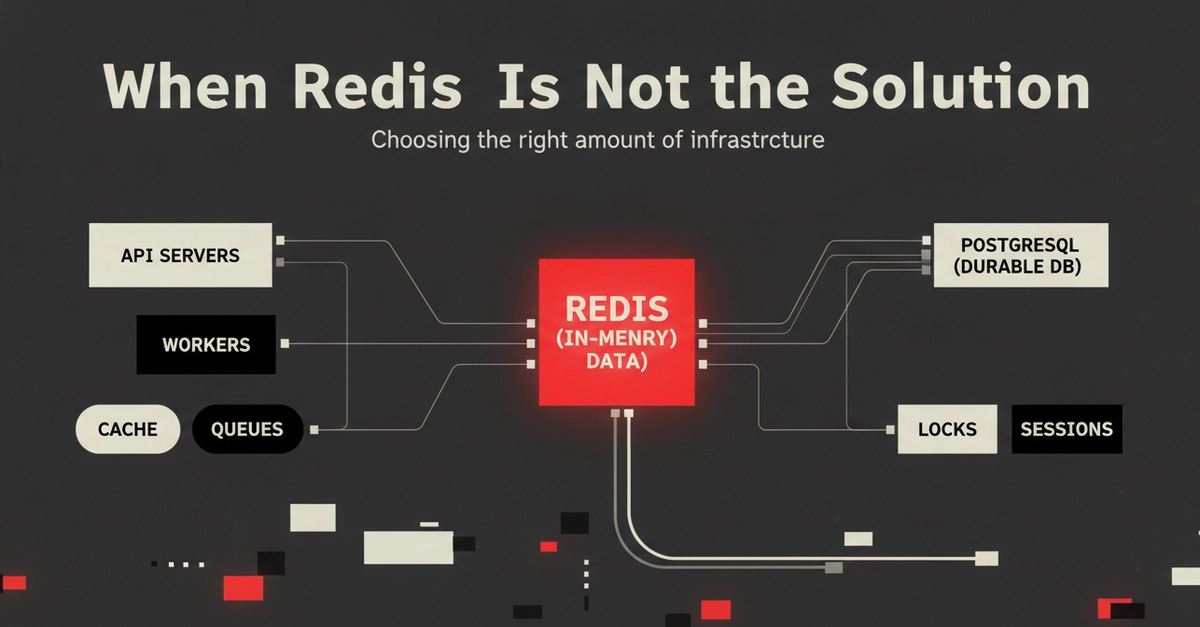
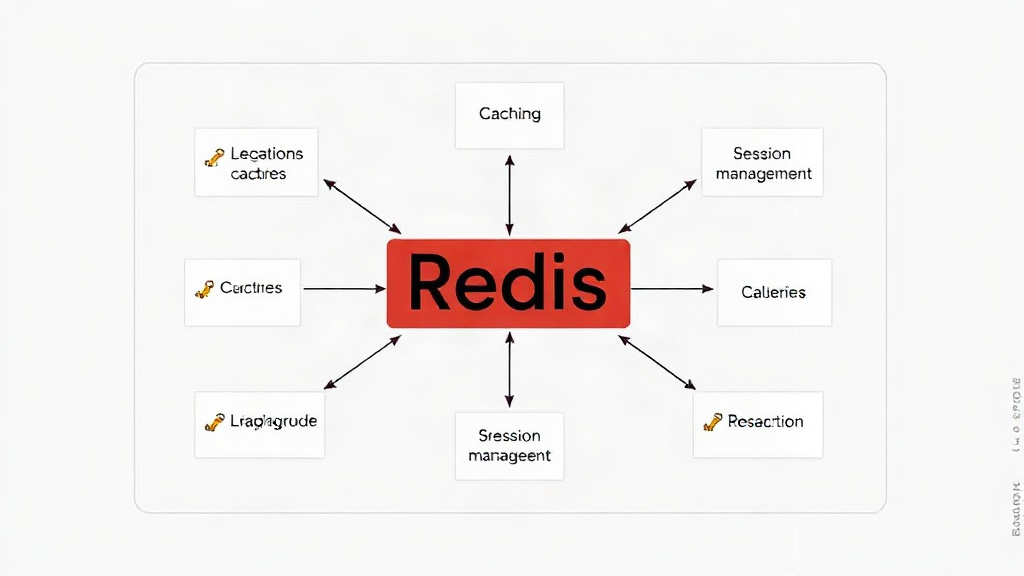
Redis. The name itself conjures images of lightning-fast data retrieval. It’s the go-to for developers seeking to supercharge their applications, often becoming the default choice for tasks like caching, managing one-time passwords (OTPs), implementing rate limiting, handling distributed locks, building queues, storing user sessions, and managing temporary data. Its in-memory nature and highly optimized data structures make it exceptionally performant for these use cases. The sheer speed and efficiency gains it offers can be transformative, especially in high-throughput environments where milliseconds matter.
The temptation to integrate Redis into a system for any of these needs is understandable. It promises to solve performance bottlenecks, simplify certain application logic, and provide robust solutions for common distributed system challenges. Developers often see it as a silver bullet, a tool that can instantly elevate their application's responsiveness and scalability. This widespread adoption is a testament to its power and flexibility. However, like any powerful tool, its indiscriminate application can lead to unintended consequences.
The Hidden Costs of Adding Another Component
Every new piece of infrastructure introduced into a system, no matter how beneficial, carries a cost. This is a fundamental principle in system design that is often overlooked in the initial rush to implement a perceived performance enhancement. For Redis, these costs manifest in several critical areas:
Operational Overhead
Operating Redis requires dedicated resources and expertise. It’s not just about spinning up a server; it involves managing its lifecycle, ensuring high availability, handling backups, and performing regular updates. This means more tasks for your operations team, or for your development team if they are wearing multiple hats. The complexity scales with the number of Redis instances and their configurations. Each instance becomes another potential point of failure and another system to monitor.
Increased Failure Modes
Introducing any new component inherently introduces new ways for your system to fail. Redis, while robust, is not immune to issues. Network partitions, memory exhaustion, disk I/O bottlenecks (if persistence is heavily used), and configuration errors can all lead to Redis outages. When Redis is a critical part of your application's architecture, its failure can cascade, impacting user experience and business operations. Understanding and mitigating these failure modes adds another layer of complexity to your system's resilience planning.
Monitoring Complexity
Effective monitoring is crucial for any distributed system. With Redis added to the mix, your monitoring suite needs to expand. You’ll need to track not only application-level metrics but also Redis-specific metrics like memory usage, CPU load, network traffic, hit/miss ratios for caches, queue lengths, and latency. Setting up comprehensive dashboards and alerts for all these indicators requires significant effort and ongoing maintenance. Without proper monitoring, performance degradations or outright failures can go unnoticed until they cause significant damage.
Distributed State Management
When Redis is used for stateful operations like sessions, locks, or queues, it becomes a central point of distributed state. Reasoning about this state, especially in a highly concurrent environment, can be challenging. Developers need to carefully consider race conditions, data consistency, and the implications of Redis’s eventual consistency models (if replication is involved). Debugging issues related to distributed state can be significantly more complex than debugging issues within a single, monolithic application.
When Simplicity Is the Real Solution
The core message is not that Redis is a bad tool; it’s an excellent tool for the right job. The problem arises when it’s chosen out of habit or a reflexive desire for speed without a thorough consideration of the trade-offs. Often, simpler solutions exist that can achieve acceptable performance with significantly less operational burden.
PostgreSQL and Relational Databases
For many use cases, particularly those involving structured data and transactional integrity, a relational database like PostgreSQL can be perfectly adequate, and sometimes even superior. PostgreSQL has evolved significantly and offers robust features for caching (e.g., `pg_cache`), indexing strategies that can provide high performance, and built-in support for features that might otherwise require Redis, such as locking mechanisms or even basic queueing patterns using LISTEN/NOTIFY. When your data model naturally fits a relational structure, leveraging the full power of your existing database can avoid the overhead of introducing and managing a separate Redis cluster. Think of it like this: sometimes, your highly organized friend who remembers everything in your filing cabinet (PostgreSQL) is all you need, rather than hiring a separate, super-fast assistant for specific tasks (Redis).
Rethinking the Need for a New Component
Before reaching for Redis, or any new infrastructure component, it’s essential to ask: is this problem truly insurmountable with the existing stack? Can application-level optimizations, better indexing in the primary database, or more efficient algorithms suffice? Sometimes, the most elegant and cost-effective solution is to optimize what you already have, or to simply not add complexity where it isn't strictly necessary. The simplest solution often involves the fewest moving parts, leading to greater stability, easier maintenance, and faster development cycles.
Making the Right Choice
The decision to use Redis, or any specialized tool, should be a deliberate one, based on a clear understanding of the problem domain, the performance requirements, and the operational costs. It requires a nuanced evaluation of trade-offs. While Redis excels at specific high-speed, ephemeral data tasks, developers must weigh its benefits against the added complexity and potential failure points it introduces. By critically assessing whether the performance gains justify the operational burden, and by considering simpler alternatives like optimizing existing databases, teams can build more robust, maintainable, and efficient systems.