The Illusion of Choice: Too Many Tools, Too Little Value
The digital landscape is saturated with tools. From productivity suites to niche applications, users are presented with an ever-expanding arsenal of software. Yet, this abundance often leads to a paradoxical outcome: decreased efficiency and increased frustration. The core problem isn't a lack of available tools, but rather the disconnect between these tools and the user's established mental models and workflows. Users don't need another button to click or another app to learn; they need existing functionalities to work together harmoniously, fitting into how they already think and operate.
Consider the average professional. They might use a project management tool, a communication platform, a document editor, a CRM, and a calendar, among others. Each tool is designed with a specific purpose, and many are excellent at what they do. However, the friction arises when moving data or context between these applications. Manually copying and pasting information, reformatting documents, or toggling between screens to find related data consumes valuable cognitive load and time. This fragmentation forces users to adapt their mental models to the tool's limitations, rather than the tool serving the user's natural cognitive processes. The result is a constant, low-level tax on attention and productivity.
Bridging the Gap: Integration as the New Frontier
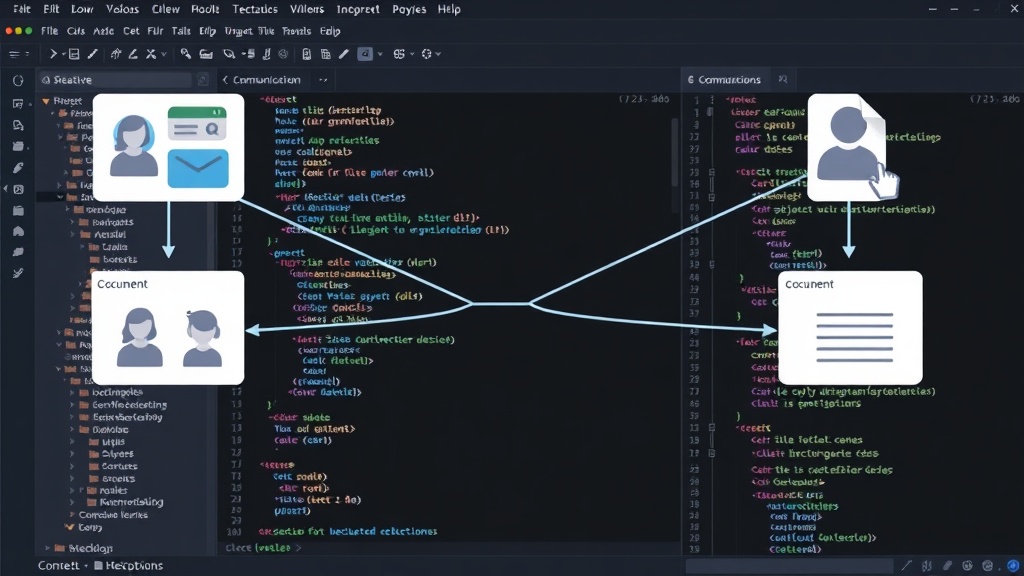
The true innovation in software design today lies not in creating novel features, but in orchestrating existing ones into coherent, integrated experiences. This means understanding the user's journey and identifying points where different functionalities can intersect and complement each other. For instance, a task within a project management tool could directly link to a relevant document in a cloud storage service, or a customer communication could automatically update a CRM record. These integrations don't require users to learn new paradigms; they leverage existing ones, making the technology feel intuitive and supportive.
This approach mirrors how we naturally interact with the world. We don't think of tasks in isolation. When planning a trip, we consider flights, accommodation, and activities simultaneously, not as separate, unrelated steps. Software should reflect this interconnectedness. The goal is to create a digital environment that feels like an extension of the user's own thought process, where information flows freely and tools work in concert. This is particularly relevant in the realm of AI interfaces. Instead of presenting AI as a separate tool to be invoked, its capabilities should be woven into existing workflows, offering assistance contextually.
Mental Models: The User's Cognitive Compass
A key concept here is the user's mental model. This is the internal representation of how a system works. When a new tool or feature aligns with an existing mental model, adoption is rapid and intuitive. When it deviates significantly, users face a steep learning curve and potential resistance. Seamless integrations act as bridges, connecting new functionalities or data points to established mental frameworks. For example, if a user is accustomed to managing tasks in a list format, integrating new task-related features into that list structure is far more effective than introducing a completely new interface for those features.
This principle extends beyond simple feature linking. It's about understanding the underlying logic of a user's work. If a designer is accustomed to iterating on visual elements, any new design tool or feature should integrate into that iterative process rather than demanding a departure from it. This requires developers and designers to move beyond feature checklists and focus on the holistic user experience. It means asking: How does this new capability fit into the user's existing workflow? What mental model does it reinforce or disrupt? The success of a product is increasingly measured not by the number of features it offers, but by how effectively it reduces cognitive overhead and empowers users to achieve their goals with less friction.
The Future is Integrated: A Call for Contextual Design
The trend is clear: the future of software lies in integration and contextual relevance. Companies that focus on building isolated, feature-rich applications risk being outmaneuvered by those that excel at creating cohesive ecosystems. This doesn't necessarily mean building every single piece of functionality in-house. It often involves smart partnerships, robust APIs, and a deep understanding of user flows. For developers, this means prioritizing interoperability and designing systems with integration in mind from the outset. For designers, it means mapping user journeys and identifying opportunities to connect disparate tools and data points.
The challenge for founders is to shift their product strategy from feature accretion to experience orchestration. Instead of asking, "What new feature can we add?" they must ask, "How can we make our existing features work better together, and with the tools our users already rely on?" This user-centric approach, focused on minimizing cognitive load and maximizing intuitive interaction, is the path to true product success in an increasingly crowded digital world. The ultimate goal is to make technology disappear into the background, serving users so effectively that they can focus entirely on their tasks and objectives.