
The AI Assistant for Every Desk
When we talk about Artificial Intelligence in the workplace, the conversation often defaults to coding, data science, or product development. But for the vast majority of office workers who aren't directly involved in building technology, the perceived utility of AI can feel limited to mundane tasks like drafting emails or summarizing lengthy reports. This perspective overlooks a burgeoning landscape of AI applications designed to augment productivity, enhance creativity, and streamline workflows across a spectrum of non-technical roles. The real power of AI for these professionals lies in its ability to act as an intelligent collaborator, an tireless researcher, and a personalized tutor.
Consider the administrative professional. Beyond composing routine correspondence, AI can manage complex scheduling across multiple time zones, proactively identify potential conflicts, and even draft agendas tailored to meeting participants' known interests or roles. For marketing and sales teams, AI can move beyond simple report summarization to generate buyer personas based on market data, craft personalized outreach sequences, and analyze customer feedback for sentiment trends that might escape human notice. Even roles focused on internal operations can benefit. HR professionals might use AI to screen initial job applications based on defined criteria, identify skill gaps within teams, or even design personalized onboarding plans.
Unlocking Market Insights and Customer Understanding
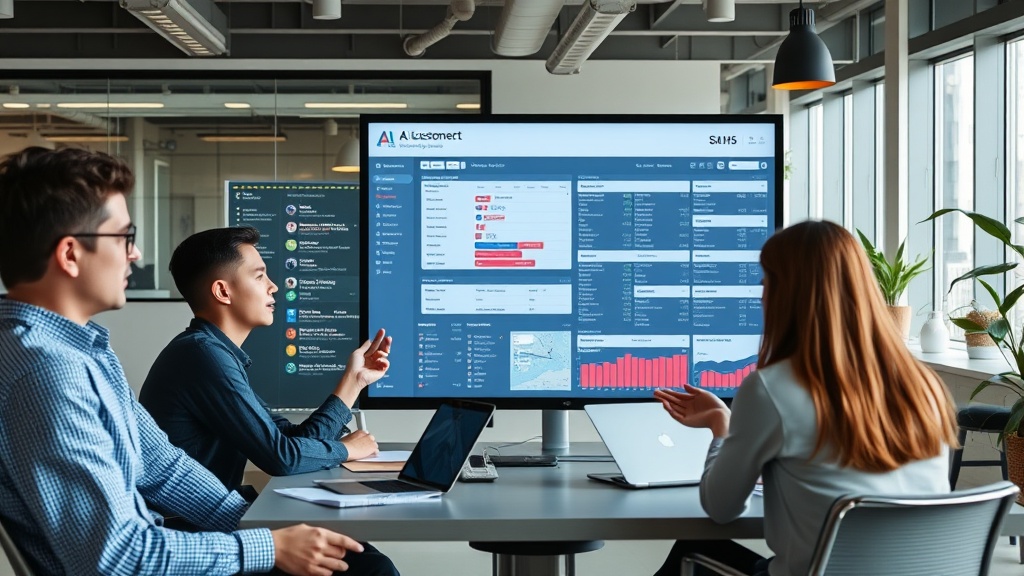
For professionals in marketing, sales, and business development, AI offers a significant leap in understanding markets and customers. Instead of manually sifting through mountains of data, AI tools can rapidly analyze trends, identify emerging competitors, and forecast market shifts. Imagine a product marketing manager needing to understand the competitive landscape for a new feature. An AI assistant could scour industry news, competitor websites, patent filings, and social media discussions to provide a synthesized overview of key players, their strategies, and potential market saturation. This is not just summarization; it's active intelligence gathering and synthesis.
Furthermore, AI excels at granular customer analysis. Tools can process large volumes of customer reviews, support tickets, and social media mentions to pinpoint common pain points, desired features, and overall sentiment. This allows non-technical teams to make data-driven decisions about product roadmaps, marketing campaigns, and customer service improvements. For instance, a customer success manager could use AI to identify customers at risk of churn based on their interaction patterns and feedback, enabling proactive intervention. This moves AI from a writing aid to a strategic insight engine.
Boosting Creativity and Content Generation
The creative process, often seen as uniquely human, is increasingly being augmented by AI. For content creators, graphic designers, and even event planners, AI tools can serve as powerful ideation partners and production assistants. Beyond generating basic text, AI can help brainstorm campaign slogans, develop narrative arcs for presentations, and even suggest visual styles or color palettes for marketing materials. Graphic designers, for example, can use AI image generators to quickly explore different visual concepts, generate mockups, or create unique assets that would be time-consuming to produce manually.
For those in event planning, AI can assist in optimizing logistics, suggesting venue layouts based on attendee numbers and event type, and even generating personalized itineraries for VIP guests. Even in fields like internal communications, AI can help craft engaging newsletters, design visually appealing infographics (by providing text prompts to AI image tools), and ensure messaging consistency across different platforms. This frees up creative professionals to focus on higher-level conceptualization and refinement, rather than getting bogged down in repetitive design or drafting tasks.
Personalized Learning and Skill Development
One of the most understated applications of AI for non-technical professionals is in continuous learning and skill development. The modern workplace demands adaptability, and AI can act as a personalized tutor, tailoring educational content to individual needs and learning styles. For someone looking to understand a new industry trend or acquire a new soft skill, AI can curate relevant articles, videos, and courses, presenting them in a digestible format. It can then quiz the user, identify areas of weakness, and provide targeted explanations or supplementary materials.
Imagine a sales representative needing to understand the technical specifications of a new product they are selling. Instead of sifting through dense documentation, an AI assistant can explain the key features and benefits in plain language, answer specific questions, and even role-play customer objections. This personalized learning approach accelerates skill acquisition and ensures that professionals can stay up-to-date in their roles without requiring formal, time-intensive training programs. This is akin to having a dedicated mentor available 24/7, capable of explaining complex topics in a way that resonates with your existing knowledge base.
Streamlining Operations and Project Management
Even in roles that don't directly manage projects, AI can significantly improve operational efficiency. For office managers, AI can help optimize inventory management, predict supply needs, and even analyze energy consumption patterns to suggest cost-saving measures. In human resources, beyond initial screening, AI can assist in analyzing employee feedback surveys to identify cultural issues or areas for improvement, and can help draft performance review summaries based on documented achievements and feedback.
For any professional, AI can act as a personal productivity assistant, managing to-do lists, prioritizing tasks based on deadlines and importance, and even automating repetitive data entry or form-filling tasks. The key is to view AI not as a replacement for human judgment or creativity, but as an intelligent amplifier. By offloading time-consuming, data-intensive, or repetitive tasks, AI empowers non-technical workers to focus on strategic thinking, complex problem-solving, and interpersonal interactions—the very aspects of work that remain uniquely human and most valuable.
The Unanswered Question: Integration and Accessibility
What remains to be seen is how seamlessly these AI tools will integrate into existing non-technical workflows and software. While powerful standalone applications exist, the true productivity revolution will occur when AI capabilities are embedded directly into the everyday tools that office professionals already use, such as their CRM, project management software, or even their internal communication platforms, making advanced AI assistance as accessible as a well-organized filing cabinet.