The Limitation of Current Crypto Payment Integrations
Most developers approach cryptocurrency payments with a singular focus: integrating a checkout experience. This typically involves creating an invoice, redirecting the customer to a payment gateway, waiting for a webhook confirmation, and then marking the order as paid. While functional for basic transactions, this model overlooks the broader business opportunities inherent in crypto payments. For merchants, a payment is rarely the end of a process; it's a trigger for a cascade of subsequent business actions. This narrow view limits the value proposition for both developers and merchants.
The True Business Value: Automating Post-Payment Workflows
The real opportunity lies in automating the actions that follow a confirmed crypto transaction. Consider a paid invoice: it might need to activate a SaaS subscription, dispatch a digital license key, or trigger a welcome email sequence. A confirmed transaction could unlock a user's access to premium content, grant them a specific role in a community platform like Discord or Telegram, or create a customer support ticket. Even an expired invoice has a business action attached: sending a payment reminder. These are the critical business processes that merchants need to streamline. Developers can move beyond simply processing payments to building comprehensive automation studios that integrate payment confirmation with core business operations.
Introducing the Payment Automation Studio Concept
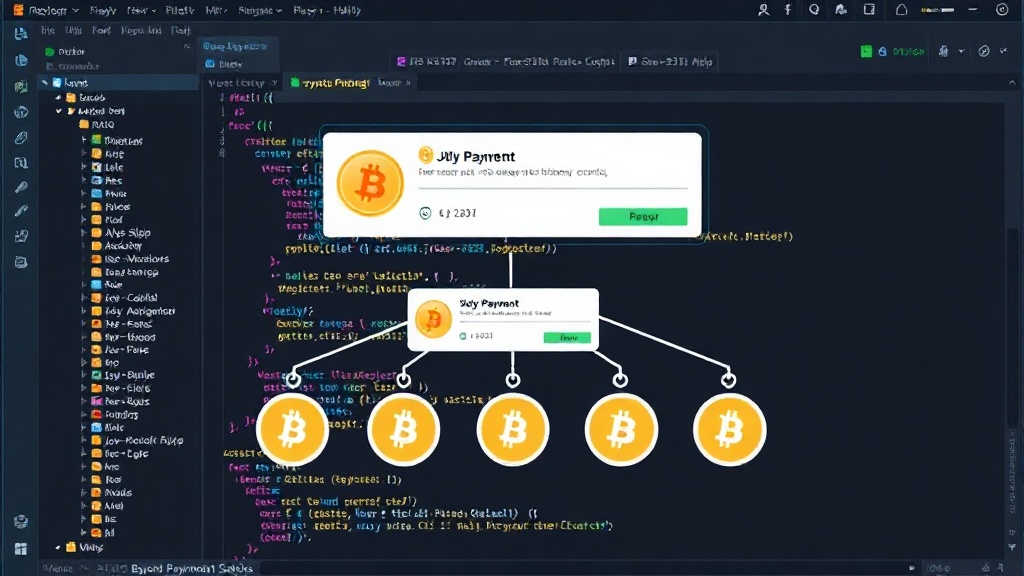
A Payment Automation Studio for crypto merchants aims to bridge this gap. It’s not just about accepting cryptocurrency; it’s about orchestrating the entire business workflow that payment initiates. This studio would empower merchants to define and manage a series of automated actions based on various payment statuses: paid, pending, expired, or even partially paid. For example, a merchant selling digital goods could configure the studio to automatically generate and deliver a unique license key immediately after a Bitcoin payment is confirmed. A subscription service could automatically upgrade a user's plan in their CRM and grant access to premium features upon receiving an Ethereum payment.
Key Components of a Payment Automation Studio
Building such a studio requires a modular approach, focusing on several core functionalities:
1. Flexible Invoice Generation and Management
Beyond simple invoice creation, the studio needs to support customizable invoice details, including payment deadlines, accepted cryptocurrencies, and specific network requirements (e.g., ERC-20, BEP-20). It should also track invoice status in real-time, providing merchants with a clear overview of outstanding, paid, and expired invoices.
2. Multi-Cryptocurrency and Multi-Network Support
Merchants operate in a diverse crypto landscape. The studio must support a wide range of cryptocurrencies (Bitcoin, Ethereum, Solana, stablecoins, etc.) and their associated blockchain networks. This includes handling different transaction fees, confirmation times, and network-specific data.
3. Real-time Webhook and Event Handling
Robust webhook capabilities are essential for instant event notifications. The studio should reliably capture payment confirmations, rejections, and other relevant transaction events from the blockchain. This data then feeds into the automation engine.
4. Customizable Workflow Builder
This is the heart of the studio. A visual, no-code or low-code workflow builder allows merchants to define conditional logic. For instance: IF payment status is 'paid' AND cryptocurrency is 'USDC' THEN 'activate SaaS plan' AND 'add to CRM'. This builder should support a wide array of actions, integrating with popular business tools.
5. Integration with Business Systems
The true power comes from integration. The studio needs pre-built connectors or robust APIs to interact with common business systems such as:
- Customer Relationship Management (CRM) platforms (e.g., Salesforce, HubSpot)
- E-commerce platforms (e.g., Shopify, WooCommerce)
- Enterprise Resource Planning (ERP) systems
- Communication tools (e.g., Slack, Telegram, Discord, Email)
- Project management tools (e.g., Asana, Jira)
- Spreadsheets and reporting tools (e.g., Google Sheets, Finance Dashboards)
- Identity and access management systems for license key distribution or role assignment.
6. Reporting and Analytics
Merchants need insights into their payment flows and automated processes. The studio should provide dashboards and reports on transaction volumes, payment success rates, workflow execution, and the business impact of automated actions.
Developer Opportunity: Building Value Beyond the Button
The development effort shifts from a simple payment gateway integration to building a sophisticated automation platform. This requires expertise in blockchain, API integrations, workflow orchestration engines, and user interface design for business users. Companies like OxaPay are emerging in this space, aiming to provide these comprehensive solutions. The opportunity for developers is to build platforms that abstract away the complexities of both cryptocurrency transactions and business process automation, creating a seamless experience for merchants. This moves the needle from a transactional tool to a strategic business enabler.
The Future of Crypto Payments for Merchants
As cryptocurrency adoption grows, merchants will increasingly demand more than just a payment method. They will seek integrated solutions that streamline operations, reduce manual work, and enhance customer engagement. A Payment Automation Studio addresses this need directly. It transforms crypto payments from a technical integration challenge into a powerful lever for business growth and efficiency. Developers who focus on this automation layer will capture significant value, offering solutions that are far more impactful than isolated checkout buttons.