Bypassing Base44 Payment Restrictions
Base44 offers built-in payment solutions like Stripe and its own Base44 Payments (powered by Wix), with Tranzila/Max for Israel. While robust for many, these options present significant hurdles for builders needing flexibility. Stripe's live mode requires verified business and banking information, a process that can take time and exclude certain business models. Similarly, Base44 Payments mandates a business and bank account within specific supported countries, limiting global reach. The most requested feature on Base44's feedback board is precisely this: a way to integrate alternative payment providers.
The core issue lies in Base44's closed-loop system for payments. While it aims for simplicity and compliance, it inadvertently creates a bottleneck for businesses that don't fit its predefined mold. This is particularly frustrating for developers who want to offer niche payment methods, cater to specific regional preferences, or simply leverage existing, more favorable merchant accounts.
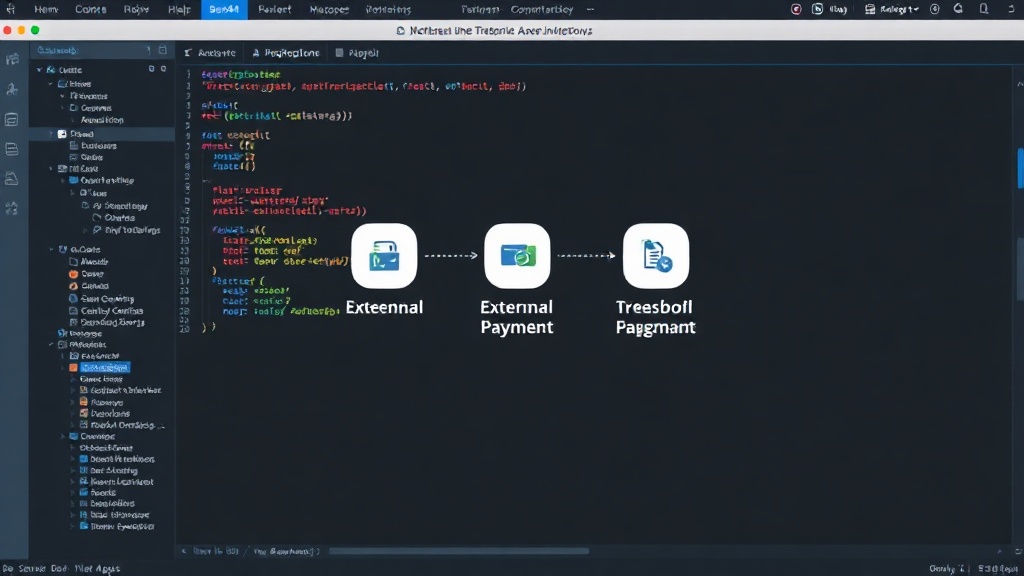
Fortunately, Base44 provides three documented integration points that allow developers to bypass these built-in restrictions and connect with any external payment API. These mechanics, while not explicitly designed for third-party payment gateway integration, can be leveraged to achieve this goal. This article details these three insertion points and how they can be tested to enable real-world payments in your Base44 application.
Integration Point 1: Webhooks
Base44 applications can receive event notifications from external services via webhooks. This is the most common and flexible method for integrating third-party payment gateways. When a payment event occurs in your chosen payment provider (e.g., a successful charge, a failed payment, a refund), the payment gateway sends a webhook notification to a designated URL within your Base44 app. Your app then processes this notification to update its internal state, such as marking an order as paid, initiating a refund process, or sending a confirmation email.
To implement this, you first configure your payment gateway to send webhooks to a specific endpoint in your Base44 application. This endpoint needs to be built to receive and parse the incoming JSON payload from the payment gateway. You'll need to handle potential security concerns, such as verifying the webhook signature to ensure it originates from the legitimate payment provider and not an attacker. Base44's backend logic can then trigger appropriate actions based on the received event data.
For testing, you can use tools like ngrok to expose your local development server to the internet, allowing the payment gateway to send test webhooks. Many payment providers also offer sandbox environments with test webhook functionality. This method is ideal for asynchronous payment confirmations and handling complex payment workflows.
Integration Point 2: External API Calls (Server-Side)
Your Base44 application can initiate API calls to external payment gateway services directly from its backend logic. This is useful for actions that require immediate server-to-server communication, such as creating a new customer, initiating a payment charge, or retrieving transaction details. Unlike webhooks, which are event-driven, this approach allows your application to proactively interact with the payment provider.
The implementation involves using Base44's server-side scripting capabilities to make HTTP requests to the payment gateway's API endpoints. You'll need to manage API keys and authentication securely, often storing them as environment variables within your Base44 project. The response from the API call can then be processed to update the application's state or provide feedback to the user.
Testing this integration point involves simulating API responses or using the payment gateway's test credentials and sandbox environment. Developers must be mindful of rate limits imposed by the payment gateway and implement robust error handling to manage network issues or API errors gracefully. This method is critical for initiating payments and managing payment lifecycles directly from your app.
Integration Point 3: External Forms and Redirects
For simpler payment flows, Base44 applications can leverage external forms or redirect users to a payment provider's hosted payment page. This method abstracts away much of the direct API integration complexity. When a user decides to make a payment, your Base44 app can dynamically generate an HTML form that includes all the necessary fields required by the payment gateway (e.g., amount, currency, customer details, a payment token). This form is then either displayed within an iframe or, more commonly, the user is redirected to the payment provider's secure checkout page.
Upon successful payment, the payment provider typically redirects the user back to a predefined success URL in your Base44 application, often including transaction details in the URL parameters or via a POST request. Conversely, a failed payment redirects the user to a failure URL. This approach offloads the PCI compliance burden to the payment gateway, as sensitive card details are never handled directly by your Base44 application.
Testing this involves ensuring the form is correctly constructed with all required parameters and that the redirect URLs (success and failure) are accurately configured in both your Base44 app and the payment gateway's dashboard. You'll need to simulate successful and failed payment scenarios to verify the user experience and the application's response to different outcomes. This is an excellent option for straightforward one-time payments where minimal backend interaction is needed post-transaction.
Considerations for Real-World Payments
While these three insertion points offer significant flexibility, integrating real payments requires careful planning. You must choose a payment provider that meets your business needs, supports your target markets, and offers competitive fees. Compliance with financial regulations, such as KYC (Know Your Customer) and AML (Anti-Money Laundering), is paramount. Oded, co-founder of UniPaaS, emphasizes that their own product, paas.build, is an FCA-authorised Payment Institution (No. 929994), highlighting the importance of regulatory adherence.
Furthermore, consider the user experience. A seamless payment flow, clear communication about transaction status, and robust error handling are crucial for customer satisfaction. Security cannot be overstated; always prioritize secure handling of API keys, webhook verification, and user data. By leveraging these Base44 integration mechanics, developers can unlock a world of payment possibilities beyond the platform's default offerings.