
Bambu Lab R1: A Leap Forward in Standalone Laser Cutting
Bambu Lab has established a reputation for pushing boundaries in the consumer 3D printing space, often by focusing on user experience and sophisticated motion control. With the introduction of the R1 laser cutter, the company appears to be applying this same philosophy to a new domain. The R1 isn't just another desktop laser engraver; it aims to be a complete, standalone solution that minimizes the usual setup headaches and complexity associated with these machines. Early indications suggest Bambu Lab has largely succeeded, creating a device that feels polished and integrated, a stark contrast to many of its competitors that often require significant tinkering and external software integration.
The core of the R1's appeal lies in its sophisticated motion system and a remarkably intuitive user interface. Unlike many laser cutters that rely on users to manually align materials, set parameters via external software, and troubleshoot complex G-code, the R1 aims to streamline this process. This focus on a seamless user experience is a hallmark of Bambu Lab's approach, and it appears to be a significant differentiator in the laser cutting market. The device is designed to be functional right out of the box, reducing the barrier to entry for creators and makers who might be intimidated by the technical demands of other machines.
Integrated Design and User Experience
Bambu Lab's mastery of motion systems, honed through their 3D printers, translates directly to the R1. The machine boasts a robust frame and precision linear rails, contributing to stable and accurate cuts and engraves. This mechanical precision is crucial for achieving high-quality results, whether you're etching intricate designs onto wood or cutting precise shapes from acrylic. The company’s commitment to a premium feel extends to the build quality, which is evident in the solid construction and the smooth operation of the moving components.
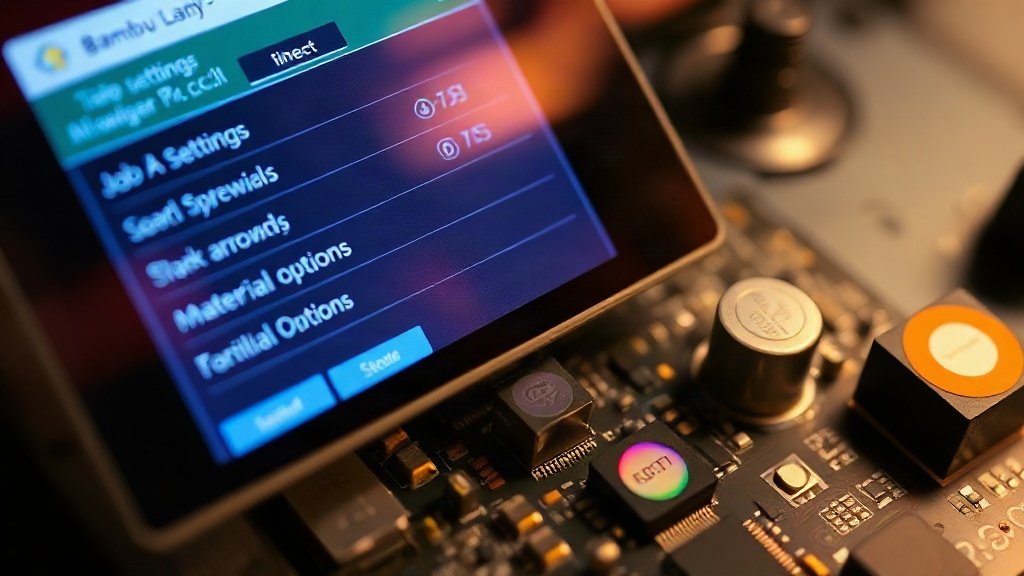
The user interface is perhaps the most striking aspect of the R1’s standalone capability. Bambu Lab has developed a user-friendly touchscreen interface that allows users to load designs, adjust settings, and initiate jobs directly from the machine. This eliminates the need for a constant connection to a PC or complex slicing software for basic operations. The UI is clean, responsive, and logically organized, making it accessible even for users new to laser cutting. This integrated approach simplifies the workflow significantly, allowing creators to focus on their designs rather than wrestling with technical configurations.
Performance and Capabilities
Under the hood, the R1 features a 10W laser module, suitable for a wide range of materials commonly used by hobbyists and small businesses. This includes wood, acrylic, leather, and various plastics. The machine is capable of both engraving and cutting, with the precision offered by the motion system ensuring detailed results for engraving and clean edges for cuts. While 10W is not the highest power available on the market, it strikes a balance between capability and safety for a desktop unit, providing enough power for most common applications without requiring extensive safety enclosures beyond what the R1 itself provides.
The R1’s onboard processing and storage mean that once a design is loaded, the machine can operate independently. This is a significant advantage for workflow efficiency, particularly in busy maker spaces or small workshops where a dedicated computer might not always be available or convenient. The ability to load designs via USB or Wi-Fi further enhances its flexibility, allowing users to prepare files remotely and then transfer them to the machine for immediate use.
Addressing the Competition
The laser cutter market, particularly at the consumer and prosumer level, has historically been dominated by machines that require considerable user expertise. Many popular models are essentially barebones hardware requiring users to source and integrate their own software solutions for design, control, and operation. This often involves a steep learning curve and a time-consuming setup process. Bambu Lab’s R1 directly challenges this status quo by offering a cohesive, integrated hardware and software experience.
The