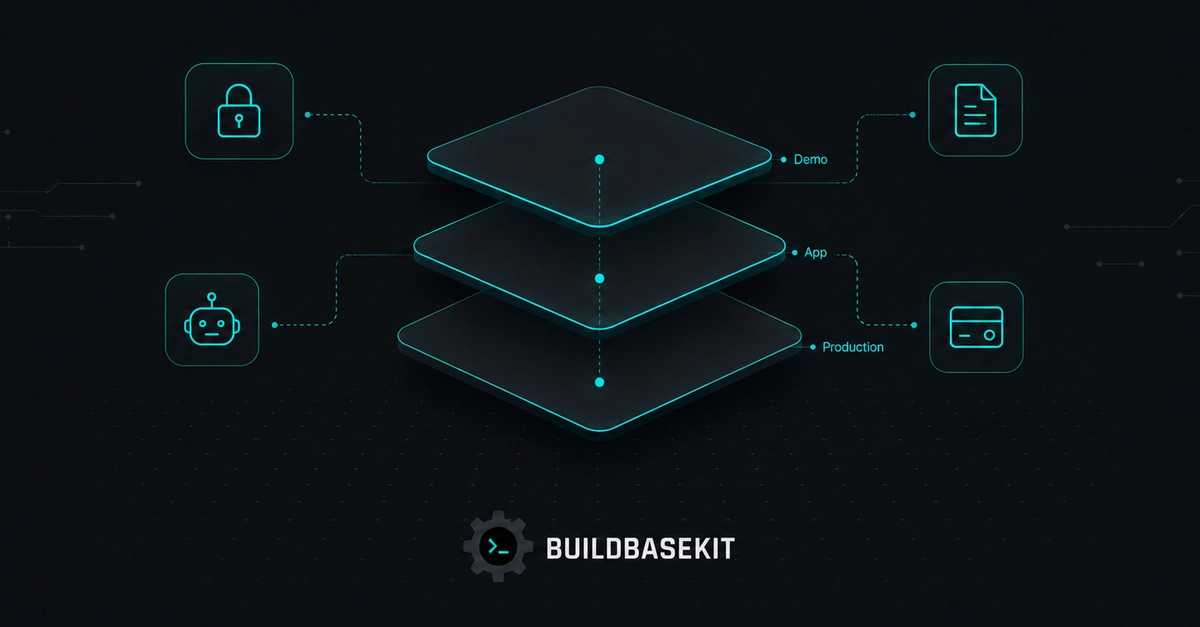
The Illusion of Simplicity: Beyond the First Endpoint
Most backend features appear deceptively simple when reduced to their most basic form: a single API endpoint. Think of it like building the front door to a house. Getting that door installed and functional might take a few hours. However, the real complexity of the house lies not in the door itself, but in the plumbing, electrical systems, foundation, and ongoing maintenance – the entire lifecycle. This is precisely the situation with backend development. The initial endpoint, whether it’s for authentication, file storage, payments, or a simple bot command, is often the easiest part.
Consider authentication. The first endpoint might handle a basic login request. But in production, this single function explodes into a constellation of requirements: token refresh and revocation, secure password reset mechanisms, granular permissions, multi-factor authentication (MFA), OAuth2 integrations, and robust session management. Each of these additions introduces new code, new potential failure points, and new security considerations. The initial login endpoint was a snapshot; the full authentication system is a living, breathing entity that requires constant attention.
Similarly, file storage starts with an upload endpoint. Production demands much more. You need to implement file validation to ensure integrity, ownership checks to enforce access controls, secure download mechanisms that don’t expose underlying storage, rich metadata management, strategies for storage migration as needs evolve, and safe, auditable deletion processes. Each of these is a mini-project in itself, extending far beyond the initial upload functionality.
Payments are notoriously complex, and the first checkout endpoint is merely the tip of a very large iceberg. Production systems require handling verified webhooks from payment gateways, implementing robust duplicate-event protection to avoid charging users twice, managing refund processes, building retry logic for failed transactions, tracking subscription states accurately, and performing regular reconciliation against financial records. These aren't minor additions; they are critical business functions that underpin revenue generation and user trust.
Even a simple Discord bot command listener, which might take an hour to set up for basic command execution, quickly escalates in complexity. Production bots need sophisticated routing to handle numerous commands, permission systems to control who can use what, scheduled jobs for recurring tasks, rate limiting to prevent abuse, flexible configuration options, and robust error isolation to ensure one command failure doesn't bring down the entire bot. The initial command listener is a single instruction; the full bot is an interactive service.
Three Levels of Backend Maturity
To better understand and evaluate backend infrastructure, it's useful to categorize its development and management into three distinct levels of maturity. This framework helps pinpoint where a system truly stands, moving beyond the surface-level functionality of its endpoints.
Level 1: The Endpoint
This is the foundational stage, characterized by the creation of the first, simplest iteration of an API endpoint. The focus is solely on making a specific piece of functionality work in isolation. Code is often written quickly, with minimal consideration for error handling, scalability, security beyond the absolute basics, or long-term maintainability. Testing might be limited to happy paths. While this level gets a feature off the ground, it’s not production-ready. It’s akin to writing a single line of code that performs a calculation without any context for its use or potential impact.
Level 2: The Feature Lifecycle
At this stage, developers begin to grapple with the realities of production. The focus shifts from the single endpoint to the entire lifecycle of the feature it represents. This involves adding essential capabilities that were overlooked in Level 1. For authentication, this means token refresh, password resets, and basic permissions. For file storage, it includes validation and ownership. For payments, it’s about handling webhooks and basic refunds. This level acknowledges that endpoints don’t exist in a vacuum. They are part of a larger system with user interactions, data persistence, and operational requirements. The code becomes more robust, with improved error handling, basic logging, and more comprehensive testing, including edge cases.
Level 3: The System Lifecycle
This is the pinnacle of backend maturity, where the focus expands from individual feature lifecycles to the overall system lifecycle. It encompasses everything from initial deployment and ongoing operation to maintenance, scaling, security auditing, and eventual decommissioning. Here, concerns like observability (monitoring, logging, tracing), automated deployments (CI/CD), infrastructure as code, advanced security measures (MFA, OAuth2), disaster recovery, performance optimization, and compliance become paramount. A Level 3 system is designed for resilience, scalability, and maintainability over the long term. It anticipates failures, adapts to changing demands, and is manageable by a team, not just its original author. This level treats the entire backend as a complex, interconnected organism that requires continuous care and strategic evolution.
The journey from Level 1 to Level 3 is where the true work of backend engineering lies. While the initial endpoint might be a few hours of code, building a robust, production-grade system capable of handling its full lifecycle can take months or even years of iterative development and refinement. Recognizing this distinction is crucial for setting realistic expectations, managing project scope, and ultimately delivering reliable and scalable software.