The Problem: AI Coding Assistants Lack Discipline
AI coding assistants excel at generating code snippets, but they falter when it comes to the fundamental engineering discipline required for robust software development. Left unchecked, these tools often leap directly into implementation without first addressing critical questions. They bypass the vital stages of understanding project scope, defining objectives, assessing risks, and planning architectural breakdown. This results in rapid code generation that frequently solves the wrong problem or creates technical debt due to a lack of upfront design thinking.
AWS's AI-Driven Development Life Cycle (AI-DLC) emerges as a direct response to this challenge. It is not a new tool or a paid service. Instead, AWS Labs has released AI-DLC as an open-source set of workflow rules designed to impose structure on AI coding agents. The core principle is to steer these AI assistants through a disciplined software development process, preventing them from operating in a 'freewheeling' manner. The methodology is delivered as a collection of markdown rules that existing coding agents can ingest and follow.
Methodology First: The Core Tenet of AI-DLC
AI-DLC's foundational philosophy is "methodology first." This approach prioritizes the established principles of software engineering over the raw output of AI. The entire framework is distributed as plain markdown files, making it accessible and adaptable. Developers can integrate these rules into their existing AI coding workflows without requiring new infrastructure or complex tooling. The rules are designed to prompt AI agents to engage in critical thinking, similar to a human developer, before writing code.
The AI-DLC process is envisioned to guide the AI through several key phases of the development lifecycle. Initially, it prompts the AI to clarify requirements and project goals. This stage mirrors the initial requirements gathering and analysis performed by human engineers. Instead of asking "write me a function to do X," the AI is guided to ask "what is the overall goal of this feature?" and "what are the edge cases we need to consider?"
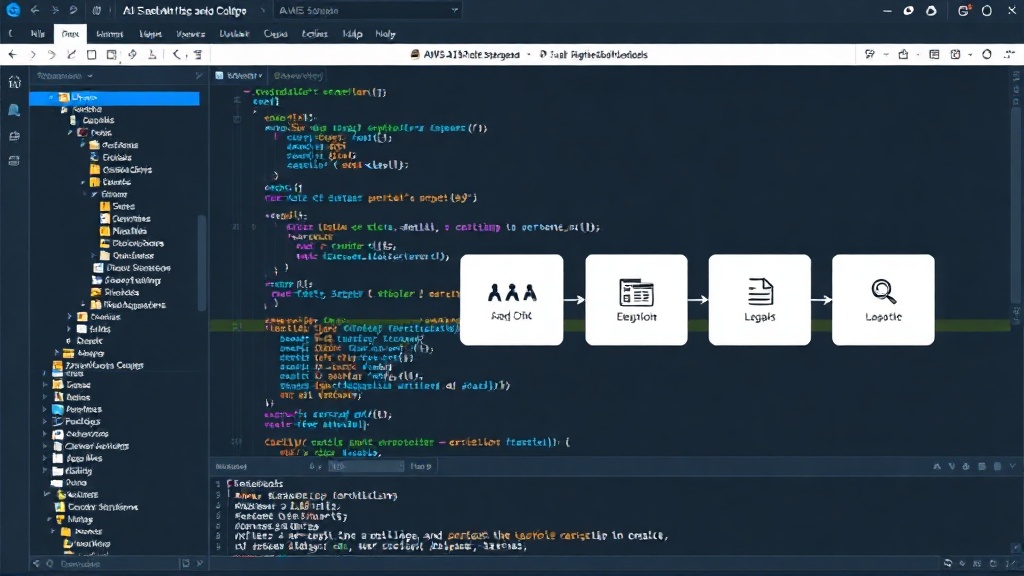
Following requirement clarification, AI-DLC directs the AI towards architectural considerations and task breakdown. This involves identifying potential modules, defining interfaces between them, and estimating the effort required for each component. This structured approach helps in creating a more modular and maintainable codebase. It also allows for better tracking of progress and identification of potential bottlenecks early in the development cycle.
Key Components and Workflow
While the specific rules are extensive, the general workflow AI-DLC encourages can be understood through its emphasis on structured decision-making. The process begins with an AI agent receiving a high-level development task. Instead of immediately generating code, the AI is prompted by the AI-DLC rules to:
- Clarify Objectives: Understand the user's intent and the business value of the requested feature or change.
- Define Scope and Requirements: Elicit detailed functional and non-functional requirements, including user stories, acceptance criteria, and performance expectations.
- Assess Risks and Constraints: Identify potential technical challenges, security vulnerabilities, performance bottlenecks, and any project-specific constraints.
- Break Down Tasks: Decompose the overall feature into smaller, manageable sub-tasks or modules, defining dependencies and order of execution.
- Design and Plan: Outline the high-level architecture, data structures, and algorithms required for each task.
- Implement and Test: Generate code for individual tasks, adhering to best practices and quality standards, followed by unit and integration testing.
- Review and Refactor: Analyze generated code for efficiency, readability, and adherence to design principles, performing necessary refactoring.
This structured approach mirrors a traditional, disciplined software development lifecycle, adapted for an AI-assisted environment. The markdown rules serve as prompts and checklists, ensuring that the AI doesn't skip critical steps. The output is not just code, but a development process that includes planning, design, and risk assessment.
The Impact on AI-Assisted Development
AI-DLC addresses a critical gap in current AI coding tools. By formalizing the development process, it aims to produce more reliable, maintainable, and aligned code. This methodology can help organizations leverage AI coding assistants more effectively, transforming them from mere code generators into partners in a disciplined engineering workflow. The implications are significant for teams looking to scale their development efforts while maintaining quality and reducing the risk of AI-generated code that misses the mark.
The surprising detail here is that AI-DLC is entirely methodology-driven, delivered as plain text rules. This open-source approach allows for broad adoption and customization. It suggests a future where AI coding assistants are not just about raw code output, but about how intelligently and systematically they can contribute to the entire software development lifecycle. It's less about the AI's ability to write a line of code, and more about its ability to follow a blueprint for building an entire application.
For developers, this means a more predictable and higher-quality output from AI tools. It encourages a more collaborative relationship with AI, where the AI assists in planning and design, not just coding. For engineering leaders, it offers a way to integrate AI into their teams without sacrificing established development practices or introducing uncontrolled technical debt. The goal is to augment human developers, not replace their critical thinking and architectural oversight.
Future Considerations
While AI-DLC provides a valuable framework, its effectiveness will ultimately depend on the ability of AI coding agents to interpret and adhere to the markdown rules consistently. The current generation of AI models is improving rapidly in understanding context and following instructions, but nuances in interpreting complex engineering principles might still pose challenges. What remains to be seen is how well these rules can be adapted to highly specialized domains or rapidly evolving technology stacks.