
AutonomyAI: Automating the Product Lifecycle
AutonomyAI has launched a new platform designed to automate and streamline the entire product development lifecycle. The ambitious goal is to enable product teams to "discover, plan, build, ship, repeat" with significantly reduced manual intervention. This move signals a growing trend towards AI-driven automation in software development, aiming to accelerate innovation cycles and improve efficiency.
The platform positions itself as a comprehensive solution, tackling key stages of product delivery that have historically been complex and time-consuming. By integrating various functions under a single umbrella, AutonomyAI seeks to break down silos between different development phases and foster a more cohesive workflow. The core promise is to allow teams to focus on strategic decision-making and creative problem-solving, rather than getting bogged down in the execution details.
Discover and Plan with AI Assistance
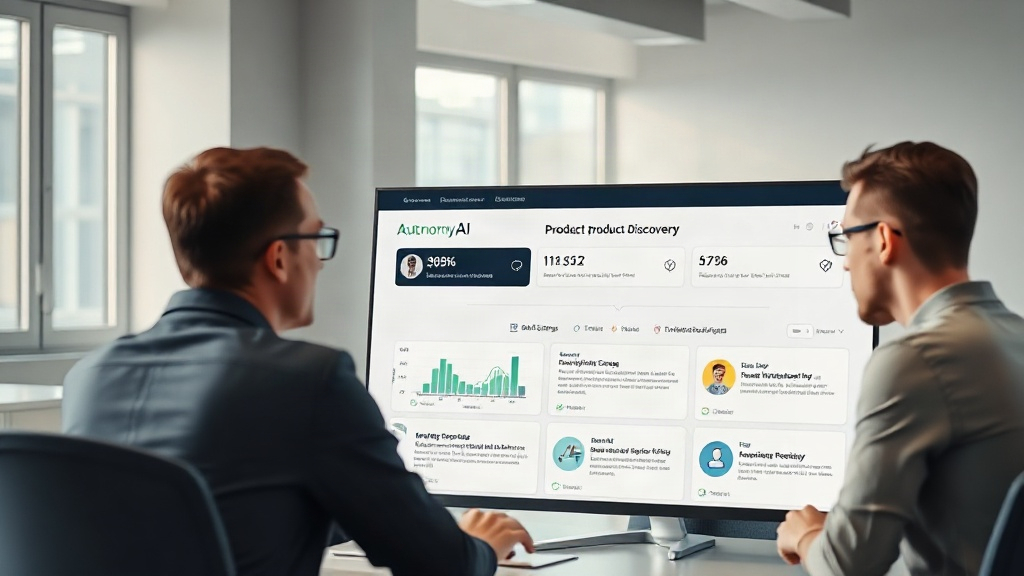
At the discovery phase, AutonomyAI leverages AI to analyze market trends, user feedback, and competitive landscapes. This helps product managers and teams identify potential opportunities and pain points more effectively. The platform aims to move beyond simple data aggregation by providing actionable insights that can inform product strategy. Think of it less like a raw data feed and more like a highly informed research assistant who has read every market report and user forum.
Following discovery, the planning stage is intended to be transformed by AI-driven roadmapping and prioritization tools. AutonomyAI suggests features and user stories based on the insights gathered, helping teams to build a backlog that is aligned with strategic objectives. The system aims to predict potential development challenges and estimate timelines, providing a more data-backed approach to project planning. This can help mitigate risks associated with scope creep and resource allocation.
Automated Building and Shipping
The most transformative aspect of AutonomyAI appears to be its approach to the build and ship phases. The platform is designed to translate planned features into actual code, or at least to significantly accelerate the coding process. While the specifics of how this is achieved are not fully detailed, it likely involves sophisticated code generation models, automated testing frameworks, and CI/CD pipeline integration. The aim is to reduce the time from concept to deployable artifact dramatically.
For the shipping phase, AutonomyAI integrates with deployment infrastructure, automating the release process. This includes managing environments, rolling out new versions, and monitoring performance post-deployment. The platform seeks to ensure that new features reach users quickly and reliably, with built-in mechanisms for rollback and incident management. This end-to-end automation is intended to create a continuous delivery loop, where the cycle of building and shipping can be repeated with minimal friction.
The Vision: Repeatable Innovation
The overarching vision of AutonomyAI is to create a system where the entire product delivery process becomes a repeatable, optimized cycle. By automating the more mundane and time-consuming tasks, product teams can dedicate more resources to innovation, experimentation, and strategic growth. This could allow companies to respond more rapidly to market changes and user demands, gaining a competitive edge.
However, the success of such a platform hinges on several factors. The accuracy and reliability of the AI in understanding complex product requirements and generating robust code are critical. Furthermore, the integration with existing development workflows and tools will be a significant challenge. The human element of product development – creativity, intuition, and nuanced user understanding – remains paramount, and it's unclear how AI can fully replicate or augment these aspects without introducing new complexities.
What remains to be seen is how AutonomyAI will address the potential for AI-generated code to introduce subtle bugs or security vulnerabilities that are harder to detect than those introduced by human developers. The platform's ability to maintain code quality and security across diverse projects will be a key differentiator.