
The Unseen Witness: Why Logs are Paramount in Autonomous Systems
When an autonomous system encounters an issue at 3 AM, and there's no human operator to intervene, the system's logs become its only witness. This isn't a theoretical concern; it's a production reality for those running multi-agent systems with minimal to no human in the loop for day-to-day decisions. A silent pipeline failure, where an error occurs without any outward indication, can lead to hours of lost work and corrupted data. This happened recently when a downstream agent attempted to act on non-existent data, the result of a six-hour autonomous workflow that had silently failed. The realization that the system had been operating under false pretenses, churning through tasks without producing valid output, underscores a fundamental truth: the log is not merely a record of an agent's actions; it is the bedrock of its integrity.
Structured logs in autonomous systems are not a luxury; they are the system's memory. Without them, understanding what transpired, why it failed, and how to correct it becomes an exercise in guesswork. Agent traces require correlation IDs that persist across handoffs between different agents. This ensures that a single logical operation, potentially spanning multiple agents, can be traced end-to-end. Silent failures are particularly insidious because they mask underlying problems, allowing autonomous processes to continue operating under incorrect assumptions. This undermines the very concept of self-healing, as healing logic relies on an accurate understanding of past events, not an idealized version of what *should* have happened.
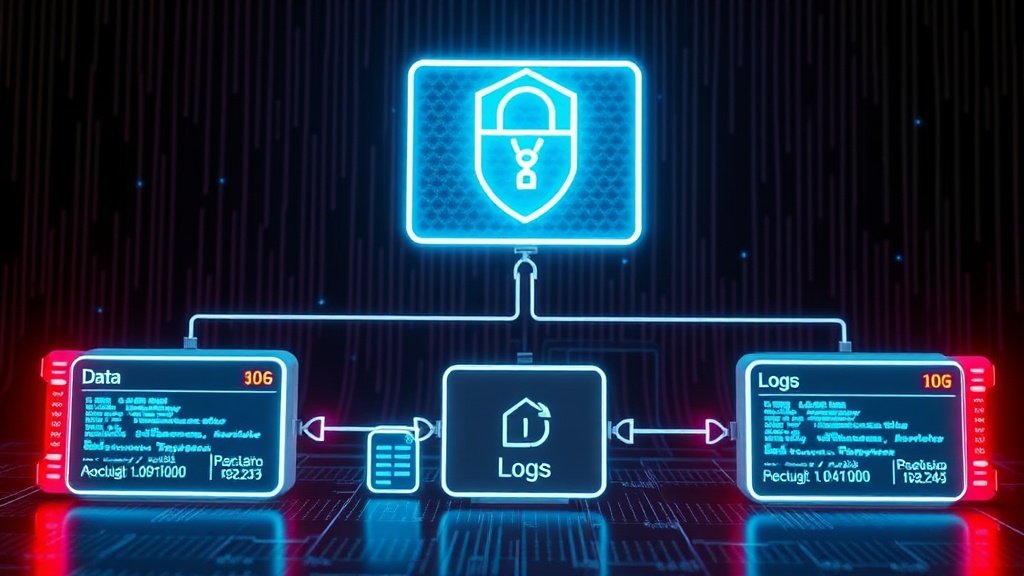
Structured Logging as System Memory
The concept of an agent's trace is often discussed in the context of debugging a single process. However, in a multi-agent system, each agent is a component in a larger, orchestrated workflow. When Agent A passes its output to Agent B, and then to Agent C, a failure in Agent B might not immediately halt the entire system. Agent C might proceed, attempting to process incomplete or malformed data from Agent B, leading to cascading errors or, worse, silent data corruption. This is where structured logging becomes indispensable. Each action, decision, and data transformation performed by an agent should be logged in a consistent, machine-readable format. This structured data serves as the system's persistent memory, allowing for post-mortem analysis and, crucially, enabling future iterations of the system to learn from past failures.
Think of it less like a simple error report and more like a detailed, chronological diary of the system's operations. Each entry in this diary must be timestamped, associated with a unique identifier for the task or workflow it pertains to, and contain sufficient context to understand the state of the system at that moment. This includes not just the inputs and outputs but also the parameters used, the intermediate states, and any decisions made by the agent. Without this level of detail, diagnosing a failure becomes like trying to reconstruct a complex event with only a few scattered, unlabeled photographs.
Correlation IDs: The Thread Through the Maze
A critical component of effective logging in multi-agent systems is the use of correlation IDs. When a request or a task is initiated, a unique ID is generated. This ID is then passed along with the data as it moves from one agent to another. If Agent A starts a process with `correlation-id: abc-123`, and then hands off to Agent B, Agent B must log its operations using the same `correlation-id: abc-123`. This creates a traceable thread through the entire workflow, regardless of how many agents are involved or how long the process takes. When a failure occurs, or when an anomaly is detected downstream, the system can use this ID to quickly retrieve all relevant log entries associated with that specific operation. This is far more efficient and reliable than trying to piece together events based on timestamps alone, especially in systems that operate concurrently or at high throughput.
The absence of robust correlation IDs is a common vulnerability in the design of multi-agent systems. Developers often focus on the internal logic of each agent, assuming that the handoff mechanism will implicitly manage context. However, in production, where agents might be retried, rescheduled, or even replaced, maintaining this contextual link is vital. A missed or corrupted correlation ID is akin to losing the thread of a conversation; the subsequent dialogue might be coherent in isolation but entirely disconnected from the original topic.
The Peril of Silent Failures and the Promise of Self-Healing
Silent failures are the bane of autonomous systems. Unlike a loud crash, which immediately alerts operators to a problem, a silent failure allows the system to continue executing, often producing incorrect or incomplete results. This can be far more damaging, as it might corrupt downstream data, lead to incorrect business decisions, or waste significant computational resources. The recent experience with a six-hour silent pipeline failure is a stark reminder of this danger. The system believed it was performing its tasks, but in reality, it was operating on faulty premises, and the output was essentially garbage.
Effective self-healing mechanisms depend entirely on the ability to accurately assess the system's state and past actions. If the logs are incomplete, inaccurate, or non-existent, the self-healing logic has no reliable data to work with. It cannot understand what went wrong, so it cannot implement the correct fix. For example, if an agent fails to produce a required output file, a self-healing system needs to know *why* it failed. Did it encounter an error? Was the input data invalid? Was there a resource constraint? Without detailed logs, the healing logic might simply retry the same operation, leading to the same failure, or attempt a fix that is inappropriate for the actual root cause.
Choosing the Right Backend for Your System's Memory
The choice of backend for storing these critical logs is as important as the logging strategy itself. For autonomous systems, an append-only audit log backend is often ideal. This ensures that once a record is written, it cannot be tampered with or deleted, preserving the integrity of the system's history. While traditional databases can be adapted, specialized solutions or even simpler, robust implementations can offer significant advantages. For instance, using a service like Supabase, which can be configured as an append-only log, provides a scalable, reliable, and cost-effective solution for storing the system's memory. Its ability to handle high write volumes and provide query capabilities makes it a surprisingly powerful, albeit often overlooked, option for this specific use case. The key is that the backend must be able to reliably capture and store every relevant event, ensuring that the system's