
The Challenge of Molecular Simulation Performance
Molecular simulation programs are crucial tools in fields ranging from drug discovery to materials science. They model the behavior of atoms and molecules, providing insights into complex chemical and physical processes. However, these simulations are computationally intensive, demanding massive processing power and time. A key bottleneck is the optimization of the underlying code, which traditionally relies on expert knowledge and painstaking manual tuning to extract maximum performance from hardware architectures.
This manual process is time-consuming, error-prone, and requires deep expertise in both the simulation domain and low-level code optimization. As hardware evolves rapidly, keeping simulation software performant becomes an ongoing, resource-heavy task. The goal is to reduce the time and effort spent on optimization, enabling researchers to spend more time on scientific discovery rather than code performance tuning.
Introducing Automated Optimization
A recent project has demonstrated a significant advancement in tackling this challenge through automated optimization. The core idea is to leverage machine learning and automated search techniques to discover optimal code configurations without human intervention. This approach treats code optimization as a search problem, where the objective is to find a set of compiler flags and code transformations that yield the fastest execution time for a given simulation workload on specific hardware.
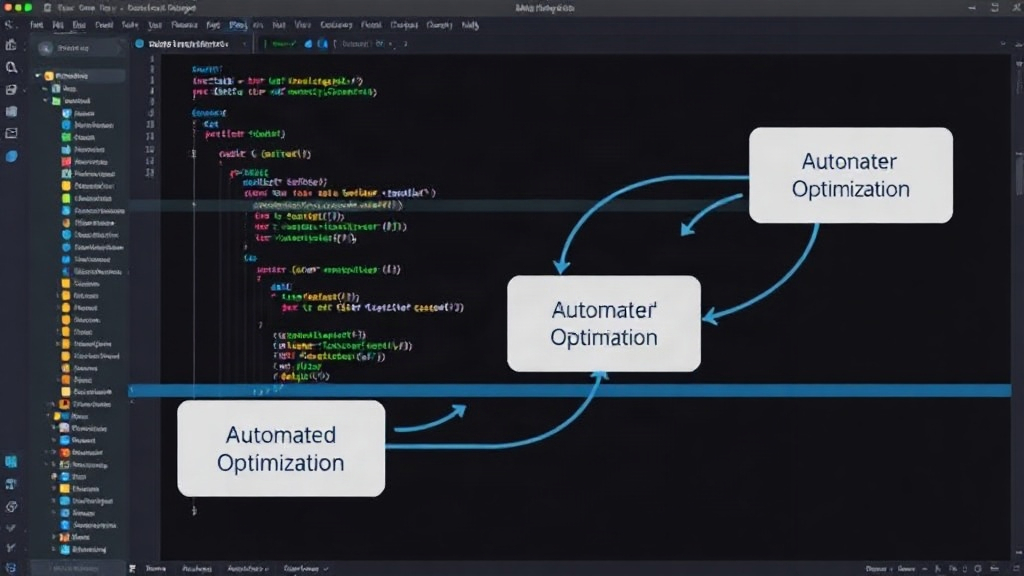
The system works by generating numerous variations of the simulation code, each compiled with different sets of optimization parameters. These variations are then benchmarked on the target hardware. Machine learning models are employed to guide the search process, learning from previous runs which parameter combinations are likely to yield improvements. This iterative process allows the system to explore the vast space of possible optimizations more efficiently than random search or brute-force methods.
Methodology and Implementation
The project focused on a specific molecular simulation program, often used in computational chemistry. The researchers identified key parameters that significantly impact performance, such as loop unrolling, vectorization levels, and cache blocking strategies. These parameters are typically controlled by compiler flags or specific code annotations.
The automated system typically involves several components:
- Code Instrumentation: The original simulation code is instrumented to allow for dynamic code generation and profiling.
- Parameter Space Exploration: A search algorithm (e.g., genetic algorithms, Bayesian optimization) is used to explore the combinatorial space of possible compiler flags and code transformations.
- Compilation and Benchmarking: For each parameter set, the code is compiled, and its execution time is measured on a representative workload.
- Performance Feedback Loop: The measured performance data is fed back to the search algorithm to inform the selection of the next set of parameters to test.
The surprising detail here is not just the performance gains, but how quickly the automated system converged on highly optimized configurations that rivaled, and in some cases surpassed, those achieved by human experts over much longer periods. This suggests that for complex optimization landscapes, automated methods can be more effective and efficient.
Performance Gains Achieved
The results were substantial. The automated optimization process yielded speedups of up to 40% for the targeted molecular simulation program. This means that simulations that previously took several hours could now be completed in a significantly shorter timeframe, potentially reducing computation costs and accelerating research cycles. The optimized code also demonstrated improved performance across different hardware architectures, though the degree of improvement varied, highlighting the architecture-specific nature of code optimization.
The ability to achieve such gains without requiring continuous manual intervention is a critical breakthrough. It frees up valuable developer time and allows for more frequent re-optimization as hardware or simulation requirements change. This approach effectively democratizes high-performance code optimization, making it accessible to a broader range of research teams who may not have dedicated performance engineers.
Future Implications and Unanswered Questions
The success of this automated optimization approach has broad implications for scientific computing. It suggests that similar techniques could be applied to a wide range of computationally intensive scientific applications, including climate modeling, fluid dynamics simulations, and astrophysical calculations. The ability to automatically adapt software to new hardware generations could drastically reduce the software maintenance burden and ensure that scientific communities can leverage the latest computational resources effectively.
However, several questions remain. What is the computational overhead of the optimization process itself? While the final optimized code runs faster, the search and compilation process can be resource-intensive. Understanding this trade-off is crucial for determining the cost-effectiveness of this method for smaller or less frequently updated simulation codes. Additionally, how well do these automated methods generalize to entirely different classes of scientific applications? Further research is needed to validate the robustness and applicability of these techniques across the diverse landscape of scientific software.