
The Challenge of Scaling SEO Content
Managing SEO content at scale presents a familiar hurdle: a growing spreadsheet of articles, each in a different stage of production. The manual tasks involved—pasting metadata into a CMS, setting canonical tags, updating internal links, and scheduling publication—become a significant bottleneck. This process, while seemingly straightforward, quickly devolves into a time-consuming operation that distracts from strategic content development. Automating SEO content publishing aims to eliminate these manual handoffs, transforming the content pipeline into a repeatable, efficient system.
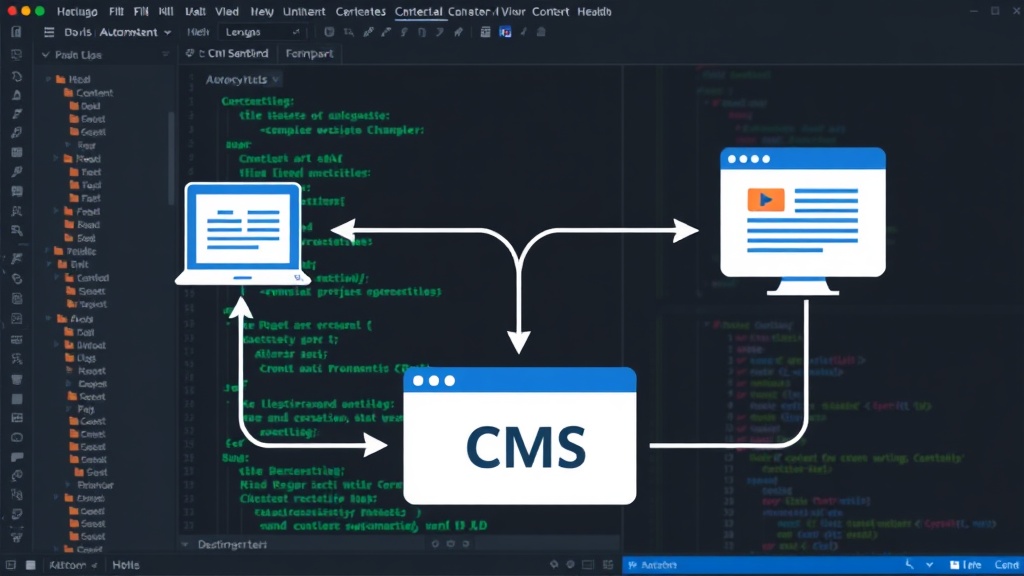
The core of this automation lies in integrating distinct tools and processes. It requires a Content Management System (CMS) with robust API access, a workflow orchestration layer, and standardized content templates. By connecting these elements, content can move seamlessly from an approved draft to a live, optimized webpage without human intervention at each micro-step. This integration is not about replacing human creativity but about freeing up valuable time currently spent on repetitive administrative tasks.
Connecting the Content Pipeline
The foundation of an automated SEO content publishing workflow is a CMS that exposes its functionality via an API. This allows external tools to interact with the CMS programmatically, enabling actions like creating new posts, updating metadata, setting categories, and scheduling publication. Popular choices like WordPress (with its REST API), headless CMS platforms (Contentful, Strapi), or even custom-built solutions can serve this purpose. The key is ensuring the API is well-documented and provides the necessary endpoints for content management.
Next, a bridge is needed to connect your content creation or management tools to the CMS API. This is where workflow automation platforms shine. Tools like Zapier or Make (formerly Integromat) offer visual interfaces to build automated workflows. You can set up triggers—such as a new row in a Google Sheet, a file upload to Dropbox, or an approval in a project management tool—that initiate a series of actions. These actions can include formatting content, fetching SEO metadata, and pushing it to the CMS via its API. For more complex or high-volume scenarios, a custom script written in Python, Node.js, or another suitable language might be more efficient and flexible. This script would interact directly with the CMS API, offering fine-grained control over the publishing process.
Structured Content Templates and SEO Fields
To ensure consistency and efficiency, structured content templates are crucial. These templates define the schema for your content, including standard fields for titles, body copy, featured images, and, critically for SEO, metadata. By pre-defining fields for meta titles, meta descriptions, slug generation, canonical URLs, and keyword focus, you ensure that essential SEO elements are always captured. This structured approach prevents omissions and standardizes how SEO data is handled across all content pieces.
When content is created or finalized, it should populate these structured fields. For instance, a content writer might fill out a dedicated section in a Google Sheet or a project management tool with the meta title, description, and target keywords. This data then becomes part of the information passed through the automation workflow. The workflow tool or script reads this data and maps it directly to the corresponding fields within the CMS template. This eliminates the need for a human to manually copy and paste this information, significantly reducing errors and saving time. Think of it less like a rigid form and more like a smart assistant that remembers all your SEO requirements for each piece of content.
The Automated Publishing Workflow in Action
Consider a typical workflow: A content writer finishes a draft and marks it as 'Ready for Review' in a project management tool like Asana or Trello. A trigger in Zapier detects this status change. Zapier then fetches the content, along with pre-defined SEO fields (meta title, description, keywords) that were also input by the writer or content manager. It formats the content, perhaps converting Markdown to HTML, and then uses the CMS API to create a new draft post. Simultaneously, it populates the meta title, meta description, and other SEO fields within the CMS. An editor then reviews the draft within the CMS. Upon approval, another trigger is activated, perhaps a status change to 'Approved for Publishing'. This triggers another automation step that schedules the post for publication at a pre-determined time or immediately publishes it. The canonical tag is automatically set based on the post's URL, and any necessary internal linking rules are applied programmatically or flagged for a quick manual check.
This end-to-end automation ensures that content flows from creation to publication with minimal manual intervention. It standardizes the publishing process, reduces the risk of human error, and frees up content managers and editors to focus on higher-value tasks such as content strategy, performance analysis, and creative ideation. The result is a more agile and efficient content operation capable of handling a larger volume of SEO-optimized content without compromising quality or workflow integrity.
Overcoming Workflow Breakage
The primary risk in automating such a critical process is workflow breakage. This can occur due to API changes, incorrect data formatting, or unexpected errors in the automation logic. Robust error handling and monitoring are therefore essential. Automation platforms often provide logs that can help diagnose issues. For custom scripts, comprehensive logging and alerting mechanisms are vital. Regularly testing the workflow, especially after any updates to the CMS or automation tools, is also a best practice. What nobody has addressed yet is how to build a fallback system that gracefully handles unexpected API deprecations without immediately halting all content publishing.
Furthermore, maintaining flexibility is key. While automation streamlines repetitive tasks, the need for manual overrides or adjustments should always be considered. Sometimes, a specific piece of content might require a unique publishing approach or a last-minute change that an automated system cannot anticipate. Building in points where a human can easily pause the automation, make manual adjustments, and then resume the process ensures that the system remains a tool to enhance, not hinder, the content team's ability to respond to dynamic needs.