The Solo Developer's Content Grind
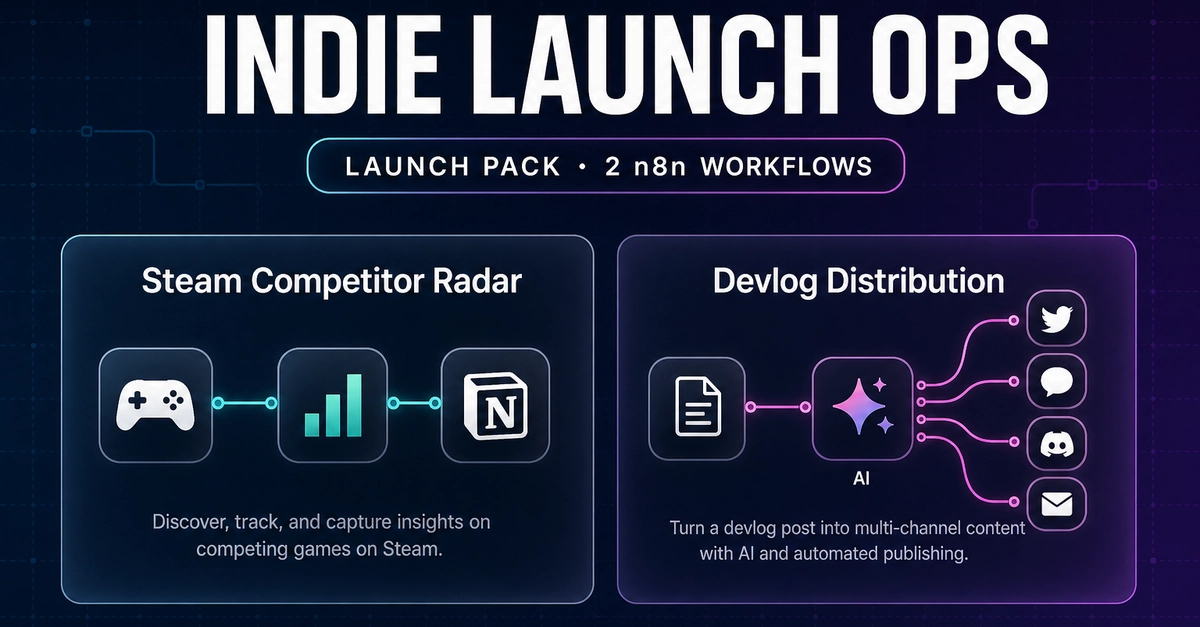
Solo game developers face a common, time-consuming challenge: updating their audience. After pouring hours into a new game build, the devlog is written. But the work isn't over. A single devlog post needs to be adapted for multiple platforms – a concise tweet, a more detailed Reddit post, a casual Discord announcement, and a newsletter snippet. The effort involved in rewriting the same core message for each channel often leads to developer burnout and inconsistent community engagement.
Shrisab Shrestha, a solo developer, has built a workflow to tackle this exact problem. By integrating n8n, Google Gemini, and Notion, Shrestha automates the creation of channel-specific drafts from a single devlog entry. The system doesn't auto-post; instead, it generates reviewed drafts within Notion, maintaining control and authenticity while respecting platform guidelines. This approach frees up developer time and ensures a consistent presence across their community channels.
Workflow Breakdown: From Devlog to Drafts
The core of this automation lies in a carefully constructed n8n workflow. When a developer pastes their devlog into a designated Notion page, the workflow kicks off a series of AI-powered transformations. The process ensures that the essence of the devlog is preserved while tailoring the message for different audience expectations and character limits.
Here's how the system works:
- Trigger: The workflow is initiated when new content is added or updated in a specific Notion database entry. This acts as the central repository for the original devlog.
- Content Extraction: n8n pulls the raw text of the devlog from Notion.
- AI Transformation (Google Gemini): The extracted text is then fed into Google Gemini. The AI is prompted to generate multiple versions of the devlog, each tailored for a specific platform:
- Twitter Draft: A short, punchy summary designed for Twitter's character limits, focusing on the most exciting update.
- Reddit Draft: A more detailed post, suitable for subreddits like r/gamedev or r/IndieGaming. This version aims for a conversational tone, avoiding overly promotional language.
- Discord Draft: A brief, casual announcement to be shared in community servers, often including relevant emojis or calls to action.
- Newsletter Blurb: A concise summary for email newsletters, designed to pique interest and drive traffic back to the full devlog or game page.
- Draft Storage (Notion): Once Gemini generates these drafts, n8n captures the AI's output and updates the original Notion entry or creates new linked entries. Each draft is clearly labeled by its intended platform. This allows the developer to easily review, edit, and copy-paste the content into the respective social media platforms.
The surprising detail here is not the use of AI for content generation, but its application in automating the *reformatting* and *tailoring* of content. Many developers might assume AI is for writing the initial draft, but Shrestha’s workflow leverages it for the tedious, repetitive task of adaptation. This frees the developer to focus on game creation and strategic community engagement rather than the mechanics of content repurposing.
Why This Matters Beyond Solo Devs
While built with solo game developers in mind, this workflow has broader implications for anyone managing multiple online presences with limited resources. Content creators, small marketing teams, or even individual project leads can benefit from such an automated approach. The principle of taking a core piece of information and efficiently adapting it for various communication channels is universally applicable.
Consider the traditional marketing funnel. A blog post or a press release serves as the central content piece. From there, marketers might create social media snippets, email excerpts, and website summaries. Automating this adaptation process, even with AI-assisted drafting, can significantly increase the reach and consistency of marketing efforts without a proportional increase in human workload. It’s like having a tireless junior marketing assistant who can take your core message and spin it into dozens of variations, ready for your final approval.
The choice of tools is also telling. n8n, an open-source workflow automation tool, offers a powerful alternative to proprietary solutions, appealing to developers who value control and transparency. Google Gemini provides the AI muscle, and Notion serves as a flexible, collaborative workspace for managing both the source content and the generated drafts. This combination offers a robust, cost-effective solution that can be customized to fit a wide range of content workflows.
The Human Element: Review and Authenticity
A critical aspect of Shrestha's workflow is the emphasis on human review. The system generates drafts, not final posts. This deliberate step ensures that the content remains authentic, aligns with the developer's voice, and adheres to the specific nuances and community norms of each platform. AI can be a powerful tool for drafting, but it lacks the lived experience and genuine connection that a human creator brings. By keeping the final posting decision with the developer, the workflow preserves the integrity of their community interactions.
This workflow highlights a mature understanding of AI integration. It doesn't aim to replace human creativity or judgment but to augment it, removing the drudgery and allowing creators to focus on what they do best. For any developer or creator who finds themselves spending more time crafting social media updates than building their project, this approach offers a tangible path to efficiency and sustained engagement.