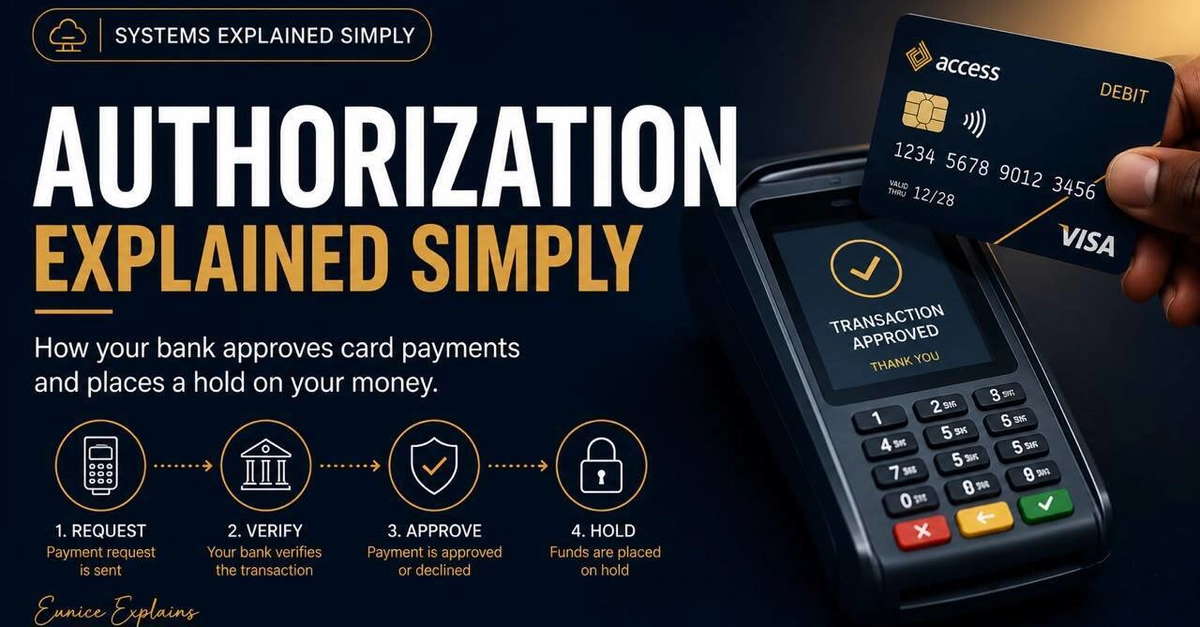
The Silent Scrutiny: What is Card Payment Authorization?
That satisfying 'Transaction Successful' message is the culmination of a lightning-fast, yet intricate, process. Most consumers see only the end result, a few seconds of digital waiting. However, beneath the surface, a distributed system comprising merchants, payment providers, payment switches, card schemes (like Visa and Mastercard), issuing banks, and sophisticated fraud detection systems works in concert. The fundamental question these entities must answer before any funds are exchanged is simple: Should this payment be approved? This critical decision point is known as authorization. It’s the first and most crucial stage in the card payment lifecycle, determining whether a transaction proceeds or is declined, all before a single cent changes hands.
Authorization is not about transferring money; that happens later. Instead, it's about verifying the validity of the transaction and ensuring the cardholder has sufficient funds or credit available. It’s a digital handshake, a complex negotiation happening in milliseconds across a global network. Think of it less like a cash transaction and more like a digital bouncer at a club, checking your ID and your name on the guest list before letting you in. The authorization system checks if you are who you say you are, if you’re allowed to be there (i.e., have sufficient funds), and if your presence poses any immediate risk.
The process begins when you present your card or card details to a merchant. This could be at a physical point-of-sale terminal, online via a checkout form, or through a mobile app. The merchant’s payment terminal or gateway captures your card information – the card number, expiry date, and sometimes a CVV or PIN. This data is then securely transmitted to the merchant’s acquiring bank or payment processor. This entity acts as the intermediary between the merchant and the wider payment network.
The Journey Through the Payment Ecosystem
From the acquiring bank, the authorization request embarks on a rapid journey through various networks. If the transaction is online, it might first pass through a payment switch, which routes the request to the appropriate card scheme. If it's a physical transaction at a chip-and-PIN terminal, the process is similar. The request is sent to the acquiring bank, which then forwards it to the relevant card network (Visa, Mastercard, American Express, etc.).
The card scheme acts as a central hub, directing the authorization request to the issuing bank – the financial institution that issued the card to the customer. This is where the decision to approve or decline ultimately lies. The issuing bank receives the request and performs several checks. The primary checks include:
- Cardholder Verification: Is the card valid? Is it expired? Is it reported lost or stolen?
- Account Status: Is the account in good standing? Are there any restrictions?
- Funds/Credit Availability: Does the cardholder have enough available balance or credit limit to cover the transaction amount?
- Fraud Detection: Sophisticated algorithms analyze the transaction in real-time. They consider factors like the transaction amount, location (is it unusual for this cardholder?), time of day, merchant type, and historical spending patterns. If the transaction flags as suspicious, it may be declined even if funds are available.
This entire sequence of checks happens within milliseconds. If all checks pass, the issuing bank sends an approval message back through the card network to the acquiring bank, and finally to the merchant. If any check fails, a decline message is sent. This is why you sometimes see a message like 'Declined by your bank' – the issuing bank made the call.
Authorization Holds: Why Your Money Disappears (Temporarily)
Once an authorization is approved, the issuing bank doesn't immediately deduct the funds from the cardholder's account. Instead, it places an authorization hold, also known as a pre-authorization or pending transaction. This is a temporary reservation of funds. For a debit card, this means the amount is marked as unavailable in your current balance. For a credit card, it reduces your available credit limit.
The purpose of this hold is twofold. Firstly, it guarantees to the merchant that the funds will be available when they eventually settle the transaction. This is crucial for merchants to confirm sales and manage their cash flow. Secondly, it ensures the cardholder doesn't overspend their available balance or credit limit during the time between authorization and final settlement. The hold remains in place until the merchant completes the transaction by submitting a settlement request, or until it expires (which can happen if the merchant never settles, or if the hold is for a service like a hotel stay where the final amount might differ).
When the merchant finally 'settles' the transaction – typically at the end of the business day or after fulfilling an order – they send a settlement request to their acquiring bank. This request includes the final transaction amount. The acquiring bank then communicates with the card scheme, which notifies the issuing bank. The issuing bank then converts the authorization hold into a final charge, moving the funds from the cardholder's account to the merchant's account (via the acquiring bank).
The speed of authorization is a marvel of modern computing and networking. It’s a testament to the engineering behind financial systems that billions of these micro-decisions are made daily without noticeable delay for the end-user. Yet, this complex dance of data packets and verification algorithms is almost entirely invisible, a silent guardian ensuring the integrity of every card payment.
The Unanswered Question: What About Authorization Failures?
While the system is remarkably robust, the complexity also means that failures, though rare, can occur. What nobody has fully addressed yet is the precise impact and mitigation strategies for cascading authorization failures in a highly interconnected financial ecosystem. If a key payment switch or a major issuing bank experiences a significant outage, how does the system gracefully degrade? What recourse do consumers have if they are unfairly declined due to systemic issues beyond their control, especially for essential purchases? The current focus is on optimizing successful authorizations, but a deeper dive into resilience and consumer protection during widespread authorization system anomalies is still needed.