
Aura: Bridging AI Agents and Code Repositories
The software development landscape is rapidly evolving with the integration of Artificial Intelligence. Developers are increasingly exploring AI coding assistants, but managing these agents, their outputs, and integrating them into established workflows remains a significant challenge. Aura, a new Integrated Development Environment (IDE), aims to solve this by directly embedding AI agent control alongside Git version control and an "intent-driven" paradigm.
At its core, Aura positions itself as an IDE built for controlling AI coding agents. Traditional IDEs focus on human-written code, offering features like syntax highlighting, debugging, and version control integration. Aura extends this by bringing AI agents into the fold, allowing developers to define, direct, and manage AI-generated code within the same environment where they manage their human-authored projects.
The key innovation lies in Aura's approach to agent interaction. Instead of treating AI outputs as final, Aura encourages developers to define their intent. This means articulating the desired outcome or functionality at a higher level, allowing the AI agent to work towards that goal. This intent acts as a guiding principle for the agent, making its contributions more predictable and aligned with the project's objectives.
Think of it less like asking a junior developer to "write a function" and more like briefing a senior architect on the system's overall goal. The architect then breaks down the problem, proposes solutions, and iterates based on feedback. Aura aims to bring this level of structured interaction to AI agents, moving beyond simple code generation to intelligent collaboration.
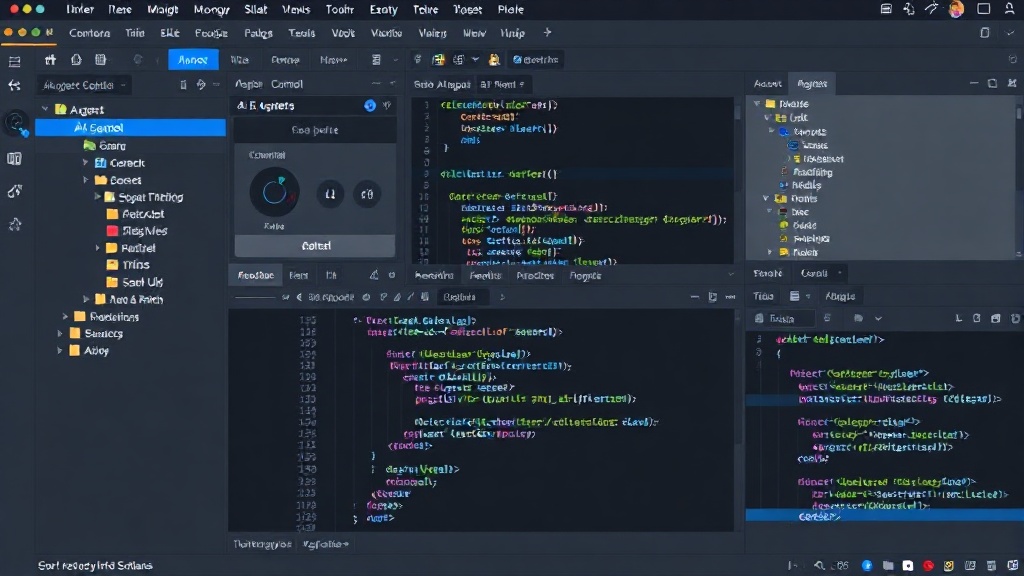
Intent-Driven Development with Git Integration
Aura's "intent-driven" philosophy is deeply intertwined with its Git integration. Version control is the bedrock of modern software development, providing a history, a means of collaboration, and a safety net. Aura brings AI-generated code under this umbrella from the outset.
When a developer defines an intent, Aura's agents can act upon it. This might involve generating new code, refactoring existing code, writing tests, or even identifying bugs. Crucially, these actions are not just dumped into a file; they are managed as distinct commits or branches within the Git repository. This allows developers to:
- Track AI contributions: See exactly what code the AI generated, when, and in response to which intent.
- Review and approve: Treat AI-generated code like any other code change, subject to human review and approval before merging.
- Roll back changes: If an AI's contribution introduces issues, reverting to a previous stable state is straightforward via Git.
- Collaborate effectively: Multiple developers can work with AI agents on the same codebase, with Git managing the integration of their respective contributions.
This tight integration transforms AI agents from black boxes into transparent collaborators. The developer remains in control, using Git as the arbiter of changes. The "loops" mentioned in Aura's description likely refer to iterative development cycles where an intent is defined, an agent acts, the developer reviews, provides feedback, and the agent refines its work. This loop is fundamental to achieving desired outcomes with AI.
The Loop: Iterative AI Collaboration
The concept of "built-in loops" is central to Aura's value proposition. AI coding agents, while powerful, often require multiple iterations to produce code that meets specific requirements. Aura facilitates these loops by providing the necessary tools within the IDE.
A typical workflow might look like this:
- Define Intent: The developer specifies a high-level goal. For example, "Implement user authentication using OAuth 2.0 with Google as the provider, ensuring secure token handling."
- Agent Action: An Aura agent processes this intent and generates initial code, potentially creating a new branch in Git.
- Review & Feedback: The developer reviews the generated code. They might find it doesn't handle edge cases correctly or uses an outdated library. They provide specific feedback, perhaps by editing the code directly or adding comments.
- Agent Refinement: The agent receives the feedback and revises the code, committing the changes to the same branch.
- Iteration: This process repeats until the developer is satisfied with the code and merges it into the main branch.
This structured approach is a significant departure from simply copy-pasting AI-generated snippets. It embeds the AI into the disciplined, auditable process of software development. The IDE acts as the control panel, Git as the ledger, and the defined intent as the compass.
What Aura Means for Developers and the Future of Coding
Aura's approach directly addresses the growing pains of AI in software development. By treating AI agents as first-class citizens within the IDE and connecting them directly to Git, it brings much-needed structure and control to AI-assisted coding.
For developers, this means:
- Increased Productivity: Automating repetitive tasks, generating boilerplate code, and assisting with complex logic can significantly speed up development cycles.
- Better Code Quality: The ability to iterate with AI, review its contributions, and leverage Git's safety net can lead to more robust and maintainable code.
- Empowered AI Collaboration: Developers gain more agency in directing AI, rather than passively accepting its output. The intent-driven model ensures alignment with project goals.
The surprising detail here is not the existence of AI coding agents, which are becoming commonplace, but the explicit focus on integrating them into the core mechanics of version control and structured intent definition. Aura is building a framework that acknowledges AI as a partner in development, not just a tool.
What nobody has addressed yet is the long-term impact on developer skill sets. As AI agents become more capable of handling complex coding tasks, will developers shift their focus further towards architectural design, intent definition, and high-level problem-solving? Aura's architecture suggests this is the direction development teams will need to head.
Ultimately, Aura aims to make AI coding agents more useful and less disruptive. By grounding their operation within the familiar and robust framework of Git and an intent-driven workflow, it offers a compelling vision for the future of collaborative software development.