%22%20%2F%3E%0A%20%20%3C%2Fsvg%3E)
Understanding ATProto's Architecture
ATProto, the protocol powering Bluesky, represents a significant shift in how decentralized social applications can be built. It's not just another social media platform; it's a foundational layer designed for interoperability, user control, and developer flexibility. At its core, ATProto is a set of open protocols that allow anyone to create social experiences, manage their identity, and host their data independently. This approach contrasts sharply with traditional social networks where data is siloed and controlled by a single entity.
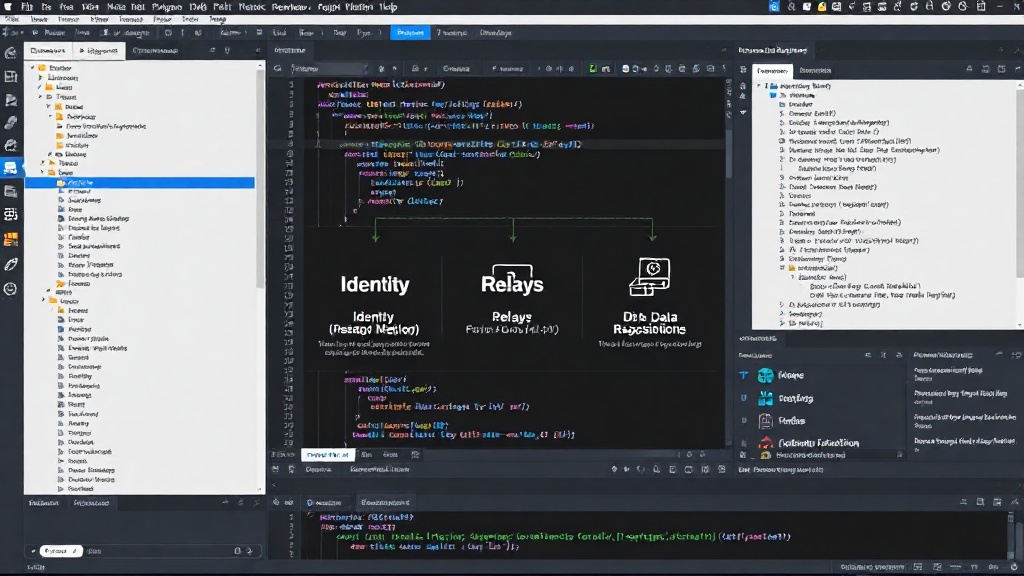
The protocol is structured around several key components: the Identity service, the Relays, and the Data Repositories. The Identity service, managed by the Bluesky team, currently handles the initial account creation and DID (Decentralized Identifier) resolution. However, the long-term vision is for this to become fully decentralized. Relays are servers that aggregate and serve data from user repositories to clients, enabling real-time social feeds. Developers can run their own relays, customizing the data they serve and how it's presented. Finally, user Data Repositories are where users store their social graph, posts, and other content. These repositories are append-only logs, ensuring data integrity and providing a historical record that can be queried and processed.
The protocol leverages JSON for data representation and HTTP for communication, making it accessible to a broad range of developers. Unlike some decentralized systems that require deep cryptographic expertise or specialized infrastructure, ATProto aims for a more familiar developer experience. This focus on developer ergonomics is crucial for fostering a vibrant ecosystem of third-party applications and services.
Core Concepts for Developers
Building on ATProto requires understanding a few fundamental concepts. The first is the concept of a DID (Decentralized Identifier). Each ATProto account is associated with a DID, a globally unique identifier that is not issued by a central authority. This DID is the anchor for a user's identity across the ATProto network. Users can have multiple DIDs, and each DID can be linked to multiple services, offering a high degree of identity flexibility.
Next is the notion of Records. All data on ATProto is stored as records within a user's repository. These records are signed by the user's private key, ensuring authenticity and integrity. Common record types include posts (often referred to as 'posts' or 'algos' in the context of ATProto), profile information, and social graph connections (follows, likes, etc.). The structure of these records is defined by App Views and Record Types, which are essentially schemas that dictate the format and fields of the data.
App Views are crucial for how clients consume data. They are essentially curated, aggregated views of the raw data in user repositories. A relay server might expose an App View for a user's timeline, which combines posts from people they follow, their own posts, and potentially algorithmically curated content. Developers can define their own App Views to serve specific data needs for their applications. This abstraction layer allows clients to interact with a more digestible and application-specific data format without needing to parse raw repository logs directly.
Practical Steps for Building Applications
Getting started with ATProto development involves setting up your environment and understanding the available tools. The primary tools are the ATProto SDKs, available for various languages including JavaScript, Python, and Swift. These SDKs abstract away much of the complexity of interacting with the ATProto API, allowing developers to focus on building application logic.
The first step for any application is to authenticate with the ATProto network. This typically involves obtaining an access token for a user account. For client applications, this is usually done through a user-facing authentication flow where the user grants permission to the app to act on their behalf. For server-side applications or bots, you might use a service account or a specific user's credentials.
Once authenticated, developers can perform various actions:
- Posting Content: Creating new records, such as text posts, images, or other media. This involves constructing the record data according to the defined record type and then submitting it to the ATProto API for inclusion in the user's repository.
- Following Users: Creating follow records to establish social graph connections.
- Interacting with Posts: Liking, reposting, or replying to existing posts. These actions are also represented as records.
- Querying Data: Fetching data from App Views or directly from user repositories. This allows applications to display timelines, user profiles, and other social data.
A key consideration for developers is whether to run their own relay server. Running a relay provides maximum control over data aggregation and presentation. It allows developers to build highly customized feeds, implement unique recommendation algorithms, or serve data in formats optimized for their specific application. However, it also introduces operational overhead. For simpler applications, leveraging existing public relays or building clients that query user repositories directly might be sufficient.
The Future of ATProto Development
ATProto is still evolving, and its decentralized nature means that the ecosystem will grow organically. Developers are encouraged to contribute to the protocol’s development by building tools, libraries, and applications that demonstrate its capabilities. The open-source nature of ATProto means that transparency and community input are paramount. As more developers experiment with ATProto, new patterns and best practices will emerge.
One of the most exciting aspects of ATProto is its potential for innovation in social media. By decoupling identity, data storage, and application logic, ATProto enables a new generation of social applications that are more resilient, user-centric, and customizable. This could lead to a diversification of social experiences beyond the monolithic platforms that dominate today. The ability for anyone to spin up a custom relay or build a client that interacts with any user's data opens up possibilities for niche communities, specialized social graphs, and novel forms of online interaction.
For developers, this means an opportunity to build on a foundational technology that prioritizes user freedom and data ownership. The challenges lie in navigating the early-stage nature of the protocol and contributing to its maturation. The community is actively working on improving documentation, tooling, and standardization, making it an opportune time to get involved. The long-term success of ATProto hinges on its ability to attract and empower a diverse range of developers to build the decentralized social web of the future.