ASRock's Bold Entry into the AIO Cooling Market
ASRock, a brand long associated with motherboards and graphics cards, has made a significant debut in the competitive All-In-One (AIO) liquid cooling market. The company has launched two new models: the Phantom Gaming 360 LCD and the Steel Legend 360 LCD. Both AIOs feature a 360mm radiator and a distinctive LCD screen integrated into the pump housing, signaling ASRock's intent to compete not just on performance but also on aesthetics and user experience. This move into a mature market segment, dominated by established players, requires a product that can stand out. ASRock appears to have achieved this with their initial offerings, demonstrating a surprisingly strong performance right out of the gate.
Design and Features: More Than Just Pretty Screens
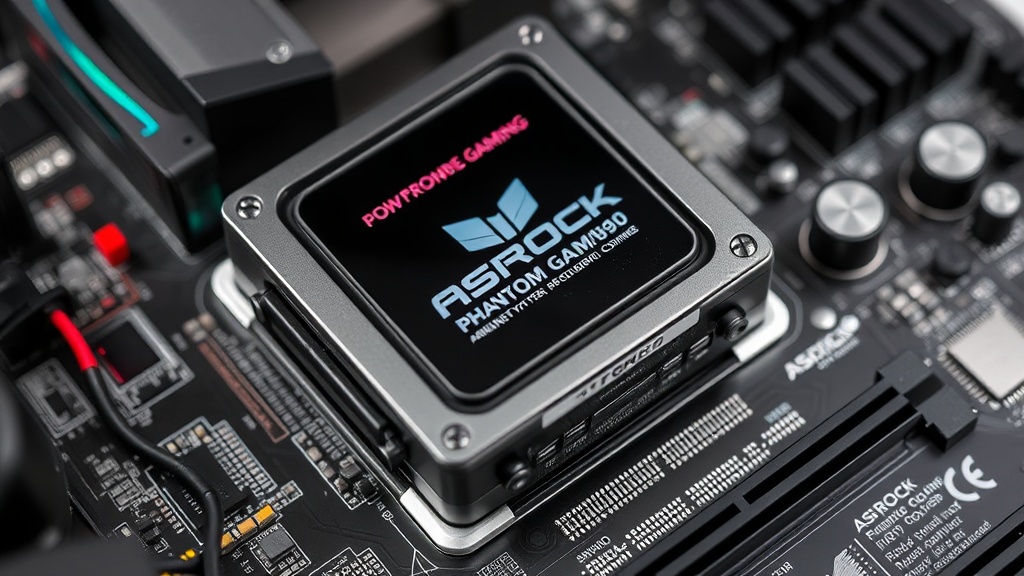
The most eye-catching feature of both the Phantom Gaming and Steel Legend 360 LCD models is the integrated LCD screen on the pump. This screen is not merely decorative; it serves as a dynamic display for system information. Users can monitor real-time CPU temperature, fan speed, pump speed, and even display custom images or animations. The accompanying software allows for easy customization of these displays, turning a functional component into a personalized visual element for a PC build. This level of customization is a significant draw for builders who aim for unique and highly personalized systems. The design language of both models also reflects their respective branding. The Phantom Gaming variant sports a more aggressive, gamer-centric aesthetic, while the Steel Legend offers a cleaner, more understated look suitable for a wider range of builds. Both utilize a triple-fan setup on a 360mm radiator, a standard configuration for high-performance AIOs, ensuring ample surface area for heat dissipation.
Thermal Performance: Putting the Coolers to the Test
To assess the efficacy of ASRock's cooling solutions, rigorous testing was conducted using AMD's high-end Ryzen 9 9950X3D processor. This powerful CPU, known for its thermal demands, serves as an excellent stress test for any cooling hardware. The results indicate that ASRock's debutants are more than capable of handling demanding workloads. Under load, the AIOs managed to keep the Ryzen 9 9950X3D temperatures well within acceptable limits, outperforming some established competitors in direct thermal benchmarks. The fans, while effective, also maintain a reasonable noise profile, a crucial balance for any high-performance cooling solution. The pump also operates quietly, contributing to an overall less intrusive user experience compared to some louder AIOs on the market. The combination of efficient heat dissipation from the 360mm radiator and the optimized fan and pump speeds contributes to this impressive thermal performance. It's clear that ASRock didn't just focus on the visual appeal of the LCD; they invested heavily in the core cooling mechanics.
Software and User Experience: Intuitive Control
The user experience with ASRock's AIOs is significantly enhanced by their dedicated software suite. This software provides comprehensive control over the LCD display, fan curves, and pump speeds. The interface is generally intuitive, allowing users to easily select display modes, upload custom images, and set custom fan profiles based on temperature thresholds. The ability to create detailed fan curves is particularly important for users who want to fine-tune their system's acoustics and thermal performance. For instance, a user might want fans to ramp up aggressively only when CPU temperatures exceed a certain point, while remaining nearly silent during idle or light workloads. The software's ease of use for the LCD customization means that users can quickly personalize their rig without a steep learning curve. This thoughtful integration of hardware and software is a hallmark of a product designed with the end-user in mind, moving beyond mere functionality to offer a more engaging and tailored PC building experience.
What This Means for the Market and Future Builds
ASRock's entry with the Phantom Gaming and Steel Legend 360 LCD AIOs signals a new level of competition in the enthusiast PC cooling segment. The company has not only matched the performance of many established brands but has also introduced compelling features like the customizable LCD screen at a competitive price point. This challenges existing manufacturers to innovate further, potentially driving down prices or leading to the integration of similar display technologies across more products. For PC builders, this means more choices and potentially better value. The focus on both performance and aesthetics caters to a growing segment of the market that views PCs as a form of personal expression. These ASRock AIOs are well-positioned to become a popular choice for those looking to build a visually striking and thermally sound system. The success of these initial models will likely pave the way for ASRock to expand its cooling product line, potentially introducing more sizes and feature sets in the future.