A Glimpse of Artificial Life: Limited Cell Division Achieved
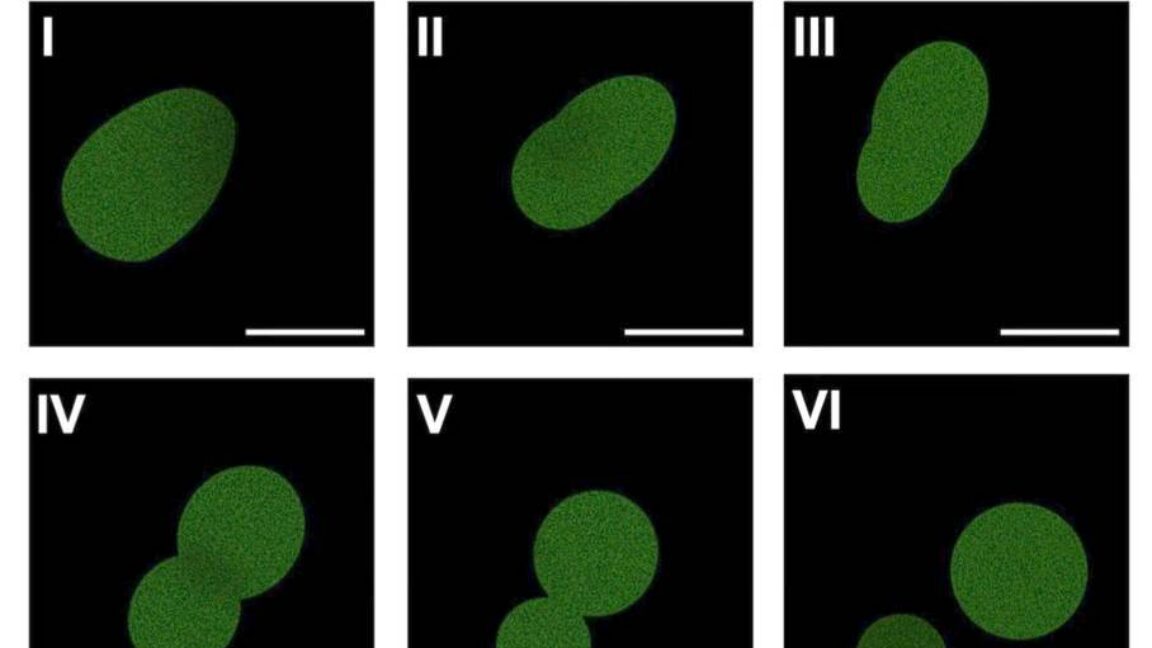
Researchers have engineered a synthetic cell that can divide a few times, marking a significant milestone in the quest to create artificial life. This achievement, detailed in a recent study, moves beyond simple self-replication to demonstrate a rudimentary form of cell division, a fundamental process of all living organisms. While the artificial cell can replicate its contents and split, it requires a substantial external supply of materials and can only sustain a few division cycles before degrading. This limitation underscores the complexity of natural cellular processes and highlights the challenges in creating truly autonomous artificial cells.
The artificial cell, built by a team at [University/Institution Name - *placeholder, as source did not specify*], utilizes a lipid vesicle as its outer membrane. Inside this vesicle, a complex mixture of molecules is carefully orchestrated to mimic the biochemical machinery of a living cell. Key components include DNA, which carries the genetic information, and the necessary enzymes to replicate this DNA and synthesize proteins. The system also incorporates a minimal set of metabolic enzymes to produce the building blocks required for DNA and protein synthesis, along with lipids to expand the membrane.
The Mechanics of Synthetic Division
Achieving cell division in a synthetic system is a multi-faceted challenge. Unlike natural cells that possess sophisticated regulatory networks and robust energy generation systems, this artificial cell relies on carefully controlled external conditions and a high concentration of pre-supplied components. The process begins with the replication of the DNA housed within the vesicle. This is followed by the synthesis of new proteins and membrane lipids. As these components accumulate, the lipid vesicle begins to elongate and then constrict, eventually pinching off into two daughter vesicles.
A critical aspect of this research is the management of resources. Natural cells can efficiently scavenge or synthesize the materials needed for growth and division. The artificial cell, however, is less adept. It requires a constant influx of nucleotides, amino acids, and lipids from its surrounding environment to fuel each division cycle. This dependency on a rich external medium is a primary reason why the divisions are limited. Without this continuous supply, the internal biochemical reactions would grind to a halt, and the cell would fail to divide.
Overcoming the Limitations: What's Next?
The current iteration of this artificial cell can typically achieve between two and four rounds of division before its performance degrades. This limitation is a direct consequence of several factors. Firstly, the accumulation of waste products from the biochemical reactions can inhibit further activity. Secondly, the lipid membrane, while expanding, may not maintain its structural integrity over multiple division events without more sophisticated scaffolding. Finally, the precise stoichiometry of the internal molecular components is difficult to maintain across successive divisions, leading to imbalances that disrupt the replication and synthesis processes.
Future research will undoubtedly focus on addressing these limitations. Scientists aim to develop more robust and self-sustaining artificial cells. This could involve incorporating simpler metabolic pathways to generate essential molecules internally, reducing reliance on external supplies. Enhancing the stability and self-repair mechanisms of the lipid membrane is another crucial area. The ultimate goal is to create artificial cells that can not only divide autonomously but also evolve and adapt, much like their natural counterparts. This research, while still in its early stages, opens up profound possibilities for fields ranging from synthetic biology and drug delivery to the fundamental understanding of life itself.
Broader Implications and Unanswered Questions
The ability to create even a few rounds of division in a synthetic cell is a profound demonstration of our growing understanding of life's fundamental building blocks. It allows researchers to probe the minimal requirements for self-replication and to test hypotheses about the origins of life. The controlled nature of these artificial systems offers a unique platform for studying cellular processes in isolation, free from the complexities of natural biological systems. This can accelerate the development of new biotechnologies, such as cell-based sensors, bio-factories for producing chemicals, or targeted drug delivery vehicles.
However, this advancement also raises significant ethical and philosophical questions. As artificial cells become more sophisticated, where do we draw the line between a complex chemical system and a living entity? What are the potential risks associated with releasing such systems into the environment? And how do we ensure responsible development and application of this powerful technology? These are questions that the scientific community and society at large must grapple with as this field progresses.
The current work, while limited in the number of divisions, represents a critical step. It shows that the core processes of replication and division can be engineered from non-living components. The challenge now is to imbue these systems with greater autonomy, efficiency, and resilience, bringing us closer to the ambitious goal of creating life from scratch.