Stealthy Power: The Arctic Senza AI 370 Unveiled
Arctic, a company known for its cooling solutions, has entered the mini PC arena with the Senza AI 370. This fanless machine is designed for users who prioritize a silent, clutter-free workspace, mounting discreetly under a desk. At its heart lies AMD's Strix Point APU, promising capable everyday performance without the noise of active cooling. This design choice immediately positions the Senza AI 370 as a compelling option for home offices, media centers, or any environment where acoustics are paramount.
The absence of fans is the standout feature. This is not merely an aesthetic choice; it's a fundamental design principle aimed at eliminating a common source of distraction and potential failure. For professionals who spend hours at their desk, the silence can be a genuine productivity booster. Furthermore, fanless designs typically require less maintenance, as there are no dust-clogged fans to clean. This makes the Senza AI 370 an attractive proposition for those seeking a low-maintenance computing solution.
Performance Without the Whine
Under the hood, the Arctic Senza AI 370 leverages AMD's Strix Point APU. While specific configurations can vary, this APU is designed to deliver a strong balance of CPU and integrated graphics performance suitable for a wide range of tasks. For general productivity, web browsing, office applications, and even light content creation, the fanless design does not appear to be a bottleneck. Tom's Hardware's review indicates that everyday performance remains unhindered, a crucial point for a machine intended for daily use.
A notable aspect of the Senza AI 370's configuration is its soldered dual-channel 32GB LPDDR5X-8000 RAM. In a market that has recently experienced RAM shortages, having a generous 32GB of fast LPDDR5X memory pre-installed is a significant advantage. This ample RAM capacity ensures smooth multitasking and provides headroom for more demanding applications. The LPDDR5X standard, with its high operating frequency of 8000MHz, further contributes to the system's responsiveness, allowing the integrated graphics to access data quickly.
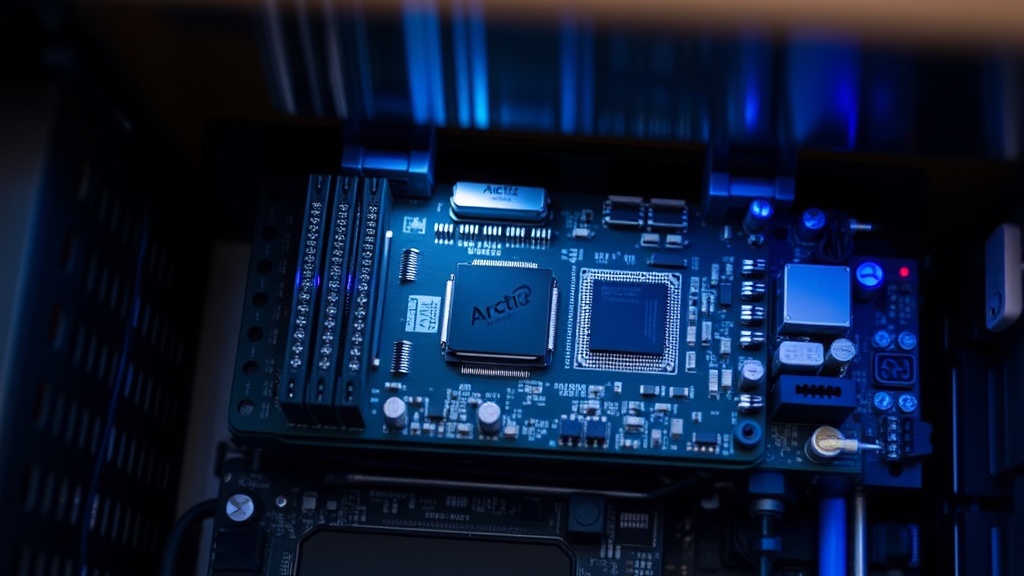
Connectivity: The Achilles' Heel?
While the fanless design and capable APU are clear strengths, the Senza AI 370 faces criticism regarding its front-panel I/O. The meager offering here is highlighted as the primary drawback. In an era where users frequently connect a variety of peripherals, including USB drives, webcams, and external storage, limited front-panel options can lead to inconvenience. This design choice forces users to rely more heavily on the rear ports, potentially leading to cable management challenges or the need for dongles and hubs.
The specific limitations of the front panel are not detailed in the excerpt, but typically, this refers to the number and types of USB ports, audio jacks, and potentially card readers. For a device intended for desktop use, easy access to a couple of USB-A ports and perhaps a USB-C port on the front is often expected. The compromise here suggests Arctic prioritized the chassis's clean aesthetic and thermal management over front-accessible connectivity. Users who frequently swap external devices may find this aspect particularly frustrating.
Design Philosophy: Silence and Simplicity
The overall design philosophy of the Arctic Senza AI 370 revolves around creating a silent, unobtrusive computing experience. The fanless nature inherently contributes to this, but the under-desk mounting further enhances the sense of minimalism. This approach is particularly relevant in modern workspaces, where aesthetics and a reduction in visual and auditory clutter are increasingly valued. The machine aims to blend into the background, providing computing power without demanding attention.
The use of soldered RAM, while offering speed and capacity, also means that upgrades are not possible. This is a common trade-off in many compact mini PCs, and it is a decision users must accept at the point of purchase. For a 32GB configuration, this is likely sufficient for the expected lifespan of the device for its target audience, but it is a factor to consider for those who anticipate needing more memory in the future.
Target Audience and Market Position
The Arctic Senza AI 370 appears to be targeting a specific niche: users who need a capable desktop PC but cannot tolerate noise or visual clutter. This includes professionals working in quiet office environments, audiophiles and videophiles who are sensitive to system noise, and anyone looking to create a streamlined, minimalist desk setup. Its fanless operation makes it ideal for 24/7 operation in applications like home servers or always-on media playback systems, where continuous noise would be a significant issue.
Compared to actively cooled mini PCs, the Senza AI 370 sacrifices potential peak performance under sustained heavy loads in favor of silence and longevity. While everyday tasks are unaffected, intensive, long-duration workloads might eventually lead to thermal throttling in a fanless design. However, for its intended use cases, this trade-off is likely acceptable. The main competition will come from other fanless mini PCs and actively cooled systems that offer more connectivity or higher performance ceilings, but often at the cost of noise or thermal management complexity.
The Unanswered Question: Long-Term Thermal Performance
What remains to be seen is the long-term thermal performance of the Senza AI 370 under sustained, demanding workloads in various ambient temperatures. While initial reviews suggest everyday performance is fine, the true test of a fanless design is its ability to dissipate heat consistently over hours of heavy use, especially during warmer months or in less-than-ideal airflow environments under a desk. Arctic's reputation in cooling suggests they've engineered this effectively, but real-world, extended stress tests will be the definitive answer.