
AI for the Entire Plant
Applied Computing, a UK-based artificial intelligence company, has secured a $20 million Series A funding round. The investment, co-led by KBR and featuring participation from Databricks, will be used to build and deploy a comprehensive, plant-wide foundation AI model specifically for the oil, gas, and petrochemical industries. This ambitious undertaking aims to move beyond point solutions and offer a unified AI understanding across an entire industrial facility.
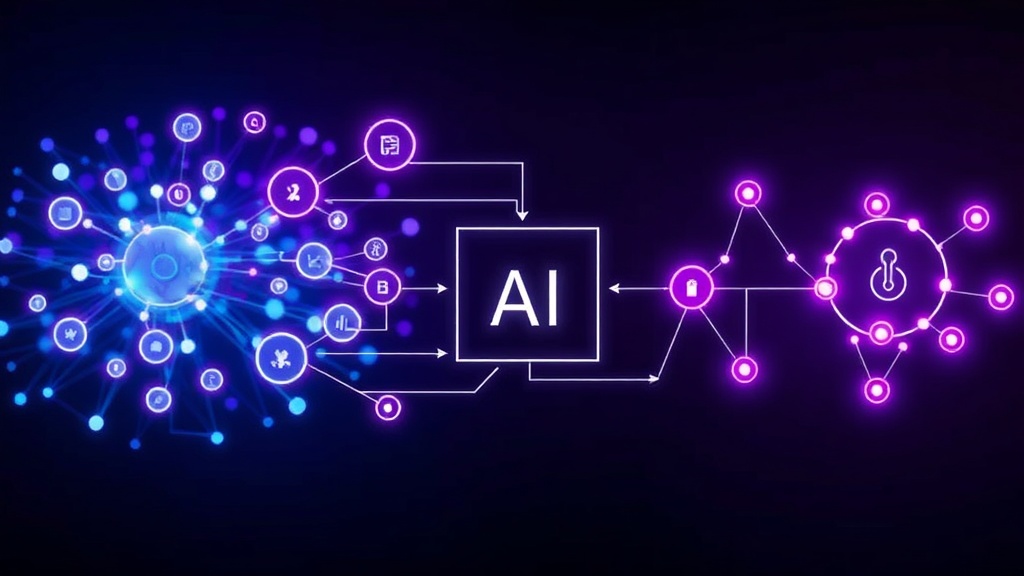
The energy sector, particularly oil and gas, has long been a significant adopter of advanced technologies. However, the integration of AI has often been fragmented, focusing on specific operational silos such as predictive maintenance for individual pieces of equipment, process optimization in a single unit, or safety monitoring in a particular area. Applied Computing’s vision is to create a single, overarching AI system that can ingest data from all these disparate sources and provide holistic insights and control capabilities. Think of it less like a collection of specialized tools and more like a central nervous system for the entire industrial plant, capable of understanding how different parts interact and influence one another.
The Foundation Model Approach
The core of Applied Computing's strategy lies in developing a 'foundation model' for the energy sector. Unlike traditional AI models trained for a single, narrow task, foundation models are designed to be general-purpose and adaptable. They are trained on vast amounts of diverse data, enabling them to learn broad patterns and relationships that can then be fine-tuned for specific downstream applications. For the oil and gas industry, this means a model that understands the complex interplay of geological data, extraction processes, refining operations, logistics, safety protocols, and market dynamics.
This approach promises several key benefits. Firstly, it can accelerate AI deployment. Instead of building custom models from scratch for every new problem, operators can leverage the pre-trained foundation model and fine-tune it with their specific plant data. This significantly reduces development time and cost. Secondly, it enables a more integrated view of operations. A plant-wide model can identify emergent issues or opportunities that might be missed by siloed AI systems. For example, it could correlate subtle changes in upstream extraction with downstream refining yields or predict the impact of a minor equipment anomaly on overall production schedules and safety compliance.
KBR and Databricks Partnership
The involvement of KBR, a global engineering, procurement, and construction company with deep ties to the energy sector, is particularly significant. KBR’s expertise in designing, building, and operating complex industrial facilities provides Applied Computing with invaluable domain knowledge and a direct pathway to potential customers. This partnership suggests that KBR sees the potential for this AI model to fundamentally change how plants are designed, operated, and maintained, moving towards a more data-driven and predictive operational paradigm.
Databricks, a major player in data analytics and AI platforms, also participated in the funding round. Their involvement underscores the importance of a robust data infrastructure for powering such a comprehensive AI model. Foundation models require massive datasets for training and sophisticated data processing capabilities for deployment and inference. The collaboration with Databricks signals a commitment to building a scalable and efficient data foundation for Applied Computing’s AI solutions.
Market Context and Future Implications
The oil and gas industry is under increasing pressure to improve efficiency, reduce environmental impact, and enhance safety. Digital transformation initiatives, including the adoption of AI, are seen as critical to meeting these challenges. While many companies offer AI solutions for specific operational pain points, Applied Computing's focus on a holistic, plant-wide model is a more ambitious play. If successful, it could set a new standard for AI integration in heavy industries.
The success of this venture will hinge on Applied Computing's ability to deliver a model that is not only powerful but also practical and safe to deploy in high-stakes industrial environments. The complexity of integrating data from thousands of sensors, ensuring model reliability, and managing the cybersecurity implications of a centralized AI system are significant hurdles. What remains to be seen is how quickly and effectively these foundation models can be adopted by a sector often characterized by long investment cycles and a cautious approach to new technologies. The $20 million in Series A funding provides a strong runway to tackle these challenges and prove the value of a unified AI approach for the entire plant.