The AI Acceleration: Faster Builds, Familiar Questions
In recent years, artificial intelligence has fundamentally reshaped software development. The journey from a nascent idea to a functional application now takes a fraction of the time it once did. For founders and development teams, this acceleration is a profound shift, enabling the creation of products with resources that were inconceivable mere years ago. This pace of innovation is undeniably exciting, democratizing product development and lowering the barrier to entry for ambitious projects.
However, this rapid advancement in build speed has outpaced a critical, yet often overlooked, aspect of the software lifecycle: determining when an application is truly “ready.” The question of readiness, once a significant hurdle, has become even more complex in an AI-augmented development environment. While AI tools can significantly reduce the time spent on coding, testing, and deployment, they do not inherently provide a universally accepted definition of “production-ready.”
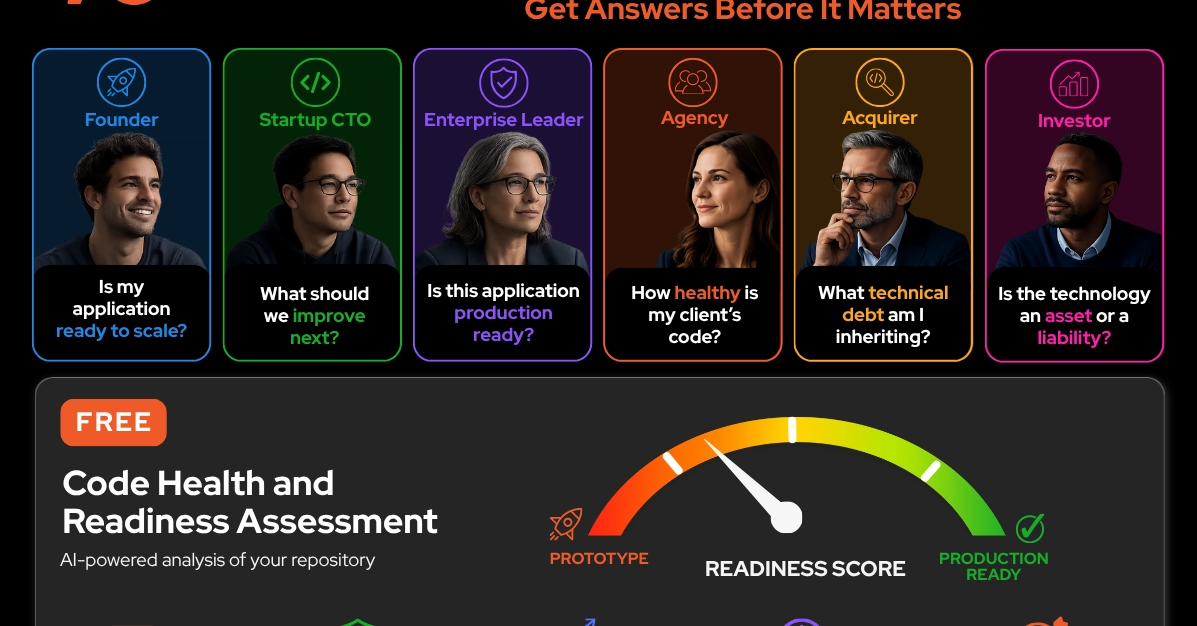
Throughout my career, I've witnessed firsthand the delivery of enterprise software across a diverse range of industries and organizational structures. A consistent lesson has emerged: there is no single, monolithic definition of what constitutes a “ready” application. If you poll six different stakeholders—from product managers and engineers to sales teams and end-users—you will likely receive six distinct answers regarding an application’s readiness. Crucially, each of these perspectives is often valid, viewed through the unique lens of their role, responsibilities, and priorities.
Stakeholder Lenses: A Spectrum of Readiness
Consider the primary stakeholders involved in a software project. Each brings a different set of expectations and criteria to the table when evaluating readiness:
- Product Managers: They focus on feature completeness, alignment with the product roadmap, user story fulfillment, and market viability. For them, “ready” often means the product meets defined user needs and can be successfully launched to acquire or retain customers. They are concerned with the “what” and “why” of the application.
- Engineers and Developers: Their definition of ready leans towards technical robustness. This includes code quality, performance metrics, scalability, security vulnerabilities, test coverage, and maintainability. They want to ensure the application is stable, efficient, and can be supported long-term without introducing technical debt. They are concerned with the “how” and “how well” the application is built.
- Sales and Marketing Teams: Readiness for these departments often translates to marketability and sales enablement. Does the application have compelling features to showcase? Are there clear value propositions? Is it stable enough for demos and trials without causing user frustration? Their focus is on the application's potential for generating revenue and market traction.
- Operations and IT Teams: For operations, “ready” means deployable, monitorable, and supportable within existing infrastructure. This involves considerations like integration with existing systems, logging, alerting, disaster recovery plans, and ease of deployment and maintenance. They are concerned with the “when” and “where” it can run reliably.
- End-Users: Ultimately, end-users define readiness by their ability to accomplish their tasks efficiently and without friction. Is the application intuitive? Does it solve their problem effectively? Is it reliable and performant in their day-to-day use? Their feedback is the ultimate arbiter of practical readiness.
- Executive Leadership/Investors: Their perspective often synthesizes these elements, focusing on return on investment, market position, competitive advantage, and strategic alignment. Readiness for them means the application is poised to achieve business objectives and deliver on financial projections.
The proliferation of AI tools in development, while accelerating the build process, has not resolved these fundamental stakeholder disagreements. In fact, it may exacerbate them. An AI can churn out code that meets functional requirements rapidly, but it doesn't inherently understand the nuanced business context, the long-term maintainability concerns, or the specific user experience expectations that a human team grapples with.
Bridging the Gap: Towards a Shared Definition
The challenge, then, is not just about building faster, but about building smarter and ensuring alignment across these varied perspectives. The question “Is it ready?” needs to be reframed. Instead, we must ask: “Ready for whom, and ready for what?”
To navigate this complexity, organizations must move beyond ad-hoc readiness assessments. This requires establishing clear, documented criteria that are agreed upon by all key stakeholders before development begins or early in the cycle. These criteria should go beyond simple functional checklists and incorporate qualitative aspects, performance benchmarks, and operational requirements.
Key Strategies for Defining and Achieving Readiness:
- Cross-Functional Readiness Frameworks: Develop a shared framework that defines specific metrics and acceptable thresholds for each stakeholder group. This could include a readiness scorecard that tracks progress against technical stability, feature completeness, user experience, and operational preparedness.
- Early and Continuous Stakeholder Engagement: Integrate feedback loops throughout the development process. Regular demos, user acceptance testing (UAT) sessions, and cross-team syncs are vital. AI can expedite the build, but human validation and alignment remain paramount.
- Defined Release Criteria: Establish explicit “definition of done” for features and for the overall release. These criteria should be tangible, measurable, and agreed upon. For instance, “95% of critical path user stories pass automated tests, with no P1 or P2 bugs outstanding, and all P3 bugs have an approved deferral strategy.”
- Risk-Based Prioritization: Understand that not all aspects of readiness are equally critical for every release. A minimum viable product (MVP) might prioritize market entry and core functionality over extensive performance tuning, whereas a critical system update might demand rigorous stability and security checks. AI can help identify potential risks, but human judgment is needed to prioritize mitigation efforts.
- Documentation and Communication: Clearly document the agreed-upon readiness criteria and the rationale behind them. Transparent communication about progress, identified issues, and trade-offs is essential for managing expectations.
The advent of AI in software development is a powerful catalyst for innovation, enabling unprecedented speed and efficiency. However, the fundamental human element of defining and agreeing upon what “ready” truly means for a given application persists. The teams that successfully navigate this landscape will be those that leverage AI for speed while proactively building consensus and clarity around the diverse needs of their stakeholders.