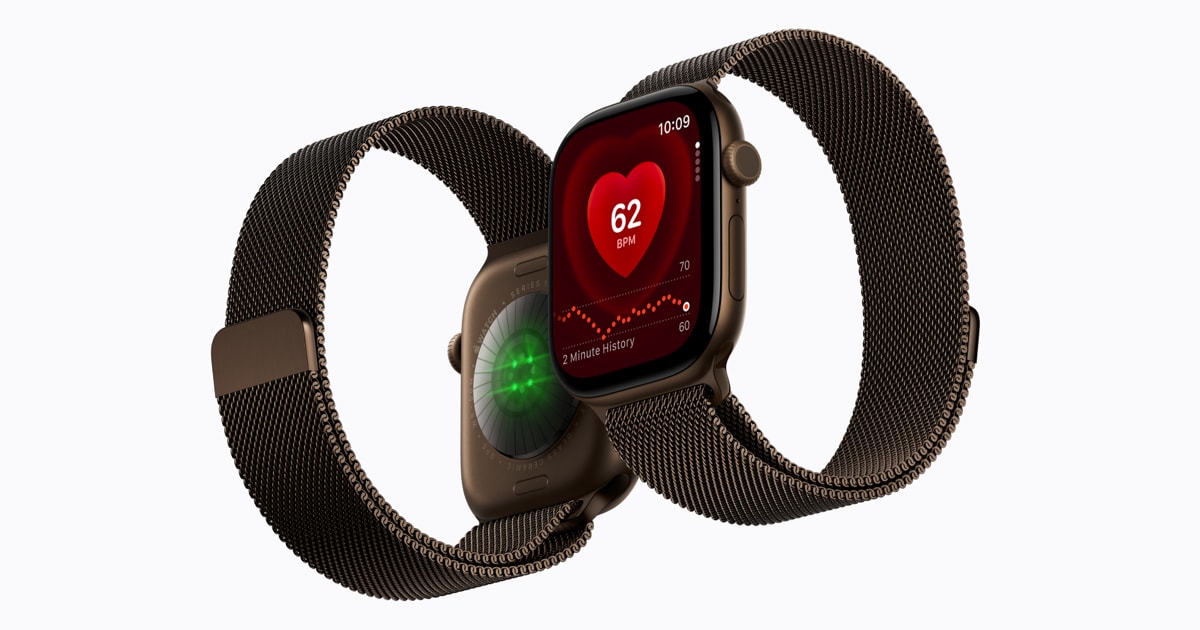
Introducing the Health Sensing System
Apple today unveiled the Apple Watch Series 12, its latest iteration of the popular wearable, headlined by a significantly advanced Health Sensing System. This new system represents a substantial leap forward in how the Apple Watch monitors and interprets an individual's physiological data, moving beyond simple activity tracking to offer more nuanced insights into overall health. The Series 12 is engineered to provide users with a more comprehensive understanding of their body's signals, empowering them to make more informed decisions about their health and wellness.
At the core of the Health Sensing System is a suite of new, highly sensitive sensors integrated into the watch's chassis. These sensors work in concert to capture a wider spectrum of biometric data than ever before. This includes not only enhanced heart rate monitoring and ECG capabilities but also new metrics related to stress levels, sleep quality, and even environmental factors that can impact health. The goal is to create a holistic view of a user's well-being, accessible directly from their wrist.

Deeper Health Insights and New Metrics
The Apple Watch Series 12 introduces several new health metrics that are directly derived from the Health Sensing System. One of the most notable is a more advanced stress monitoring feature. Unlike previous iterations that relied on heart rate variability alone, the Series 12 incorporates data from electrodermal activity (EDA) sensors. These sensors detect subtle changes in sweat gland activity, which are closely linked to the body's stress response. By analyzing this data alongside heart rate and other metrics, the watch can provide users with a more accurate and real-time assessment of their stress levels throughout the day.
Furthermore, the sleep tracking capabilities have been significantly upgraded. The Series 12 can now differentiate between sleep stages with greater precision, distinguishing between light sleep, deep sleep, and REM sleep more effectively. It also introduces a new 'Sleep Readiness' score, which combines data on sleep duration, quality, and consistency with heart rate and respiratory rate during sleep. This score aims to give users a clear indication of how prepared their body is for the day ahead, offering actionable advice if readiness is low.
Environmental sensing is another key area of improvement. The watch now includes an ambient air quality sensor, which can detect levels of common pollutants in the user's immediate surroundings. While not a medical-grade diagnostic tool, this feature aims to raise awareness about potential environmental health impacts, prompting users to take precautions or seek cleaner air when necessary. This integration of external environmental data alongside internal biometrics is a novel approach for a consumer wearable.
Enhanced Performance and User Experience
Beyond the Health Sensing System, the Apple Watch Series 12 also boasts performance improvements. It is powered by the new S7 chip, which offers faster processing speeds and improved power efficiency. This allows for more complex computations to be performed directly on the device, reducing reliance on a paired iPhone for certain health analyses and enabling smoother app performance. The battery life has also seen an incremental improvement, with Apple claiming up to 24 hours of typical usage on a single charge, even with the enhanced sensor activity.
The display has been updated with a brighter, more power-efficient OLED panel, offering better visibility in direct sunlight. The digital crown has been refined for a more tactile and responsive feel, and the device continues to feature its signature durable design with a range of case materials and band options. Apple has also updated watchOS to version 9, introducing new watch faces, enhanced workout tracking for a wider variety of activities, and improved notification management.
Privacy and Future Implications
As with all Apple products, privacy remains a central tenet of the new Health Sensing System. Apple emphasizes that all health data collected by the Series 12 is encrypted on the device and in iCloud, and users have granular control over which data is shared and with whom. The company stated that aggregated, anonymized data may be used for research purposes, but only with explicit user consent. This commitment to privacy is crucial as the watch gathers increasingly sensitive personal information.
The introduction of the Health Sensing System and its expanded metrics positions the Apple Watch Series 12 not just as a fitness tracker, but as a more proactive health companion. The ability to monitor stress, sleep readiness, and environmental factors in a more integrated way could pave the way for more sophisticated preventative health insights in future devices. What remains to be seen is how effectively these new metrics translate into tangible health outcomes for the average user, and whether third-party developers will be able to leverage this richer data stream for innovative applications.