Apple's Ambitious M7 Ultra Vision
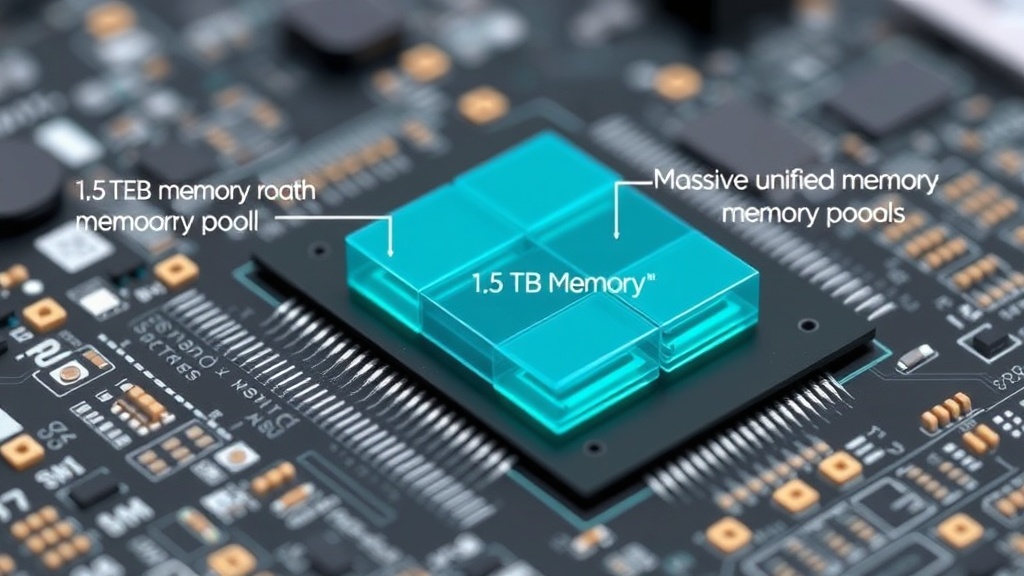
Apple's future silicon roadmap appears to be charting an aggressive course with its rumored M7 Ultra chip, slated for a 2028 release. According to a recent report, this next-generation processor is being designed with an eye-watering target of 1.5 terabytes (TB) of unified memory. This figure alone represents a monumental leap from current high-end consumer and even professional workstation capabilities. For context, most high-end consumer laptops today top out at 64GB or 128GB, with even Apple's current M3 Max maxing out at 128GB. Professional workstations might offer 256GB or 512GB, but 1.5TB would place the M7 Ultra into a class of its own, far surpassing traditional desktop and laptop memory capacities.
The implications of such a memory capacity are profound, particularly for demanding AI and machine learning workloads. Large language models, complex simulations, and massive datasets often require vast amounts of RAM to process efficiently. Apple's move towards such extreme memory configurations suggests a strategic pivot to aggressively compete in high-performance computing sectors, traditionally dominated by specialized hardware and high-end workstations from competitors like NVIDIA and AMD. The company's focus on unified memory architecture, which allows the CPU and GPU to share the same memory pool, could offer significant advantages in data throughput and latency for these tasks, provided the underlying architecture can effectively manage and access such a colossal amount of data.
AI Performance Benchmarked Against Blackwell
Beyond memory, the report also indicates that Apple is targeting AI performance on par with NVIDIA's current Blackwell-class accelerators. NVIDIA's Blackwell architecture, represented by GPUs like the B200 Tensor Core GPU, is engineered for cutting-edge AI inference and training. These accelerators boast immense computational power, specialized tensor cores, and advanced memory subsystems designed to handle the most intensive AI computations. For Apple to aim for this level of performance with its M7 Ultra, it implies a significant architectural overhaul and a substantial increase in dedicated AI processing capabilities within its System on a Chip (SoC). This would likely involve a massive expansion of its Neural Engine, potentially integrating new AI-specific acceleration hardware, and leveraging advanced manufacturing processes to achieve the necessary transistor density and power efficiency.
Achieving Blackwell-class AI performance would position Apple's future Macs and potentially other devices as formidable contenders in professional AI development and deployment. Currently, developers working with the most demanding AI models often rely on dedicated NVIDIA GPUs or cloud-based AI infrastructure. If the M7 Ultra can deliver comparable performance, it could democratize access to powerful AI tools for a wider range of users, enabling on-device training and inference for complex models that were previously infeasible outside of data centers. This would be a significant differentiator for Apple's ecosystem, attracting developers and power users who require top-tier AI capabilities without relying on external hardware or cloud services.
The Memory Shortage Caveat
However, this ambitious vision for the M7 Ultra is not without its significant hurdles, chief among them being the global semiconductor memory shortage. The report explicitly states that the realization of the 1.5TB memory target is contingent on the easing of these supply chain constraints. High-bandwidth memory (HBM), a specialized type of DRAM essential for high-performance AI accelerators, has been in extremely high demand, leading to production bottlenecks and price increases. Apple, like all major chip manufacturers, is subject to the availability and cost of these critical components. If the memory shortage persists or worsens, Apple may be forced to scale back its memory ambitions for the M7 Ultra, potentially opting for a more conservative, albeit still high, memory configuration.
This dependency on external supply chains highlights a critical vulnerability in even the most advanced silicon development plans. While Apple designs its own chips, it relies on foundries like TSMC for manufacturing and a complex ecosystem of memory suppliers. The current geopolitical and economic climate has demonstrated the fragility of these global supply chains. For a product as far out as 2028, the situation could evolve significantly, but the risk remains. A prolonged shortage could delay the M7 Ultra's introduction, force a redesign with less memory, or significantly inflate the cost of the final product, impacting its market viability. The success of the M7 Ultra, therefore, hinges not only on Apple's engineering prowess but also on the broader global semiconductor manufacturing landscape.
Broader Implications for the AI Hardware Landscape
The potential emergence of an M7 Ultra with such extreme specifications has significant implications for the broader AI hardware landscape. It signals Apple's intent to move beyond its traditional consumer and prosumer markets and directly challenge the high-performance computing and AI acceleration dominance of companies like NVIDIA. If successful, this could force a re-evaluation of what is considered possible for integrated SoCs, pushing the boundaries of on-device AI processing and potentially leading to a more decentralized AI future where powerful computation is less reliant on large, centralized data centers.
For developers, this means a future where macOS could become a much more viable platform for serious AI development, potentially rivaling Linux-based systems that currently dominate the field. Founders of AI startups might see new opportunities in developing applications optimized for Apple's unified memory architecture and powerful Neural Engine, potentially creating a new niche within the AI ecosystem. Security professionals will need to consider the implications of such powerful, integrated AI hardware, particularly regarding on-device data processing and potential new avenues for sophisticated attacks or defenses. Ultimately, the M7 Ultra, if it materializes as rumored, represents not just an incremental chip upgrade but a potential paradigm shift in personal computing and AI accessibility.