%22%20%2F%3E%0A%20%20%3C%2Fsvg%3E)
The Challenge: From Messy Scrawl to Structured Data
Building an application that can ingest a photo of a handwritten homework assignment and transform it into a structured, actionable task is more complex than it initially appears. The core problem isn't just reading the handwriting itself, which modern vision models handle with surprising proficiency. Instead, the real difficulty lies in interpreting the inherent ambiguity within human language and context, particularly when it comes to deadlines and effort estimations.
One developer, sharing their experience building such an app, detailed a pipeline designed to tackle this. The process begins with a user snapping a photo of anything from an assignment sheet to a whiteboard scribble. This image then enters a processing pipeline that leverages AI to extract specific, structured information.
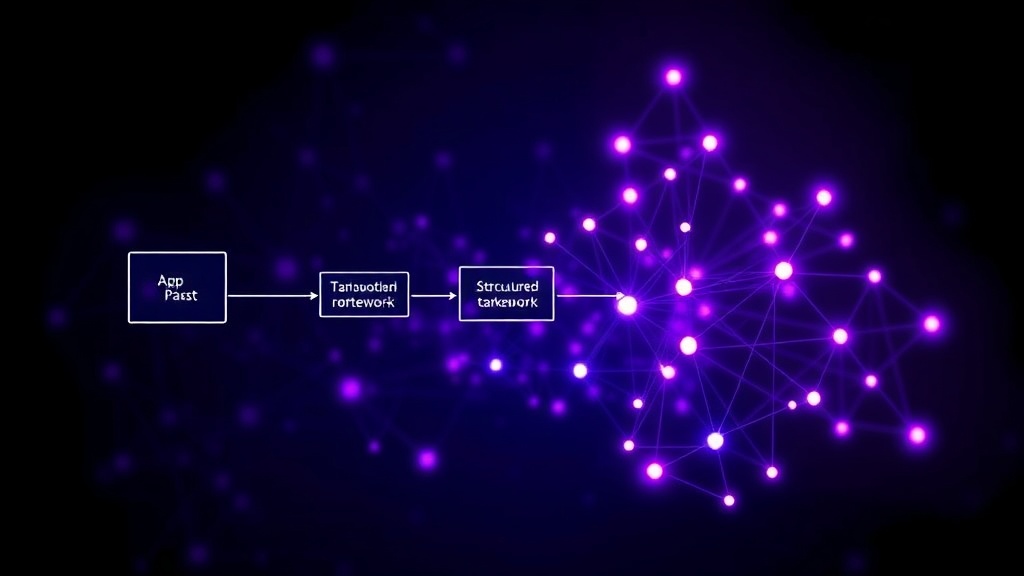
The pipeline can be broken down into these key stages:
- Image Ingestion: The user provides a photo of the assignment.
- Vision Model Processing: A powerful vision API, in this case Claude's Vision API, analyzes the image.
- Prompt Engineering for Extraction: A carefully crafted prompt instructs the AI to identify and extract predefined fields: the task title, the subject it belongs to, the due date, and an estimated effort level.
- Structured Output: The AI returns the extracted information in a JSON format.
- Task Card Rendering: This structured data is then used to generate an editable task card within the application, allowing for review and refinement before final saving.
The developer admitted to underestimating the complexity of this parsing pipeline, particularly for someone self-learning coding. The journey to a functional system took considerable time, primarily due to the challenges in data interpretation.
Data Ambiguity: The Real Hurdle
While vision models have advanced significantly and are now quite capable of deciphering messy handwriting, this is not the primary bottleneck. The developer found that the true challenge lies in the semantic interpretation of the extracted text. Consider a note like "due Friday." This simple phrase can carry multiple meanings:
- Does it mean this coming Friday, regardless of the current day?
- If today is Thursday, does it mean *this* Friday (which is tomorrow) or the Friday of the *next* week?
- If the assignment was written on a Tuesday, and the current day is already Thursday, does "due Friday" refer to the immediate Friday or a future one?
The AI needs to not only read "due Friday" but also infer the intended deadline based on the context of when the note was likely made or when the task was entered into the system. This requires a level of contextual reasoning that goes beyond simple optical character recognition (OCR).
Similarly, estimating "effort" from a handwritten note is highly subjective. A phrase like "about an hour" or "a bit of work" needs to be translated into a standardized metric, like hours or a difficulty rating. This translation requires assumptions about the user's typical workload, the complexity of the subject matter, and the user's own skill level in that subject.
The developer's experience highlights a broader trend in AI application development: the most difficult problems often aren't in the core perception or recognition tasks, but in bridging the gap between raw, unstructured data and meaningful, actionable information. This requires sophisticated prompt engineering and a deep understanding of how to guide AI models to consider context, make reasonable inferences, and handle uncertainty.
Refining the Pipeline: Iteration and Learning
The process of building this app involved significant iteration. The initial underestimation of the difficulty in parsing the data meant that the developer had to spend considerable time refining the prompts and potentially exploring additional layers of natural language processing (NLP) to resolve ambiguities. This iterative approach is common in AI development, where models and their surrounding logic are fine-tuned based on real-world performance and observed failure modes.
For instance, to handle the "due Friday" problem, a more advanced system might incorporate timestamps from when the photo was taken, user-defined preferences for interpreting relative dates, or even a confirmation step where the app asks the user to clarify ambiguous deadlines. The goal is to move from a purely literal interpretation of the text to an understanding that aligns with the user's intent.
The choice of Claude's Vision API is also significant. These large multimodal models (LMMs) are designed to understand both text and images, making them well-suited for tasks that require interpreting visual information and then processing the textual content within it. The prompt engineering phase is critical here; it's how the developer guides the LMM to focus on specific entities and relationships within the image, rather than just describing the image content generally.
The final output as a JSON object is a standard practice for ensuring machine-readability and facilitating integration with other parts of the application. This structured data is then the foundation for the user-facing task card, which serves as the user's interface to the processed information. The ability to edit this card is crucial, providing a human-in-the-loop mechanism to correct any AI misinterpretations, further improving the system's reliability over time.
This project serves as a practical demonstration of how modern AI tools can be applied to real-world problems, but also underscores the persistent challenges in achieving robust, context-aware data extraction from imperfect inputs. The success of such an app hinges not just on the AI's ability to