
Misaligned Value Propositions Undermine App Store Conversions
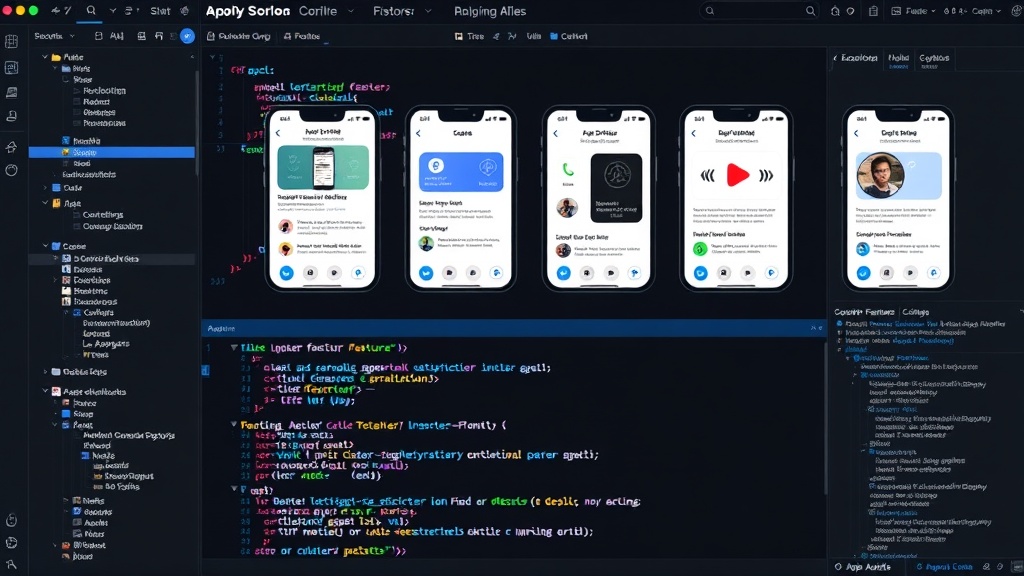
A common pitfall for app developers is a disconnect between the promises made on their app store page and the actual user experience. This isn't about a flawed paywall; it's about a confused initial impression. Take the example of TurnTalk, an iOS travel translator app. Its subtitle, "Understand Any Guide, Live," sets a clear, focused expectation. However, the accompanying screenshot sequence immediately broadens the scope to include AI travel translation, voice translation, photo translation, and instant translation. While these features might all be valuable, presenting them simultaneously dilutes the core message and forces potential users to decipher the app's primary function. This diffusion of focus can lead to confusion and a higher bounce rate before a user even downloads the app. The problem isn't the quality of individual features, but the lack of a cohesive narrative on the storefront. A visitor needs to understand the app's main benefit instantly, not after deciphering a series of disparate capabilities. This initial misstep can tank conversion rates far more effectively than any paywall ever could.
Security Solutions Often Miss the Actual Attack Vector
Another developer's audit revealed a similar disconnect, this time in the realm of security. After a small corporate website received a single piece of spam in its contact form, the immediate, almost reflexive response was to deploy a Web Application Firewall (WAF) via Cloudflare, complete with Bot Fight Mode. This is the standard prescription for form spam. However, before implementing the solution, a closer look at the form's actual behavior showed it wasn't sending any data to the site's server at all. The form submission was handled entirely by JavaScript in the browser, using a public, anonymous key, and the record was inserted directly into a database elsewhere. The spam wasn't even attempting to hit the website's server, let alone exploit a vulnerability in its web application. Therefore, the WAF, which is designed to protect the web server itself, was entirely irrelevant to the problem. It was like putting a security guard at the main gate when the intruder is climbing through a basement window. The spam was not using the 'front door' that the WAF was intended to protect. This highlights a critical flaw in many security implementations: a failure to first understand the specific attack vector and data flow before deploying generic solutions. The most common security tools are often misapplied because the underlying architecture and data handling mechanisms are not fully understood.
The Cost of Misaligned Expectations and Ineffective Security
These two independent audits, though focused on different aspects of app development and maintenance, reveal a common theme: the importance of validating assumptions before implementing solutions. For app developers, a cluttered and unfocused app store page can directly impact revenue by confusing potential users and obscuring the app's core value proposition. This is akin to a restaurant advertising a gourmet tasting menu but only showing pictures of breadsticks. It creates an immediate disconnect. Developers need to ensure their marketing materials clearly articulate the primary benefit and user journey, rather than overwhelming visitors with a laundry list of features. Every element on the store page should reinforce the main promise.
Similarly, in security, the rush to apply standard solutions without a thorough understanding of the specific threat can lead to wasted resources and a false sense of security. The corporate website's WAF deployment, while a common practice for form spam, was entirely ineffective because the spam traffic never interacted with the protected web server. The real issue was a lack of basic input validation or notification for the form itself, not a web application vulnerability. This situation underscores a broader challenge: developers and security professionals must prioritize diagnosis over prescription. Understanding how data flows, where user interactions occur, and what the actual threat surfaces are is paramount. Implementing security measures without this foundational knowledge is like trying to fix a leaky faucet by painting the ceiling. The problem remains unaddressed, and the deployed solution is a costly distraction.
Ultimately, both scenarios illustrate that the most critical findings often lie not in the obvious, but in the foundational elements of the application and its surrounding ecosystem. For developers, this means rigorously testing the user journey from discovery to conversion. For security professionals, it means deep-diving into the application's architecture and data flows to identify true vulnerabilities and the most effective points of defense. The paywall is a concern, but a confused user or a bypassed security measure presents a far more immediate and fundamental threat to an app's success and integrity.