
The Genesis of a New CLI: Beyond 126 MCP Tools
Apidog, a platform focused on API testing and lifecycle management, has embarked on a significant development initiative, creating a brand-new Command Line Interface (CLI) tool and a complementary 'Skill'. This move, detailed in a multi-part series, stems from a strategic re-evaluation of their existing toolkit. The company previously developed 126 Management and Control Plane (MCP) tools, a substantial effort aimed at addressing various aspects of API management. However, the leadership recognized that this extensive suite, while functional, was not the optimal solution for their agent-based workflows.
The core issue identified was the complexity and fragmentation inherent in managing such a large number of disparate tools. For agents interacting with these tools, the learning curve was steep, and efficiency was compromised by the need to navigate and integrate multiple distinct utilities. This realization triggered the decision to consolidate and rebuild, focusing on a more integrated and user-centric approach. The goal was not just to create another tool, but to fundamentally improve the developer and agent experience by providing a streamlined, powerful, and cohesive command-line solution.
Architectural Decisions for the New Apidog CLI
The development of the new Apidog CLI and Skill was not merely an iteration but a deliberate architectural overhaul. The team prioritized flexibility, extensibility, and ease of use, aiming to create a platform that could adapt to the evolving needs of API development and management. The previous reliance on 126 separate MCP tools, while covering a broad spectrum of functionalities, led to a less than ideal user experience. Agents often had to juggle multiple tools, leading to inefficiencies and a steeper learning curve.
The new CLI architecture was designed to consolidate these functionalities into a more unified and intuitive interface. This involved rethinking how commands are structured, how data is processed, and how integrations are handled. The 'Skill' component, in particular, suggests an effort to imbue the CLI with more intelligent capabilities, potentially enabling more sophisticated automation and interaction patterns. This could involve features like natural language command processing, context-aware suggestions, or automated workflow generation, moving beyond simple command execution.
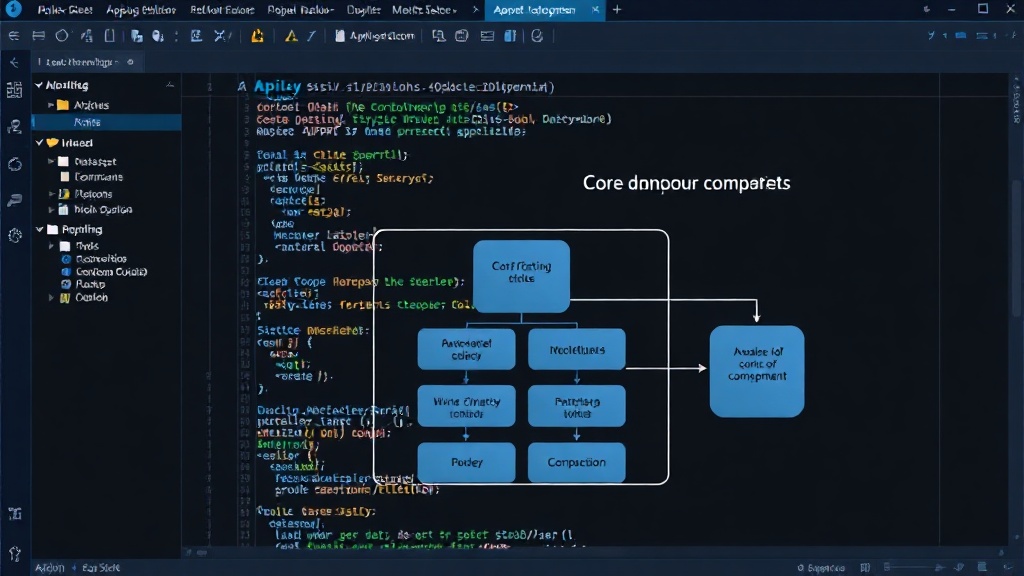
Key architectural considerations likely included:
- Modularity: Designing the CLI so that new features and integrations can be added without requiring a complete rewrite.
- Performance: Optimizing command execution speed and resource utilization, crucial for a CLI tool.
- Extensibility: Allowing third-party developers or internal teams to build upon the CLI and integrate it into their own workflows.
- Developer Experience (DX): Ensuring clear documentation, intuitive command structures, and helpful error messages.
The transition from 126 MCP tools to a singular, more powerful CLI represents a significant investment in improving the developer workflow. It signifies a commitment to providing developers with tools that are not just functional but also efficient and pleasant to use. This strategic pivot aims to reduce cognitive load for users and accelerate the API development lifecycle.
The 'Why' Behind the New Apidog CLI and Skill
The decision to develop an entirely new Apidog CLI and Skill was driven by a clear strategic imperative: to enhance the user experience and operational efficiency for agents and developers. While the company had amassed a considerable toolkit with 126 MCP tools, this proliferation of utilities, intended to cover every conceivable aspect of API management, ultimately created a fragmented and cumbersome environment. Agents found themselves navigating a complex ecosystem of tools, each with its own interface, commands, and quirks. This complexity hampered productivity and increased the time spent on onboarding and task execution.
The new Apidog CLI and Skill are designed to be a unified, powerful, and intuitive solution. The CLI provides a consolidated command-line interface, streamlining common API testing and management tasks. The accompanying 'Skill' component suggests a layer of intelligence or specialized functionality designed to augment the CLI's capabilities. This could manifest as advanced automation features, context-aware assistance, or even the ability to understand and execute more complex instructions through natural language or simplified scripting. Think of it less like a toolbox with 126 different hammers and screwdrivers, and more like a single, highly adaptable multi-tool that can perform all those functions with greater ease and precision.
The motivation behind this rebuild is to reduce friction in the API lifecycle. By offering a cohesive command-line experience, Apidog aims to empower developers to test, debug, and manage their APIs more effectively and efficiently. This strategic shift reflects a deeper understanding of developer workflows and a commitment to providing tools that not only meet but exceed user expectations in terms of usability and power. The focus is clearly on delivering a superior developer experience that translates into tangible productivity gains.
Future Implications and User Impact
The introduction of the new Apidog CLI and Skill marks a significant evolution for the platform and its users. The strategic decision to move away from a large number of disparate MCP tools towards a consolidated CLI and intelligent Skill component signals a strong focus on developer experience and operational efficiency. For existing Apidog users, this transition promises a more streamlined and intuitive way to interact with API testing and management functionalities.
Developers can anticipate a reduced learning curve, faster task execution, and potentially access to more advanced automation capabilities through the Skill. This could mean quicker debugging cycles, more efficient test suite creation, and easier integration into CI/CD pipelines. The unified nature of the CLI reduces the cognitive overhead associated with remembering and switching between multiple tools, freeing up developers to focus on core development tasks.
The shift also positions Apidog to better compete in a market where developer experience is increasingly a key differentiator. By investing in a modern, powerful CLI, Apidog is signaling its commitment to staying at the forefront of API development tools. This could attract new users who prioritize efficient command-line workflows and retain existing users by providing them with a superior toolset. The success of this initiative will likely depend on the actual implementation, the breadth of functionality covered by the new CLI and Skill, and the clarity of the migration path for users transitioning from the older MCP tools.