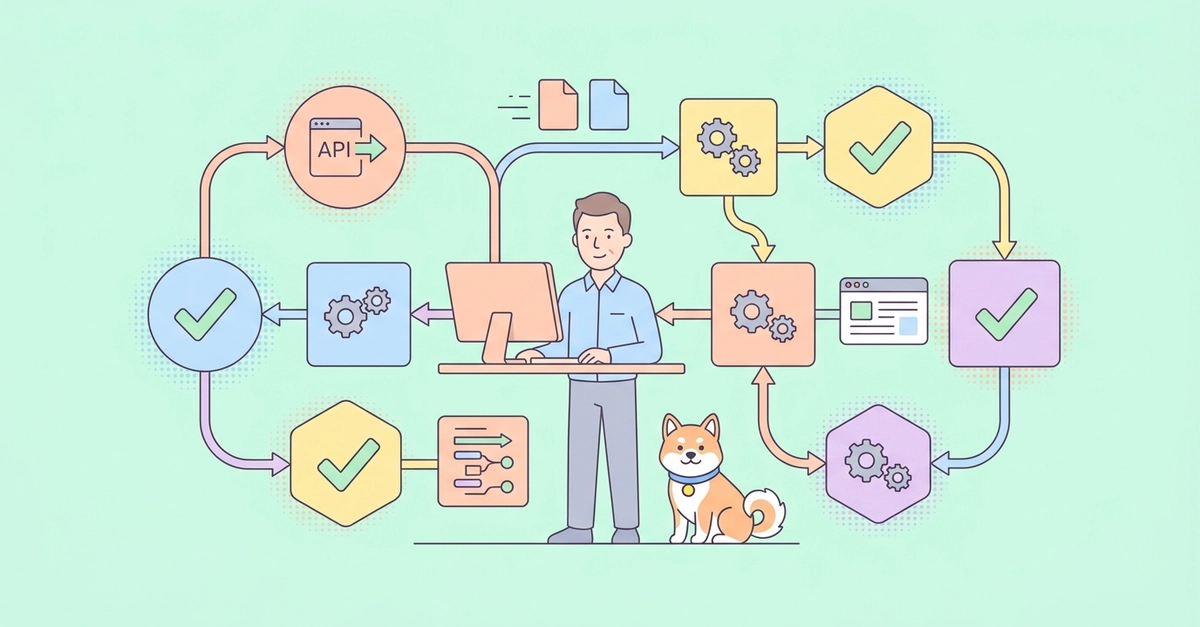
Shift Your API Testing from 'Happy Path' to 'Adversarial Path'
Most API testing suites focus on a single outcome: does the API return a 200 OK status when given valid input? This approach is insufficient. It proves your API works when called by a polite client, but it tells you nothing about its resilience against malicious actors. The critical shift required is to test your API as an attack surface. This means actively crafting negative test cases that probe for vulnerabilities by sending oversized fields, incorrect data types, malformed request bodies, and known injection strings. The goal is to ensure any such malformed or malicious input results in a 4xx client error, never a 5xx server error, which often indicates a crash or a more severe vulnerability.
The urgency for this adversarial testing is amplified by the rise of AI-powered attack tools. These agents can generate and transmit malicious payloads at machine speed. What might have been a simple data submission could rapidly escalate into an execution of arbitrary code if input validation is weak. Therefore, treating API input validation as a primary security control, not just a data formatting step, is paramount.
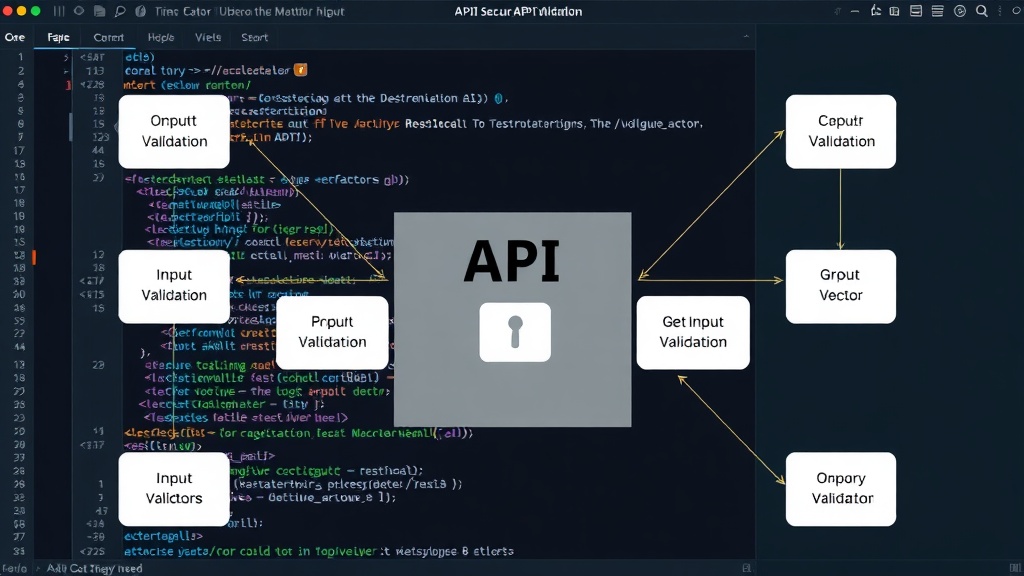
Elevating Schema Validation to Security Auditing
Schema validation, commonly used to ensure data structure and types, can be transformed into a robust security control. Simply defining expected fields and types is not enough. To leverage schema validation for security, developers should implement specific configurations:
additionalProperties: false: This setting within JSON Schema prevents unexpected or malicious fields from being accepted in the request body. If an attacker sends extra data that isn't defined in the schema, the request will be rejected.- Enumerations (
enum): Restrict field values to a predefined list of acceptable options. This prevents injection attacks or unexpected behavior caused by arbitrary string inputs where only specific keywords or states are permitted. - Length and Range Limits: Enforce strict limits on string lengths and numerical ranges. This is crucial for preventing buffer overflows, denial-of-service attacks through oversized payloads, and SQL injection attempts that rely on long, crafted strings.
By configuring your schema validator with these security-conscious settings, you move beyond mere data correctness to active threat mitigation. Each API endpoint should have its schema rigorously defined and enforced.
Implementing a Comprehensive Negative Test Suite
A robust security testing strategy for APIs must include a comprehensive suite of negative test cases. These tests should systematically probe the boundaries and expected behaviors of each API endpoint:
- Oversized Fields: Send strings or data structures that exceed the maximum defined length for a field. This tests for buffer overflow vulnerabilities and checks if the API correctly returns a
4xxerror. - Incorrect Data Types: Submit data that does not match the expected type for a field (e.g., sending a string where an integer is expected, or a boolean where a string is required). The API should gracefully reject these with a
4xxstatus. - Malformed Request Bodies: Send invalid JSON, XML, or other body formats. This tests the parser's robustness and ensures it doesn't crash or expose internal errors.
- Injection Strings: Include common injection payloads for SQL, NoSQL, command injection, cross-site scripting (XSS), and others. Even if your API doesn't directly interact with a database or shell, these can sometimes reveal unexpected vulnerabilities in how data is processed or logged.
- Empty or Null Values: Test how the API handles fields that are intentionally left empty or set to null, especially when they are expected to be present or non-null.
- Special Characters and Encoding Issues: Send inputs containing unusual characters, different encodings, or sequences that might be misinterpreted by the server.
Each of these test cases should be designed to trigger a 4xx response. A 5xx response signals a server-side failure, indicating a potential security flaw that could be exploited by attackers to gain information, disrupt service, or even execute code.
Automate Security Testing in CI/CD Pipelines
The most effective way to ensure continuous API security is to integrate these adversarial tests into your Continuous Integration and Continuous Deployment (CI/CD) pipeline. Every time code is modified, the full suite of tests, including these negative security checks, should run automatically.
This automation provides several key benefits:
- Early Detection: Catches regressions and new vulnerabilities as soon as they are introduced, long before they reach production.
- Consistency: Ensures that security testing is performed consistently on every build, regardless of human oversight.
- Speed: With AI-driven attacks operating at machine speed, your defenses must also be automated and rapid. Manual testing cannot keep pace.
By making security testing an integral and automated part of the development lifecycle, you build a more robust and resilient API. This proactive approach is essential in today's threat landscape, where sophisticated tools are readily available to attackers.
What nobody has addressed yet is the long-term maintenance cost of these automated adversarial test suites. As APIs evolve and new attack vectors emerge, these tests will require constant updating. Developers must consider the ongoing effort required to keep these security checks relevant and effective, ensuring they don't become stale and ineffective over time.