The Authentication Bottleneck in Complex APIs
Traditional API authentication often relies on a simple, per-route check using an API key, sometimes augmented with middleware for rate limiting and a database layer for quota enforcement. While functional for smaller projects, this approach quickly becomes unmanageable as API complexity grows. When an API boasts hundreds of routes across multiple access tiers, manually verifying authentication for each endpoint turns into a development and maintenance nightmare. This was the precise challenge encountered during the development of the APE-QIL QUANTUM SUPREME OCTOPUS.
APE-QIL QUANTUM SUPREME OCTOPUS, a Bio-inspired Autonomous Intelligence Organism, functions as an AI routing platform integrating over 14 external providers. Its architecture comprises 673 distinct API routes, categorized into three tiers: public (79 routes), free API key access (337 routes), and paid subscription access (255 routes). The manual management of authentication for this many endpoints proved to be an unsustainable task. The need for a more robust, scalable, and maintainable solution became apparent.
Introducing the 3-Tier Sovereign Auth Pipeline
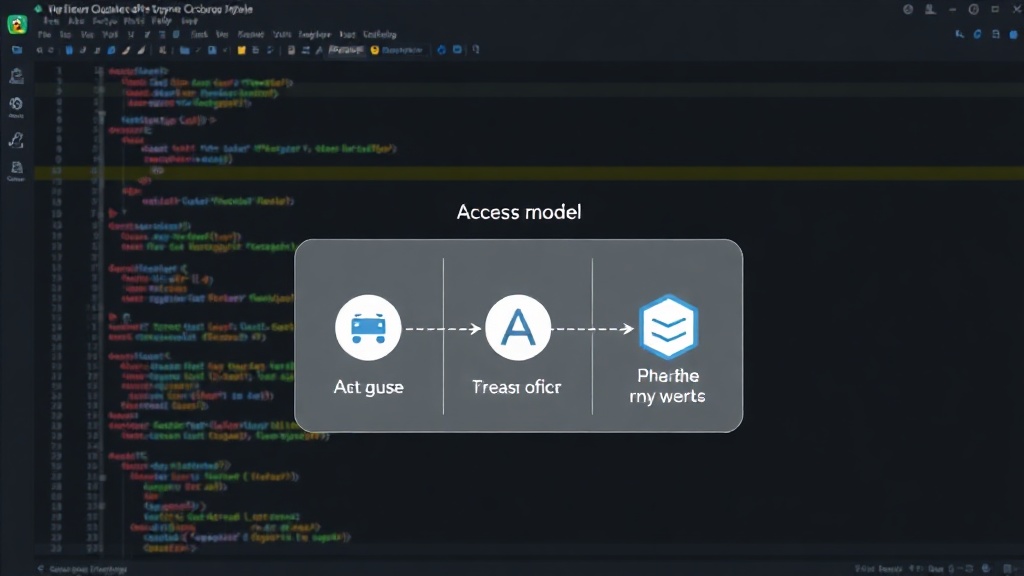
To address the authentication sprawl, a composable request pipeline was architected. This pipeline shifts the paradigm from imperative, per-route checks to a declarative, CI-enforced authentication structure. The core idea is to define authentication rules once and have them automatically applied across all relevant routes, ensuring consistency and significantly reducing the cognitive load on developers.
The system is built around a three-tier sovereign authentication model. Each tier represents a distinct level of access and requires specific credentials or subscription status. The pipeline processes incoming requests and systematically evaluates them against the defined rules for each tier. This composable nature means that new authentication requirements or modifications can be added as independent modules, which are then seamlessly integrated into the existing pipeline without requiring changes to individual route handlers.
Consider the challenge of identifying all routes requiring a paid subscription. In a traditional setup, this might involve grepping through hundreds of files, a process prone to errors and time-consuming. With the declarative pipeline, this information is inherent in the system's configuration. A query can instantly reveal all routes associated with the paid subscription tier, as the authentication logic is centralized and structured.
Declarative Auth: From Code to Configuration
The shift to a declarative approach means developers define *what* authentication should be, not *how* it should be implemented on each specific route. The pipeline then takes these declarations and enforces them. This is akin to defining a firewall policy: you specify which ports are open and to whom, rather than writing specific packet-filtering logic for every possible network interaction.
For APE-QIL, this translates to defining rules like: "Routes in the public tier require no authentication." or "Routes in the paid tier require a valid, active subscription token." These rules are then translated by the pipeline into executable logic. This declarative syntax makes the authentication structure transparent and auditable.
Furthermore, the pipeline is designed to be CI-enforced. This means that any changes to the authentication rules or the addition of new routes must pass automated checks before they can be deployed. This prevents accidental exposure of sensitive routes or the introduction of inconsistencies in access control. The CI pipeline acts as a gatekeeper, ensuring that the authentication layer remains robust and secure.
Composable Modules and Maintainability
The composability of the request pipeline is key to its scalability. Each authentication check (e.g., API key validation, subscription status verification, rate limiting) can be implemented as a self-contained module. These modules can be chained together in various combinations to form the complete authentication logic for a given request.
For instance, a route might require both a valid API key and a paid subscription. The pipeline would execute the API key validation module first. If successful, it would then proceed to the subscription validation module. If either check fails, the pipeline terminates the request early, returning an appropriate error code. This modularity allows for fine-grained control and makes it easier to update or replace individual authentication components without affecting the entire system.
The benefits extend to developer onboarding and code readability. New team members can quickly understand the API's security posture by examining the declarative configuration rather than deciphering complex, interwoven logic across hundreds of route handlers. This significantly reduces the time required to get up to speed and contributes to a more maintainable codebase.
The Future of API Authentication
The approach taken with APE-QIL QUANTUM SUPREME OCTOPUS represents a significant step forward in managing complex API authentication. By moving towards declarative, composable, and CI-enforced pipelines, developers can build more secure, scalable, and maintainable systems. This model is particularly relevant for platforms that are rapidly expanding their feature sets and integrating with numerous third-party services, where maintaining consistent access control is paramount.
The question for other developers building large-scale APIs is not *if* they will face similar authentication challenges, but *when*. The APE-QIL solution offers a blueprint for tackling this complexity head-on, transforming a potential liability into a strategic advantage.