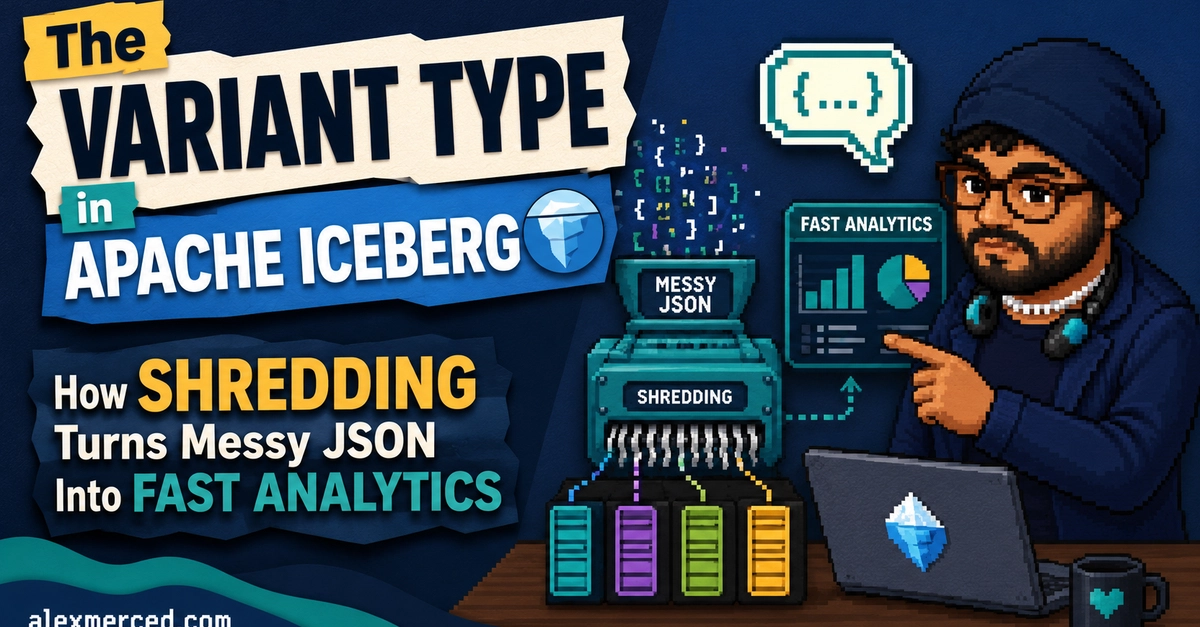
Data engineers universally encounter a specific, yet challenging, data structure: a table column saturated with JSON strings. This column, often holding event payloads, sensor readings, or volatile third-party API outputs, represents a goldmine of raw information. However, it simultaneously acts as a performance bottleneck, taxing every query that attempts to extract value. The traditional approach demands engines read entire strings, parse them, navigate nested structures, and finally isolate the required field. Across billions of rows, this process inflates query times, frustrates analysts, and swells cloud expenditures.
Introducing the Variant Type
Apache Iceberg, a popular open-source table format, addresses this pervasive issue with its Variant type, introduced in version 3 of the table format specification. The Variant type is designed to bridge the gap between the schema flexibility of JSON and the high-performance querying capabilities typically associated with strictly typed data. It allows data engineers to store semi-structured data directly within Iceberg tables while enabling the table format and query engines to optimize access, dramatically reducing the performance tax.
How Shredding Enhances Performance
The core innovation behind the Variant type's performance gains lies in a process often referred to as "shredding." When data is written to an Iceberg table with a Variant column, Iceberg doesn't just store the raw JSON string. Instead, it analyzes the structure of the JSON and, where possible, flattens common or frequently queried fields into separate, typed columns. This process is intelligent and adaptive; it doesn't require a predefined schema for the JSON content itself.
Think of it less like a traditional database column and more like a personal assistant for your data. This assistant understands the common requests you make for the information within the JSON, pre-sorts and labels the most frequently needed items, and makes them instantly accessible. Less frequently requested or highly variable data can still be accessed through the original JSON structure, but the common elements are optimized for speed.
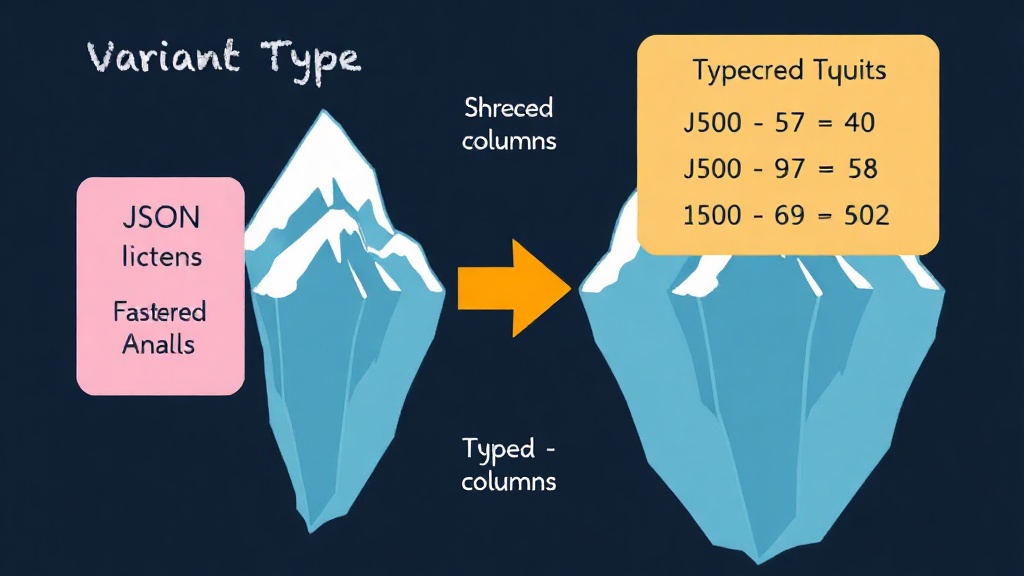
When a query engine interacts with an Iceberg table containing a Variant type, it can leverage this shredding. If the query targets a field that was successfully shredded into a typed column, the engine can read only that specific column, bypassing the need to parse the entire JSON string. This is analogous to fetching a specific book from a library by knowing its exact shelf location, rather than having to search every book in the entire building. This selective access significantly reduces I/O operations and CPU usage, leading to substantial performance improvements.
Schema Evolution and Flexibility
One of the most significant advantages of the Variant type is its ability to handle schema drift gracefully. Unlike traditional relational databases that would break or require complex ETL processes when JSON structures change, Iceberg's Variant type accommodates these shifts. When new fields appear in the JSON, they can be automatically incorporated into the Variant type's internal representation or potentially shredded in future writes if they become common. This maintains the agility required for modern data pipelines that often ingest data from sources with evolving schemas.
For developers and data engineers, this means reduced operational overhead. There's less need for constant schema management and migration scripts specifically for the JSON column. The table format itself becomes more resilient to changes in upstream data sources. This flexibility is crucial for use cases involving event streams, IoT data, or external APIs where schema stability cannot be guaranteed.
Query Engine Integration
The full potential of Iceberg's Variant type is realized through its integration with query engines like Spark, Trino, and Flink. These engines are being updated to understand and leverage the Variant type's capabilities. When querying data, they can recognize which fields have been shredded and optimize their execution plans accordingly. This means users can write standard SQL queries, referencing fields within the JSON as if they were regular columns, and the engine will automatically apply the performance optimizations provided by Iceberg.
For instance, a query like SELECT user_id, event_timestamp FROM events WHERE event_type = 'click', where user_id and event_timestamp are fields within a JSON payload stored in a Variant column, will benefit from shredding. The query engine will identify that user_id and event_timestamp were likely shredded and efficiently retrieve them without parsing the entire JSON blob for each row. This seamless integration ensures that the performance benefits are accessible without requiring users to learn a new, complex query syntax.
The Broader Impact on Data Engineering
The introduction of the Variant type in Apache Iceberg is more than just a technical feature; it represents a significant step towards unifying structured and semi-structured data processing. It acknowledges the reality that much of the world's valuable data exists in flexible, schema-less formats like JSON, and provides a robust, performant way to incorporate it into analytical workflows.
This advancement directly tackles the pain points of slow queries and high cloud costs associated with processing JSON data at scale. By enabling efficient querying of semi-structured data, Iceberg empowers organizations to derive insights from previously cumbersome data sources more readily. It lowers the barrier to entry for leveraging this data, potentially unlocking new analytical use cases and accelerating data-driven decision-making across the board. The question remains how broadly query engines will adopt and optimize for this feature, but the foundation laid by Iceberg is a powerful one.