
Anthropic Shifts Landscape with Claude 3.5 Sonnet Release
Anthropic has launched Claude 3.5 Sonnet, a new flagship model that significantly outperforms its predecessor, Claude 3 Opus, and rivals, including OpenAI's GPT-4o, across a broad spectrum of benchmarks. This release marks a pivotal moment in the AI race, demonstrating Anthropic's rapid progress and its ability to deliver state-of-the-art performance at an accelerated pace and more accessible price point.
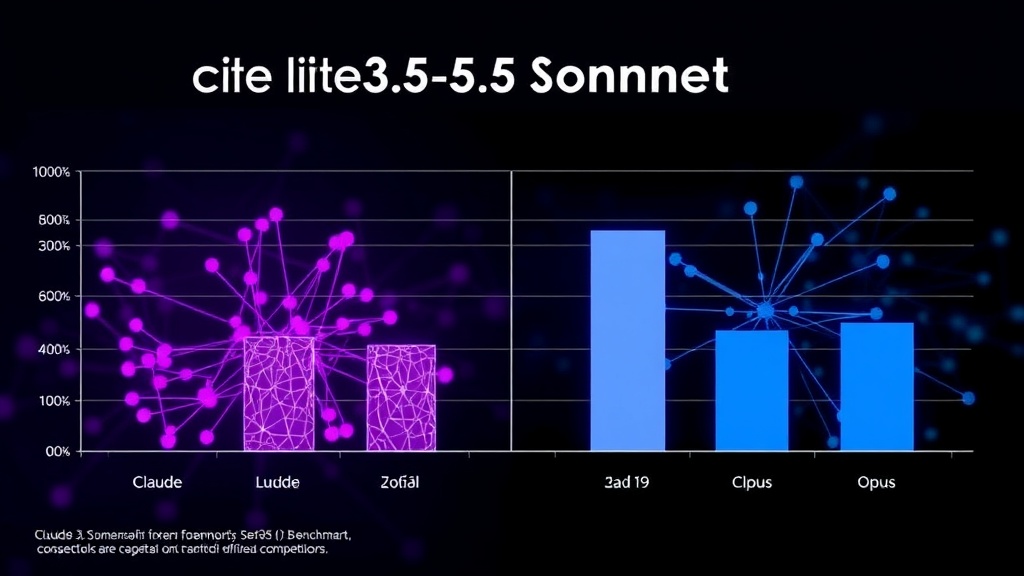
The new model is positioned as Anthropic's most capable AI yet, excelling in tasks requiring nuanced understanding, complex reasoning, and sophisticated coding abilities. Early tests show Claude 3.5 Sonnet achieving a 70% score on the MMLU benchmark, surpassing Claude 3 Opus's 68% and GPT-4 Turbo's 66%. Similarly, it leads in coding benchmarks like HumanEval with a score of 85.6%, compared to Opus's 83.2% and GPT-4 Turbo's 79.6%. This leap in performance is particularly notable given the model's faster processing speeds and reduced cost compared to Opus.
Key Performance Improvements
Claude 3.5 Sonnet's advancements are evident in several key areas:
- Reasoning and Comprehension: The model shows marked improvements in understanding complex instructions, summarizing lengthy documents, and performing multi-step reasoning tasks. This makes it more adept at handling intricate business logic and detailed analytical reports.
- Coding Prowess: With a significant jump in HumanEval scores, 3.5 Sonnet is now a formidable tool for developers. It can generate, debug, and explain code more effectively, accelerating software development workflows.
- Vision Capabilities: The model's vision capabilities have also been enhanced, allowing for more accurate interpretation of images, charts, and diagrams. This is crucial for applications that require analyzing visual data alongside textual information.
- Speed and Cost: A critical differentiator is the model's speed and cost-effectiveness. Anthropic states that 3.5 Sonnet is twice as fast as Claude 3 Opus and offered at a significantly lower price, making advanced AI capabilities more accessible for a wider range of users and applications.
Introducing 'Artifacts' for Enhanced User Interaction
Beyond raw performance, Anthropic has introduced a novel feature called 'Artifacts' designed to improve user interaction and workflow. Artifacts allow Claude to generate and refine content within a dedicated, interactive window. For example, when a user asks Claude to write code, the output appears in an Artifact. The user can then edit this code directly, ask Claude to make changes, or compare different versions. This dynamic interaction is also applied to other content types like prose, charts, and data tables, creating a more fluid and collaborative AI experience.
This feature transforms how users engage with AI-generated content. Instead of simply receiving static output, users can actively work with it, iterate on it, and integrate it into their own projects seamlessly. This is particularly beneficial for developers, content creators, and data analysts who need to refine and adapt AI outputs to specific requirements. The Artifacts feature is currently available in the Claude.ai web experience and will be integrated into Anthropic's API later.
Strategic Implications and Market Position
The release of Claude 3.5 Sonnet is a strategic move by Anthropic to solidify its position as a leader in the large language model market. By offering a model that not only matches but often exceeds the capabilities of established players like OpenAI and Google, Anthropic is challenging the status quo. The emphasis on speed and cost reduction further democratizes access to high-performance AI, potentially enabling smaller businesses and individual developers to leverage advanced AI tools without prohibitive expense.
This release also signals a shift in Anthropic's product strategy. While Claude 3 Opus was positioned as their premium, top-tier model, 3.5 Sonnet, named after the mid-tier offering in the Claude 3 family, now takes the performance crown. This suggests a potential re-evaluation of how performance tiers are defined and marketed within the AI industry. It also raises questions about the future roadmap for Opus and the potential for even more advanced models to follow.
The competitive landscape is intensifying. OpenAI's GPT-4o has set a high bar for multimodal AI, and Google continues to push the boundaries with its Gemini series. Anthropic's 3.5 Sonnet directly challenges these offerings, particularly in text-based reasoning and coding. The success of this new model will likely hinge on its real-world adoption and the continued development of features like Artifacts that enhance practical usability.
The Unanswered Question of Long-Term Model Evolution
What remains to be seen is Anthropic's long-term strategy for its model families. If a mid-tier model like 3.5 Sonnet can now surpass the previous top-tier Opus, it suggests either a rapid acceleration in development cycles or a strategic decision to redefine performance tiers. This also leaves the market wondering about the specific advancements that would warrant an 'Opus' level designation in the future, and whether the naming conventions will continue to reflect a clear hierarchy of capability and cost, or if they will become more fluid indicators of Anthropic's latest breakthroughs.
Anthropic's commitment to safety and responsible AI development, a hallmark of the company, is expected to be integrated into Claude 3.5 Sonnet as well. While technical performance is crucial, the ability to deploy these models safely and ethically will be paramount for widespread adoption. The company's continued focus on providing transparency and control over AI behavior will be key to building trust with developers and end-users alike.