The Challenge of Long-Term Memory in LLMs
Current large language models (LLMs) struggle with tasks requiring sustained attention and memory over long contexts. While context windows have expanded dramatically, they primarily offer a form of short-term, sequential recall. This is akin to a human trying to remember a long lecture by re-reading their notes from the beginning each time, rather than having a coherent, searchable knowledge base. This limitation hinders their ability to perform complex reasoning, maintain consistent personas, and engage in sophisticated multi-turn collaborations.
Anthropic's recent research introduces the concept of a 'global workspace' for LLMs, drawing inspiration from cognitive science theories of human consciousness. This theoretical framework proposes a system where an LLM can access and integrate information from a vast, persistent memory store, rather than being limited to the immediate input context. This goes beyond simply increasing the token limit; it aims to create a more dynamic and efficient way for the model to manage and utilize its knowledge.
How a Global Workspace Works
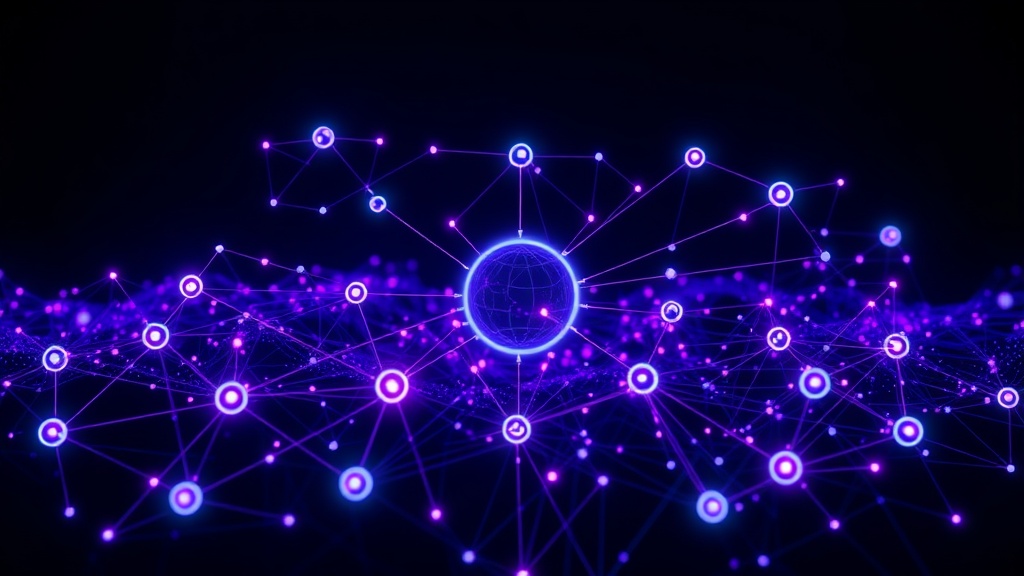
The core idea of a global workspace, as theorized by Bernard Baars and later expanded upon, is that a limited amount of information becomes globally available to a wide range of specialized unconscious processes. In the context of LLMs, this translates to a central repository of information that the model can selectively access, process, and update. This is fundamentally different from the current transformer architecture, which processes information in parallel but lacks a centralized, accessible memory beyond its immediate input.
Anthropic's proposal envisions this global workspace as a way to overcome the limitations of fixed context windows. Instead of re-processing the entire history of a conversation or document with each new token, the LLM could query this workspace for relevant information. This would allow for:
- Persistent State: Maintaining a consistent understanding of ongoing tasks, user preferences, and conversational history across extended interactions.
- Efficient Knowledge Retrieval: Quickly accessing relevant facts, previous conclusions, or domain-specific knowledge without needing to regenerate or re-encode it from scratch.
- Complex Reasoning: Enabling multi-step reasoning processes that require synthesizing information from disparate sources or recalling past deductions.
- Improved Collaboration: Facilitating more coherent and effective collaboration between multiple AI agents or between an AI and a human, by providing a shared, accessible memory state.
The researchers suggest that this global workspace could be implemented using various memory architectures, potentially including retrieval-augmented generation (RAG) systems, vector databases, or novel memory structures designed specifically for LLMs. The key is the concept of a readily accessible, dynamic repository that the LLM can interact with much like a human brain accesses long-term memory.
Analogy: The Librarian and the Books
Think of the current LLM context window like a small reading desk where only a few books can be opened at once. If you need information from a book you put away hours ago, you have to go back to the stacks, find it, and re-read it from the start to understand its relevance to your current task. A global workspace, however, is like having a highly efficient librarian. You can ask the librarian a question, and they can instantly recall or retrieve the exact page from any book in the entire library, bring it to your desk, and you can integrate that specific piece of information into your work without having to re-read the entire volume.
Potential Implications and Future Directions
The successful implementation of a global workspace could significantly advance the capabilities of LLMs. It could lead to AI systems that are more reliable, capable of handling much longer and more complex tasks, and better suited for applications requiring deep domain expertise or long-term memory, such as scientific research, complex coding projects, or extended creative writing.
However, significant challenges remain. Designing an efficient and scalable memory architecture that can be seamlessly integrated with LLM inference is a complex engineering problem. Ensuring that the LLM can accurately and efficiently retrieve the *correct* information from the workspace, and not just *any* information, is crucial for preventing hallucinations and maintaining coherence. Furthermore, managing the computational cost associated with accessing and updating such a large memory store will be critical for practical deployment.
Anthropic's work is theoretical at this stage, but it opens a vital avenue for research. It shifts the focus from simply scaling up existing models to rethinking the fundamental architecture of how LLMs process and utilize information. The concept of a global workspace offers a promising path toward more intelligent, capable, and human-like AI reasoning and memory.
Unanswered Questions
What remains unclear is the precise mechanism by which an LLM would learn to optimally query and update this global workspace. Will it require explicit training signals for memory management, or will it emerge through self-supervised learning? The efficiency and accuracy of retrieval are paramount, and the research community will be watching closely to see how these architectural challenges are overcome in practice.