The Problem with Custom Anthropic API Wrappers
For a decade, developers have been mired in boilerplate code. Whether it was FTPing files in early PHP or crafting custom Python scripts to check for new Claude model releases or monitor token costs, the cycle of redundant integration work has persisted. This is particularly true in the burgeoning field of agentic workflows. The common practice when integrating Anthropic's Claude models into an application is to build a bespoke API wrapper. This approach, however, is fundamentally inefficient. If you are using tools like Cursor or Claude Desktop, the model should ideally be able to interface directly with its foundational API without requiring intermediary code.
The Anthropic MCP (Messages API Control Plane) server addresses this redundancy. It reframes the Messages API, transforming it from a separate integration task into a set of manageable tools. Instead of developers building their own orchestration layers, the MCP server enables an AI agent to function as that orchestration layer for the API itself. This significantly reduces the amount of custom code required, allowing developers to focus on the core logic of their applications rather than the mechanics of API communication.
The core issue with the 'just use the API' mantra in the context of LLMs is that it often overlooks the practicalities of development. Building robust applications with LLMs involves more than just sending a prompt and receiving a response. It requires managing conversation history, handling rate limits, parsing complex outputs, and integrating with other services. Each of these aspects can lead to the creation of substantial amounts of boilerplate code when done manually for each new model or API version. This is where a solution like the MCP server becomes invaluable. It abstracts away much of this complexity, offering a standardized and efficient way to interact with Anthropic's models.
Consider the analogy of building a house. Instead of every builder crafting their own custom nails from raw iron for each project, they use standardized nails produced in a factory. The MCP server acts as that nail factory for Anthropic API interactions. It provides pre-fabricated, reliable components that developers can readily incorporate into their projects. This not only saves time and resources but also improves the overall quality and consistency of the integration.
How MCP Server Changes the Game
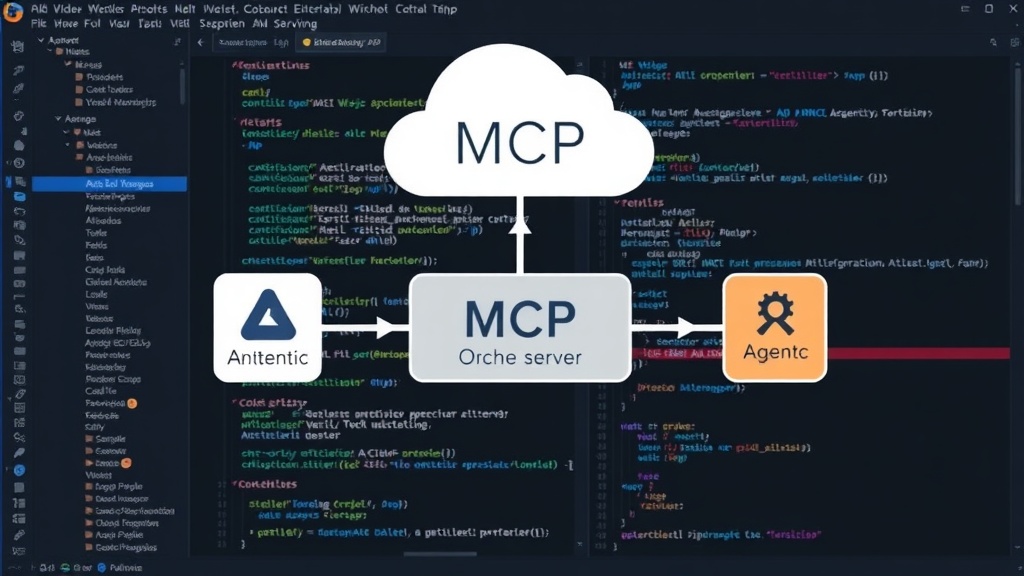
The Anthropic MCP server redefines how developers interact with the Claude API by treating the Messages API endpoints as tools. This paradigm shift simplifies the integration process significantly. Instead of writing code to format requests, handle responses, and manage state for each specific interaction, developers can leverage the MCP server to expose these functionalities as distinct tools. This means an AI agent, which is essentially an orchestration layer, can directly utilize these tools to communicate with the Anthropic API.
This approach fundamentally alters the developer experience. Rather than spending time on the mechanics of API calls, developers can focus on the agent's logic and capabilities. The MCP server handles the intricacies of the Messages API, such as managing context windows, token counts, and response parsing. This allows for faster iteration and development cycles, especially when building complex agentic workflows that require multiple interactions with the LLM.
The benefits extend beyond mere convenience. By standardizing the interaction layer, the MCP server promotes better code maintainability and reduces the likelihood of integration errors. When Anthropic updates its API, developers using custom wrappers often face the daunting task of retrofitting their existing code. With the MCP server, the responsibility for adapting to API changes lies with the server implementation, freeing developers from this burden. This leads to more robust and future-proof applications.
The 'Just Use the API' Fallacy
The common advice to simply 'use the API' for LLM integrations often fails to account for the practical realities of building software. While technically correct, it sidesteps the significant engineering effort required to build reliable and scalable integrations. Developers often underestimate the amount of boilerplate code needed to manage sessions, parse complex JSON responses, handle errors gracefully, and implement retry logic for API calls. This is not just about writing a few lines of code; it can quickly balloon into an entire microservice or a substantial part of an application's codebase.
For example, a developer might need to implement a system that summarizes long documents using Claude. This seemingly simple task requires careful management of the prompt, ensuring that the entire document fits within the model's context window, potentially by chunking and summarizing iteratively. It also involves parsing the structured output from Claude, which might be a JSON object containing the summary and confidence scores. All of this requires custom code that needs to be maintained and updated as the API evolves.
The MCP server effectively preempts this problem. By providing a set of pre-built tools that abstract the underlying API calls, it allows developers to plug into these functionalities directly. This is akin to using a high-level programming language instead of assembly. While assembly gives you fine-grained control, a high-level language allows you to build complex applications much faster. The MCP server offers that higher level of abstraction for interacting with Anthropic's models.
What nobody has addressed yet is what happens to the thousands of developers who have already built and deployed custom API wrappers. Will there be migration tools, or will they be forced to re-architect their applications to adopt the MCP server? This transition could represent a significant undertaking for existing projects relying on custom integrations.
Moving Forward with MCP
The adoption of the MCP server represents a significant step towards more efficient and maintainable AI application development. By standardizing the interaction with Anthropic's Messages API, it allows developers to bypass the tedious process of writing and maintaining custom wrappers. This not only accelerates development but also leads to more robust and scalable solutions.
For developers working with agentic workflows, the MCP server offers a clear path to integrate Claude models without reinventing the wheel. It transforms the API into a set of readily available tools, enabling AI agents to orchestrate interactions more effectively. This shift from custom integration code to a tool-based approach is crucial for the continued growth and accessibility of advanced AI capabilities.
If you are currently spending time writing Python scripts to interact with Claude, or if your team is building its own internal API abstraction layer for Anthropic, it is time to re-evaluate that approach. The MCP server provides a more streamlined, efficient, and maintainable alternative that will likely become the standard for interacting with Anthropic's powerful language models.