
The Problem: Location Services Drain Batteries
Smartphones are powerful tools, but their constant need to know our location can be a significant battery drain. Traditional geofencing implementations often rely on frequent polling of GPS or network location, leading to rapid battery depletion. This is particularly problematic for apps that require continuous or semi-continuous location monitoring, such as delivery services, personal safety apps, or even simple automation tools like automatically silencing a phone upon entering a specific location. The challenge lies in balancing the need for accurate, timely location updates with the imperative to conserve device power. Developers have historically faced a trade-off: high accuracy means high battery consumption, and low battery consumption means potentially missed geofence triggers or inaccurate location data.
Introducing a Battery-Conscious Architecture
The core of a battery-efficient geofencing engine lies in minimizing the use of power-hungry location sensors and optimizing how and when location data is accessed. This requires a multi-layered approach that leverages the Android platform's capabilities intelligently. Instead of continuously querying the GPS, a more efficient strategy involves using a combination of lower-power location methods and smart event triggers.
Leveraging Fused Location Provider
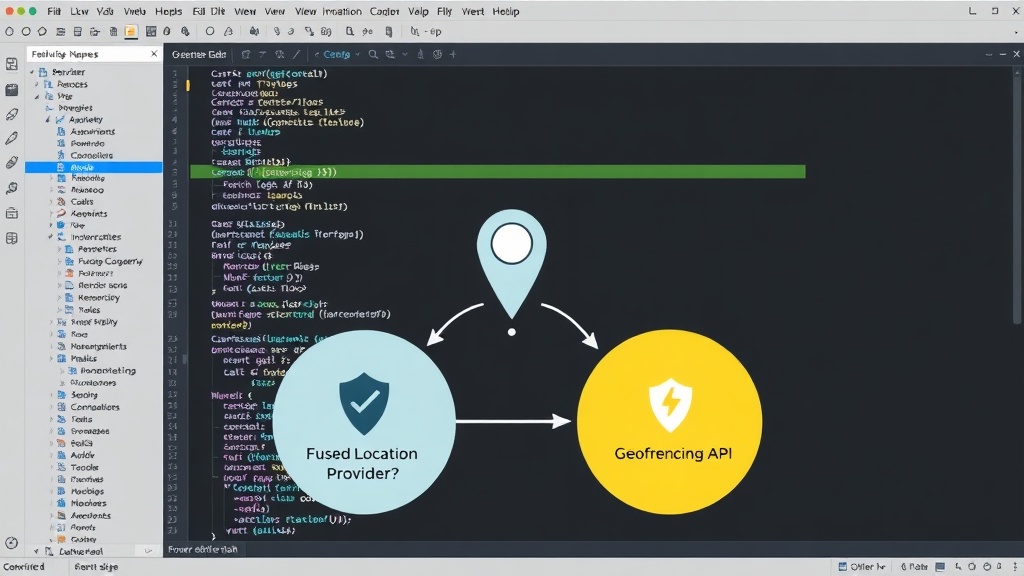
Android's Fused Location Provider API is a critical component. It abstracts away the complexity of managing different location technologies (GPS, Wi-Fi, cellular triangulation) and intelligently combines their data to provide the best possible location estimate with the lowest power consumption. By requesting location updates with appropriate accuracy and interval settings, developers can significantly reduce battery usage compared to directly accessing individual sensors.
Intelligent Geofence Monitoring
The engine should not simply rely on the Fused Location Provider for continuous updates. Instead, it should define geofence regions and rely on the Android Geofencing API to trigger events only when the device enters or exits these predefined areas. This API is optimized to work with the device's hardware to detect these transitions efficiently, often without needing to wake the device or actively poll location. The key is to set up geofences that are broad enough to avoid excessive triggering due to minor location fluctuations but precise enough for the intended use case.
State Management and Persistence
A robust geofencing engine must manage the state of geofences effectively. This includes persisting geofence definitions and their current status across app restarts and device reboots. Using Android's `WorkManager` or `AlarmManager` for scheduling background tasks related to geofence updates or re-registration is crucial. `WorkManager` is particularly well-suited for deferrable, guaranteed background work, ensuring that geofences are maintained even if the app is killed by the system.
Optimizing for Different Scenarios
Battery efficiency can be further enhanced by adapting the geofencing strategy based on the device's current state. For instance, when the device is stationary for an extended period, the engine can reduce the frequency of location checks or rely solely on passive location updates from other apps. Conversely, when the device is in motion, more frequent, albeit still optimized, location checks might be necessary. This dynamic adjustment minimizes power consumption during idle periods while maintaining responsiveness when needed.
Handling Edge Cases and User Experience
Beyond the technical architecture, user experience is paramount. The engine must gracefully handle scenarios such as temporary loss of location signal, inaccurate readings, and rapid entry/exit from geofences. Providing clear feedback to the user about the geofencing status and allowing them to manually override or disable features is essential. For example, an app designed to automatically silence a phone in meetings should have a clear way for the user to disable this feature if it interferes with an important call or if they simply prefer manual control. The initial motivation for such an engine often stems from these user-facing frustrations – the jarring sound in a quiet room, or the missed notification because a setting was forgotten. An efficient engine solves these problems reliably and unobtrusively.
Conclusion: A Smarter Approach to Location
Architecting a battery-efficient geofencing engine for Android is not about reinventing location services, but about using them more intelligently. By combining the Fused Location Provider and the Geofencing API, implementing robust state management, and adopting a context-aware approach to location monitoring, developers can create applications that are both powerful and power-friendly. This approach ensures that location-aware features enhance the user experience without becoming a burden on the device's battery life, addressing the core problem that prompts the need for such systems in the first place.