
The End of Prompting? Ng's Bold Prediction
Andrew Ng, a towering figure in AI research and a co-founder of Coursera, has issued a bold prediction: the era of manual prompting for AI agents is drawing to a close. Within three to six months, Ng anticipates that the vast majority of AI tasks will be handled by what he terms "self-improving loops," effectively rendering the current practice of detailed, step-by-step prompting obsolete. This forecast signals a fundamental shift in how humans will interact with and leverage artificial intelligence.
Ng's statement, shared on Reddit, highlights his personal experience: "100% of my tasks are now done by AI agents." He attributes this acceleration to the rapid evolution of AI capabilities, stating, "Hype has exceeded my expectations. Loops is next step." This isn't just theoretical musing; it's a declaration rooted in his direct engagement with advanced AI systems. The implication is profound: AI is moving from a tool that requires constant human guidance to a more autonomous entity capable of self-directed improvement and task execution.
Understanding Self-Improving Loops
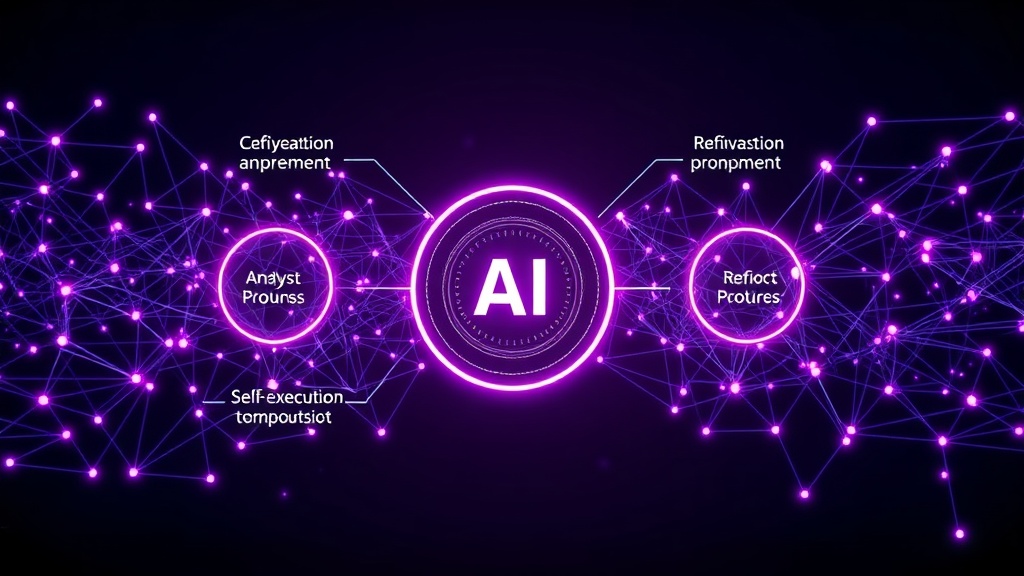
The concept of "self-improving loops" suggests AI systems that can iteratively refine their own performance without continuous human intervention. Instead of a user meticulously crafting prompts to guide an AI through a task, these loops would enable the AI to:
- Execute a task.
- Analyze its own output or performance.
- Identify areas for improvement.
- Adjust its internal parameters or strategy.
- Re-execute the task with improved performance.
- Repeat the cycle until a predefined goal is met or performance plateaus.
Think of it less like giving a chef a detailed recipe for every single dish, and more like hiring an incredibly skilled sous chef who observes the restaurant's operations, learns from feedback (even subtle cues), and proactively optimizes their workflow to improve efficiency and quality over time. This autonomous learning and adaptation is the core of Ng's prediction.
The Shift from Prompt Engineering
For the past few years, prompt engineering has been the primary interface for many AI applications, especially large language models (LLMs). Developers and users alike have invested significant effort in learning how to craft precise instructions, context, and examples to elicit desired responses from AI models. This involved understanding model biases, output formats, and the nuances of language that influence AI behavior. However, Ng suggests this paradigm is becoming increasingly inefficient as AI systems mature.
The move towards self-improving loops implies a higher level of abstraction. Instead of specifying *how* to do something, users will define *what* needs to be achieved and the criteria for success. The AI agent, operating within its loop, will then figure out the best approach, iterate on it, and deliver the final outcome. This could dramatically reduce the cognitive load and time investment required from human users, making AI accessible and powerful for a much broader audience.
Implications for AI Development and Deployment
Ng's prediction has far-reaching implications across the AI landscape:
- Agentic AI: The trend clearly points towards more sophisticated AI agents that can act autonomously. This means developing better frameworks for task decomposition, self-reflection, and goal-oriented execution.
- Reduced Reliance on Manual Prompting: The skills associated with expert prompt engineering might become less critical. The focus will shift to designing effective AI architectures that can implement these self-improving loops and setting appropriate performance metrics and guardrails.
- Accelerated Innovation: By automating the refinement process, AI development and deployment cycles could shorten significantly. New capabilities and applications could emerge much faster.
- New Interfaces: User interfaces will likely evolve to support the definition of goals and constraints rather than detailed instructions. This could involve more declarative programming styles or sophisticated goal-setting tools.
The current hype cycle around AI has certainly set the stage for such advancements. While the speed of adoption Ng predicts is aggressive, the underlying technological trajectory is evident. Companies are already experimenting with AI agents that can chain tools, plan tasks, and learn from feedback. The challenge lies in scaling these capabilities and ensuring their reliability and safety.
Challenges and Unanswered Questions
While Ng's vision is compelling, several challenges remain. Ensuring the safety and alignment of self-improving AI agents is paramount. Without careful human oversight and robust ethical frameworks, autonomous systems could deviate from intended goals or produce unintended consequences. The complexity of designing and debugging these self-improving loops also presents a significant engineering hurdle. Furthermore, what happens to the vast ecosystem of tools and services built around prompt engineering? Will they adapt, or become obsolete?
The transition to self-improving loops could democratize AI further, enabling individuals and businesses to achieve complex outcomes with less technical expertise. However, it also necessitates a new understanding of AI system design and management. The next few months will be critical in observing whether Ng's ambitious timeline for this paradigm shift becomes a reality.