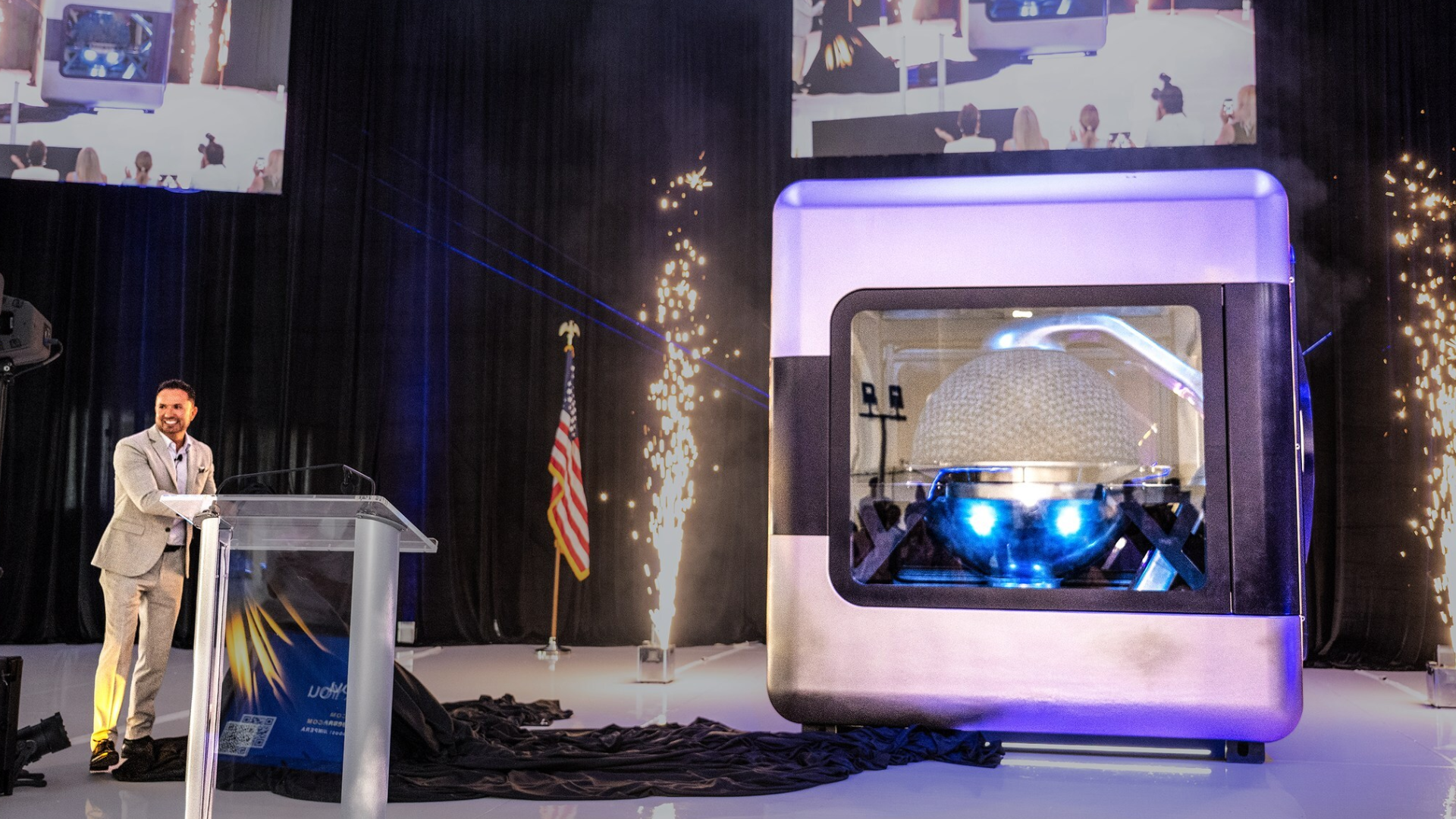
Ampera's Novel Reactor Design
Nuclear technology startup Ampera has revealed a new type of small modular reactor (SMR) that leverages 3D printing for its manufacturing process. The company touts this as the world's first subcritical, solid-state, factory-built thorium nuclear reactor. This innovation aims to address the immense and growing power demands of artificial intelligence data centers, a sector facing significant energy supply challenges.
Ampera's approach departs from traditional nuclear reactor designs in several key ways. The reactor is described as 'subcritical,' meaning it does not sustain a chain reaction on its own. This inherent safety feature significantly reduces the risk of meltdowns, a concern that has historically plagued public perception of nuclear power. Instead, it relies on an external neutron source to initiate and sustain fission, allowing for precise control over the reaction rate. This design principle is often associated with enhanced safety profiles and simpler operational requirements compared to critical reactors.
Furthermore, the reactor is 'solid-state,' indicating that its core components are made from robust, non-moving parts. This contrasts with conventional reactors that often involve complex mechanical systems for control and fuel handling. A solid-state design typically implies greater durability, reduced maintenance needs, and a longer operational lifespan. The use of thorium as the primary fuel source is another significant differentiator. Thorium is more abundant than uranium, produces less long-lived radioactive waste, and is inherently more resistant to nuclear proliferation due to its physical and chemical properties. Ampera's vision is to mass produce these reactor modules, moving away from the bespoke, site-specific construction models common in the nuclear industry.
Manufacturing and Scalability
The integration of 3D printing into the manufacturing process is central to Ampera's strategy for achieving mass production and cost reduction. Traditional nuclear reactor construction is notoriously slow, expensive, and complex, often involving lengthy permitting processes and highly specialized, on-site fabrication. By utilizing advanced additive manufacturing techniques, Ampera aims to streamline production, increase precision, and reduce the overall cost per unit. This factory-built approach allows for rigorous quality control and standardized production, akin to how other advanced technological components are manufactured today.
Ampera anticipates that its 3D-printed thorium reactors will be capable of powering AI data centers, which are known for their insatiable appetite for electricity. As AI models become more sophisticated and widespread, the computational power required to train and run them escalates dramatically. This surge in demand is placing unprecedented strain on existing power grids, particularly in regions with high concentrations of data centers. Ampera's modular design is intended to offer a scalable, reliable, and carbon-free energy solution that can be deployed closer to where the power is needed.
The company's ambitious goal is to be the first to mass produce these power sources. If successful, this could represent a paradigm shift in how high-demand industries, especially those at the forefront of technological advancement like AI, secure their energy needs. The factory-built nature of the modules also suggests a faster deployment timeline once regulatory hurdles are cleared, compared to the decades-long construction periods sometimes seen with conventional nuclear plants.
Safety and Environmental Considerations
The subcritical nature of Ampera's reactor design is a critical safety feature. Unlike critical reactors that must be carefully managed to prevent runaway chain reactions, subcritical reactors cease operation immediately if the external neutron source is removed. This passive safety characteristic significantly lowers the operational risk and simplifies emergency response protocols. The solid-state construction further enhances reliability by minimizing the potential for mechanical failures that could compromise safety systems.
The choice of thorium as fuel also brings substantial environmental benefits. Thorium is roughly three to four times more abundant than uranium in the Earth's crust. Its use in a thorium-uranium fuel cycle generates significantly less transuranic waste, which is particularly problematic due to its long half-life and high radiotoxicity. Waste from thorium reactors is generally less hazardous and decays to safe levels much faster than waste from traditional uranium-based reactors. This could alleviate some of the long-term storage challenges associated with nuclear power, making it a more sustainable option.
Ampera's proposed solution offers a path toward decarbonizing the energy-intensive AI sector. Data centers are often criticized for their substantial carbon footprint, primarily due to their reliance on fossil fuel-based electricity. By providing a clean, dense, and reliable power source, Ampera's reactors could enable the continued growth of AI and other high-tech industries without exacerbating climate change. The challenge, as with any nuclear technology, will be navigating the complex regulatory landscape and gaining public acceptance for a novel reactor design, even one emphasizing enhanced safety features.
Market Implications and Future Outlook
Ampera's announcement positions them as a potential frontrunner in the emerging market for advanced nuclear power solutions tailored for industrial and commercial applications. The AI data center boom presents a significant, untapped market for reliable, high-density power generation. If Ampera can deliver on its promises of mass production and cost-effectiveness, it could capture a substantial share of this market.
The company's strategy of factory-built, modular reactors is a growing trend in the SMR space, aiming to achieve economies of scale and predictable manufacturing. However, the journey from prototype to widespread deployment is fraught with challenges, including stringent regulatory approvals, securing substantial funding for scaling production, and demonstrating long-term operational viability and safety in real-world conditions. The specific details of their 3D printing process, material science innovations, and fuel cycle management will be critical to their success.
What remains to be seen is how quickly Ampera can move from its current stage to commercial deployment, and whether its subcritical, solid-state thorium design will prove to be as robust and cost-effective in practice as it is in theory. The success of this venture could pave the way for other innovative nuclear technologies to address the world's escalating energy demands, particularly those driven by advancements in computing and artificial intelligence.