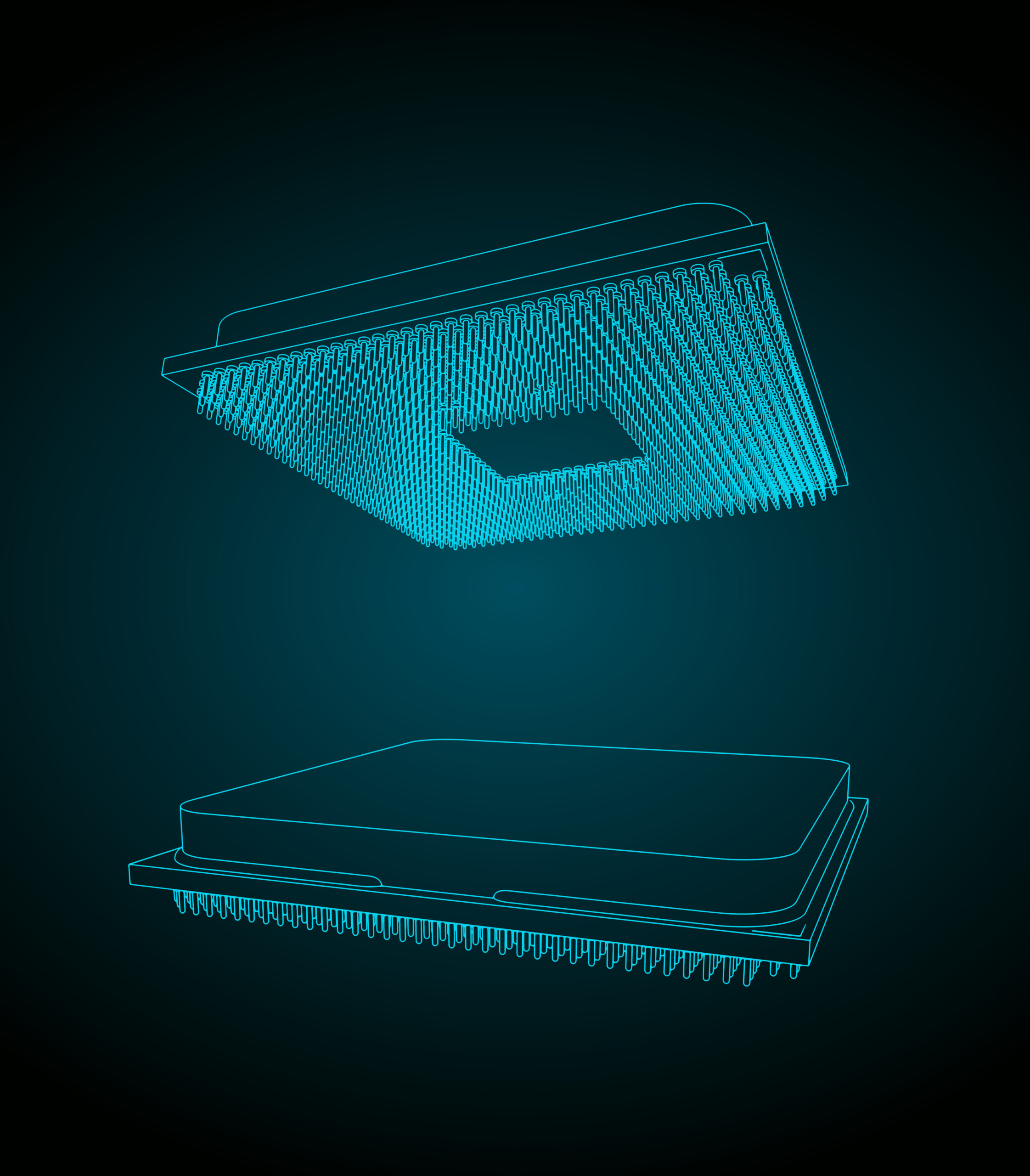
Amkor Technology's Strategic Acquisition Signals Consolidation
Amkor Technology kicked off the week with a significant move, announcing a $1.5 billion deal that underscores a trend toward consolidation in the semiconductor packaging and test sector. This acquisition, details of which are still emerging, positions Amkor to expand its capabilities and market reach. The semiconductor supply chain, particularly the back-end processes of packaging and testing, is becoming increasingly critical as chip complexity grows and demand for advanced solutions intensifies. Companies are looking to secure their position through strategic M&A to offer more integrated services and capture greater market share. This deal is a clear indicator that mature, established players are looking to leverage their financial strength to gain an edge in a competitive landscape.
The move by Amkor is not an isolated event. The semiconductor industry, despite recent cyclical downturns, continues to see substantial investment and strategic maneuvering. As chip designs become more intricate, requiring advanced packaging solutions like 2.5D and 3D integration, the importance of reliable and innovative packaging partners grows. Amkor's investment suggests a strong belief in the continued demand for these services, even as the industry navigates geopolitical tensions and supply chain recalibrations. This acquisition could enable Amkor to offer a broader portfolio of solutions, from advanced leadframe and substrate-based packaging to wafer-level packaging, catering to a wider range of customer needs across automotive, high-performance computing, and mobile markets.
Intel Foundry Services Sees Robust Revenue Growth
Intel Foundry Services (IFS) reported a substantial 31% increase in revenue, a key metric signaling positive momentum for Intel's ambitious foundry business. This growth suggests that Intel's strategy to compete with established foundries like TSMC and Samsung is gaining traction. The company has been investing heavily in expanding its manufacturing capacity and developing advanced process technologies, aiming to attract external chip designers to its fabs. The reported revenue jump indicates that these efforts are beginning to bear fruit, with more customers choosing Intel for their chip manufacturing needs. This is a critical development for Intel, as the success of its foundry business is central to its long-term turnaround strategy and its ability to compete effectively in the increasingly vital semiconductor manufacturing space.
The growth in IFS revenue is more than just a financial uptick; it represents a potential shift in the foundry landscape. For years, the market has been dominated by a few key players, making it challenging for new entrants or companies seeking diversification. Intel's progress suggests that its commitment to process innovation, including its upcoming Intel 3 and Intel 20A nodes, is resonating with customers. The company's integrated device manufacturing (IDM) model, which allows it to design its own chips while also manufacturing for others, offers a unique proposition. This dual capability can provide valuable insights into design-for-manufacturing and process optimization, potentially appealing to fabless companies looking for a reliable and supportive manufacturing partner. The challenge for Intel remains scaling its capacity to meet anticipated demand while maintaining leading-edge technology leadership.
Siemens' Dual Acquisitions and Industry Investments
Siemens continued its aggressive expansion in the electronic design automation (EDA) and semiconductor software space with two key acquisitions. While the specific targets are not detailed in this review, such moves typically aim to bolster Siemens' portfolio of tools for chip design, simulation, and manufacturing. The company has been strategically investing in acquiring technologies that can enhance its offerings to semiconductor manufacturers and designers, from early-stage R&D to full-scale production. These acquisitions signal Siemens' commitment to being a comprehensive solutions provider in the high-tech manufacturing sector, particularly for the complex world of semiconductor production.
The semiconductor industry relies on sophisticated software tools for every stage of the chip lifecycle. EDA tools are essential for designing integrated circuits, enabling engineers to create complex layouts, simulate performance, and verify functionality. Furthermore, software for manufacturing execution systems (MES), process control, and supply chain management is crucial for optimizing production in high-volume fabs. By acquiring companies in these areas, Siemens aims to create a more integrated and seamless digital workflow for its customers. This strategy allows them to offer end-to-end solutions that can improve efficiency, reduce time-to-market, and enhance the overall quality and yield of semiconductor production. The dual nature of these acquisitions suggests a focus on both the design and the manufacturing aspects of the semiconductor value chain.
Market Dynamics: SiC Plant Closure, AMD's Strong Performance, and TSMC Price Increases
The week also saw mixed signals and specific market pressures. The reported closure of a Silicon Carbide (SiC) plant highlights the challenges and volatility within specific advanced materials segments. SiC is crucial for power electronics, particularly in electric vehicles and renewable energy systems, but the market can be subject to rapid shifts in demand and intense competition, leading to consolidation or closures when companies cannot achieve sufficient scale or cost-efficiency. This event serves as a reminder that not all segments of the semiconductor industry are experiencing uniform growth.
In contrast, AMD had a notable week, with its performance and strategic positioning drawing attention. While specific details were not provided, AMD's continued strong showing in the CPU and GPU markets, particularly in data center and high-performance computing, suggests its competitive strategy is succeeding. The company has been gaining market share from rivals by offering compelling products that balance performance and cost. This sustained momentum is vital for AMD as it continues to challenge established leaders in key computing segments.
Adding to the industry's dynamic, TSMC, the world's largest contract chip manufacturer, is reportedly planning price hikes. This move, if enacted, would reflect strong demand for its advanced manufacturing services and potentially rising costs associated with capacity expansion and R&D. Such price increases from TSMC, a bellwether for the industry, can have ripple effects across the entire semiconductor ecosystem, influencing the cost of components and end products for countless companies. It also underscores the high barriers to entry and the premium placed on access to leading-edge manufacturing capacity.
Investment in AI Inference and Emerging Technologies
A significant development was the announcement of $300 million in funding specifically aimed at accelerating AI inference. This substantial investment underscores the growing importance of efficient AI model deployment. While training large AI models requires immense computational power, running these models in real-world applications (inference) demands specialized hardware and software optimized for speed and power efficiency. This funding round signals strong investor confidence in the AI inference market and the companies developing solutions to meet this burgeoning demand. Startups and established players alike are focusing on hardware accelerators, optimized algorithms, and specialized software stacks to make AI inference more accessible and cost-effective across various devices and platforms.
Beyond AI inference, other technological advancements were highlighted. Keysight Technologies' work in multiphysics simulation points to the increasing need for integrated simulation tools that can model complex physical phenomena. As chips and systems become more integrated, understanding the interplay of electrical, thermal, and mechanical properties is crucial for reliable design and performance. Furthermore, the exploration of alternatives to traditional copper interconnects suggests ongoing research into overcoming the physical limitations of current materials and architectures, potentially paving the way for future generations of high-performance chips.