Zen 6 Engineering Sample Emerges
A 10-core engineering sample from AMD, identified with the codename 'Medusa Point,' has surfaced on Geekbench. This unreleased chip is anticipated to be part of AMD's next-generation Ryzen AI lineup, potentially branded as the Ryzen AI 9 565. The preliminary benchmark results suggest a significant performance leap over AMD's current flagship mobile processors, the Ryzen AI 9 HX 370 and the even more powerful Ryzen AI MAX+ 395. This early appearance provides a glimpse into the future of AMD's integrated graphics and AI processing capabilities, signaling a strong competitive move in the mobile silicon space.
The Geekbench listing details a 10-core, 20-thread processor. While the exact clock speeds are not definitively stated for the engineering sample, the benchmark scores indicate a processor that can achieve higher sustained performance than existing Zen 4 and Zen 5-based Ryzen AI chips. The single-core score reported for the Medusa Point APU is particularly noteworthy, demonstrating a substantial uplift that hints at architectural improvements within the forthcoming Zen 6 microarchitecture. Multi-core performance also shows a marked improvement, suggesting enhanced efficiency and throughput for heavily threaded workloads.
Performance Metrics: A Clear Step Up
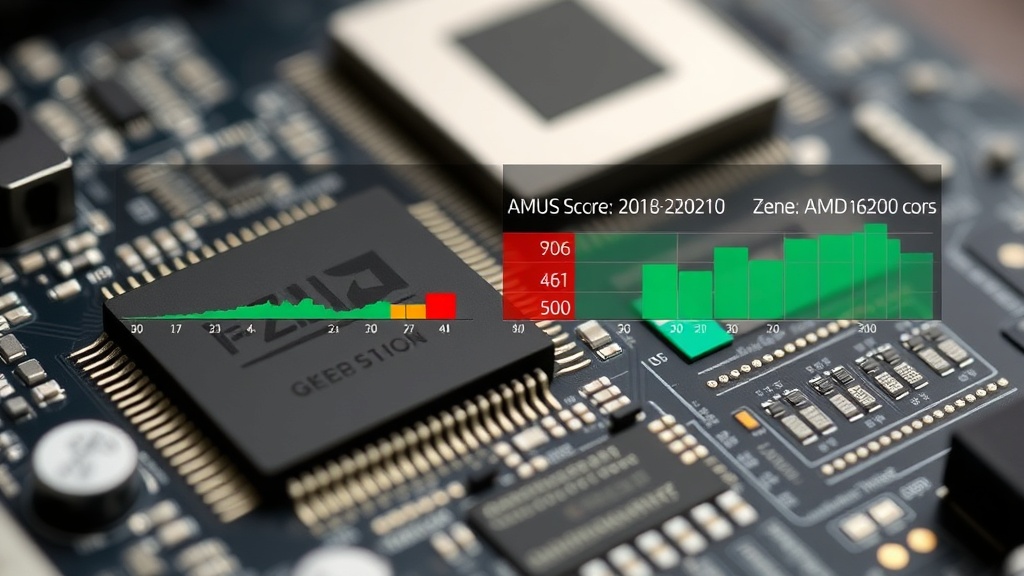
In the single-core tests, the Medusa Point APU achieved scores that surpassed both the Ryzen AI 9 HX 370 and the Ryzen AI MAX+ 395. This is a crucial indicator for responsiveness in everyday computing tasks, gaming, and applications that don't fully leverage multiple cores. The architecture of Zen 6, whatever specific enhancements it brings, appears to deliver a more potent punch per clock cycle than its predecessors. This could translate to a snappier user experience and improved performance in a wider range of applications.
The multi-core performance also tells a compelling story. The 10-core configuration, when combined with Zen 6's IPC (instructions per clock) gains and potentially higher clock frequencies, allows the Medusa Point APU to pull ahead of the currently available Ryzen AI chips. While the Ryzen AI 9 HX 370 is a 12-core processor and the Ryzen AI MAX+ 395 is also a 12-core chip, the fact that a 10-core Zen 6 chip can outperform them suggests a significant efficiency and performance-per-core advantage. This implies that AMD is not only increasing raw compute power but also refining the core architecture to extract more performance from fewer cores, a strategy that can lead to better power efficiency and thermal management.
Implications for the AI PC Market
The emergence of the Medusa Point APU underscores AMD's commitment to the burgeoning AI PC market. The 'Ryzen AI' branding signifies dedicated Neural Processing Units (NPUs) integrated within the APU, designed to accelerate artificial intelligence and machine learning tasks. While the Geekbench results primarily focus on traditional CPU performance, the underlying architecture of Zen 6 is expected to bring substantial improvements to AI acceleration as well. This early benchmark indicates that future AMD APUs will not only be faster for general computing but also more capable of handling the increasingly AI-intensive workloads that define the modern computing landscape.
The competitive landscape for AI-accelerated processors is heating up. Intel is pushing its Lunar Lake and Panther Lake architectures, while Qualcomm is making significant inroads with its Snapdragon X Elite and X Plus chips. AMD's Zen 6, as previewed by this Medusa Point sample, positions the company to remain a formidable player. The potential for higher CPU performance coupled with enhanced AI capabilities could make these next-generation APUs highly attractive for laptops and other devices prioritizing both productivity and intelligent features. Developers and users alike can anticipate a future where on-device AI processing becomes even more ubiquitous and performant.
What Remains Unanswered
While these Geekbench scores are an exciting indicator, several key questions remain. The exact specifications of the Medusa Point APU, including its final clock speeds, NPU capabilities, integrated graphics performance (likely RDNA 3.5 or RDNA 4 based), and power consumption targets, are still unknown. Furthermore, the specific architectural improvements of Zen 6 are yet to be fully detailed by AMD. Understanding how these cores achieve their performance gains, particularly in terms of IPC improvements and any new instruction sets, will be crucial for developers optimizing software. The real-world performance across a broader suite of applications, including gaming and professional creative workloads, will ultimately determine the impact of this new architecture.
The comparison points used in this early benchmark are also important. The Ryzen AI 9 HX 370 and Ryzen AI MAX+ 395 represent the top tier of AMD's current mobile offerings. However, the full capabilities and target market for the 'Ryzen AI 9 565' (if that becomes its final name) are not yet clear. Is this intended as a direct competitor to the highest-end HX parts, or does it occupy a slightly different performance or power envelope? The answers to these questions will shape our understanding of AMD's product segmentation and competitive strategy for the next generation of mobile processors. The transition from an engineering sample to a final retail product can also involve significant changes, so these early results should be viewed as a strong indicator rather than a definitive statement of final performance.