AMD's Bold Play for Local AI Development
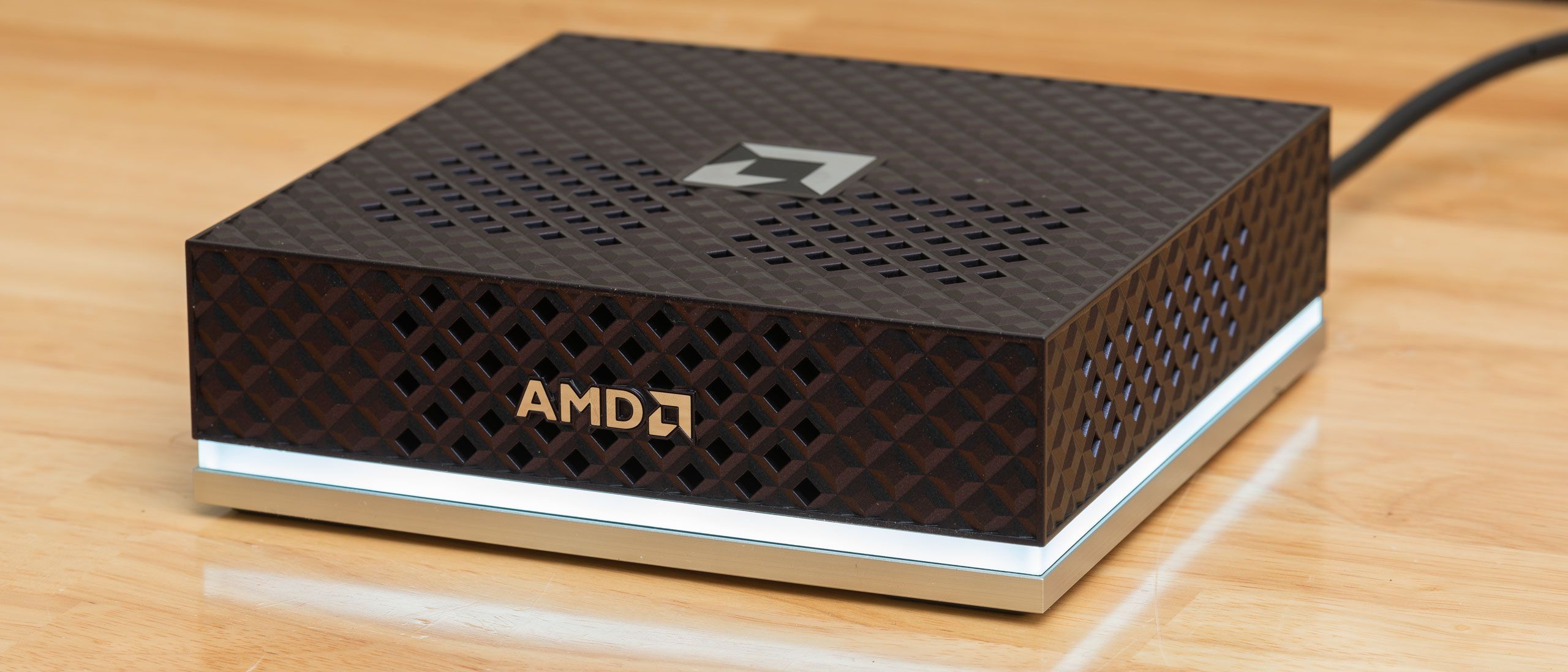
AMD has entered the burgeoning market for local AI development hardware with its Ryzen AI Halo, a complete, turn-key solution designed to bring powerful AI model training and inference directly to developers' desktops. This new offering, powered by the Ryzen AI Max+ 395 (codenamed Strix Halo) System-on-Chip (SoC), aims to provide an accessible and integrated platform for AI exploration. Unlike many DIY solutions, the Halo is presented as a ready-to-go box, complete with first-party software support, helpful utilities, and extensive documentation. This approach signals AMD's ambition to compete not just on silicon, but on the entire developer experience for on-device AI.
The Ryzen AI Halo is positioned as a direct competitor to systems like Nvidia's DGX Spark, aiming to democratize access to powerful AI hardware. The promise is significant: developers can bypass cloud dependency, reduce latency, and gain greater control over their AI workflows. However, early reviews suggest that while AMD has built a compelling hardware package, the software ecosystem and raw performance are not yet on par with established leaders. This creates a complex value proposition for potential buyers, especially given the system's considerable price tag.
Under the Hood: Strix Halo SoC and Core Capabilities
At the heart of the Ryzen AI Halo is the Strix Halo SoC. This chip integrates a powerful CPU, a dedicated AI engine (NPU), and a GPU, all designed for efficient, high-performance AI workloads. The SoC's architecture is engineered to handle both the computational demands of training smaller models and the speed requirements of running complex inference tasks locally. This integration is key to AMD's strategy, as it allows for a more compact and power-efficient system compared to multi-component desktop builds.
The system boasts a significant amount of unified memory, crucial for large language models and complex datasets. This unified memory architecture allows the CPU, GPU, and NPU to access the same data pools without costly copying, a critical factor in accelerating AI operations. The inclusion of a dedicated NPU is particularly noteworthy, as it's optimized for the specific types of matrix multiplications and parallel processing that are fundamental to neural network computations. Early benchmarks indicate strong performance in certain AI inference scenarios, especially when leveraging the NPU.
Software and Ecosystem: AMD's First-Party Approach
One of the most significant aspects of the Ryzen AI Halo is AMD's commitment to providing a robust software stack. This includes proprietary tools, libraries, and frameworks designed to make it easier for developers to deploy and manage AI models on the hardware. The availability of comprehensive documentation and first-party support is a clear attempt to lower the barrier to entry for developers who might be intimidated by building and optimizing their own AI environments. This approach is reminiscent of how Nvidia has cultivated its CUDA ecosystem, providing a unified and well-supported platform.
However, the maturity and breadth of AMD's AI software ecosystem are still developing. While the core functionality is present, compatibility with the vast array of AI frameworks, pre-trained models, and third-party tools that developers rely on can be a challenge. Early reports suggest that some popular applications and models may not run optimally, or at all, on the Halo without significant modification or workarounds. This lack of immediate, broad application compatibility is a key differentiator when compared to the more established Nvidia ecosystem, which benefits from years of developer contributions and optimized libraries.
Performance and Competitive Landscape
When pitted against its closest competitors, particularly Nvidia's offerings, the Ryzen AI Halo shows a mixed performance profile. While the Strix Halo SoC is a powerful piece of silicon, its overall performance in demanding AI tasks, especially training, often falls short of Nvidia's GB10-based solutions. The GPU component, while capable, does not match the raw compute power or the memory bandwidth of Nvidia's high-end offerings. Furthermore, the optimization of AMD's AI software stack for its hardware, while improving, still has ground to cover to match the highly tuned performance of Nvidia's CUDA-enabled GPUs and libraries.
The pricing of the Ryzen AI Halo is another point of contention. Positioned as a premium development tool, its cost places it in a segment where users expect top-tier performance and seamless compatibility. For many developers, the steep price may be difficult to justify when considering the performance gap and the software ecosystem's current limitations. The question remains whether the convenience of a turn-key solution and AMD's dedicated hardware will outweigh the raw power and broader software support offered by competitors, even if those involve a more complex setup.
The Unanswered Question: Long-Term Software Investment
What remains to be seen is AMD's long-term commitment to the software side of its AI initiatives. Building a competitive AI platform requires more than just powerful hardware; it demands a vibrant and continuously evolving software ecosystem. Developers rely on robust libraries, extensive documentation, and broad framework compatibility. AMD has made a strong start with the Ryzen AI Halo, but the true success of this platform will hinge on its ability to attract developer contributions, optimize third-party software, and consistently release updates that keep pace with the rapid advancements in AI. Without this sustained software investment, even the most capable hardware risks becoming a niche solution.