AMD Prepares Gaming Laptop Powerhouse with New X3D Mobile Chip
The competitive landscape for high-performance gaming laptops may soon see a significant shake-up. A recent leak, originating from a source that has previously provided accurate information regarding AMD's product roadmap, suggests that AMD is actively developing a new mobile processor specifically designed to bring its coveted X3D V-Cache technology to the laptop form factor. Codenamed the Ryzen 7 9800HX3D, this chip is anticipated to feature an 8-core, 16-thread configuration based on AMD's upcoming Zen 5 architecture, and crucially, will boast a substantial 96MB of L3 cache. This move, if realized, would represent a major step forward in mobile gaming performance, potentially offering a desktop-like experience for gamers on the go.
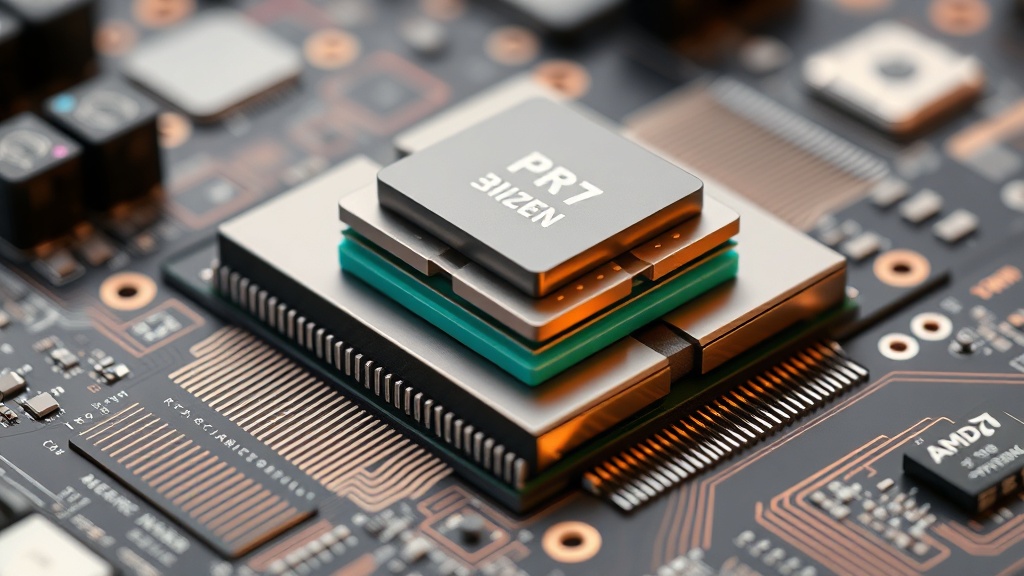
The inclusion of AMD's 3D V-Cache technology has been a defining feature of its high-end desktop Ryzen processors, particularly those aimed at gamers. This technology involves stacking an additional layer of L3 cache directly on top of the CPU core complex die (CCD). This dramatically increases the total cache available to the cores, reducing the need for the CPU to fetch data from slower main memory (RAM). For gaming, where rapid access to game assets, textures, and instruction sets is paramount, this can translate into significant performance gains, often measured in higher frame rates and smoother gameplay, especially in CPU-bound scenarios. Until now, this potent gaming advantage has been largely confined to desktop PCs, leaving laptop gamers with a performance ceiling dictated by the thermal and power constraints of mobile designs.
The Ryzen 7 9800HX3D, as suggested by the leak, would leverage the Zen 5 architecture, which is expected to deliver notable improvements in both Instructions Per Clock (IPC) and overall efficiency compared to its Zen 4 predecessors. Combining this architectural uplift with the massive L3 cache of the X3D technology creates a compelling proposition for mobile gaming. The 8-core, 16-thread configuration is a familiar and powerful setup for modern gaming titles, providing ample processing power for both the game itself and any background applications or streaming software a user might be running. The 96MB of L3 cache is particularly noteworthy, as it matches the cache configuration found in some of AMD's most powerful desktop X3D chips, such as the Ryzen 7 7800X3D, which is widely regarded as one of the best gaming CPUs available.
Implications for Mobile Gaming Performance
The potential impact of an X3D mobile chip on the gaming laptop market cannot be overstated. Gaming laptops have historically faced a trade-off between portability and raw performance. While top-tier gaming laptops have become incredibly powerful, they often come with significant compromises in terms of size, weight, battery life, and thermal management. The addition of a CPU designed from the ground up to excel in gaming, with a massive cache that directly benefits game performance, could allow manufacturers to achieve new levels of gaming fidelity without necessarily requiring the most extreme power envelopes. This could lead to thinner, lighter, and more power-efficient gaming laptops that still deliver exceptional frame rates.
Think of it less like simply adding more horsepower, and more like giving a race car driver a perfectly organized, instantly accessible map of the entire track, rather than making them search through a glove compartment for directions. The X3D cache acts as that perfectly organized map, allowing the CPU to access critical game data without the delay of going to the slower main memory. This is particularly impactful in games that are sensitive to memory latency, which includes many of the latest AAA titles. For developers of these games, this means they can potentially target higher average and minimum frame rates on a wider range of mobile hardware if the 9800HX3D becomes a mainstream option.
Furthermore, the presence of such a potent gaming CPU could also influence the broader laptop component ecosystem. It might spur increased competition from Intel, pushing them to accelerate their own high-performance mobile CPU strategies. It could also create new opportunities for laptop manufacturers to differentiate their products, not just on GPU power, but on the CPU's ability to sustain high frame rates and deliver a superior gaming experience. The specific HX designation suggests this chip would be aimed at the highest-end gaming laptops, likely paired with top-tier mobile GPUs from both AMD and NVIDIA, enabling a truly no-compromise mobile gaming platform.
Unanswered Questions and Future Prospects
While the prospect of an AMD Ryzen 7 9800HX3D is exciting for gamers, several key questions remain unanswered. The primary concern for any high-performance mobile chip is thermal management. Stacking extra cache on the CPU die can increase power consumption and heat generation. AMD will need to demonstrate that it can effectively manage these thermal challenges within the typical constraints of a laptop chassis. This will likely involve sophisticated cooling solutions from laptop manufacturers and potentially some power tuning by AMD itself, which could affect sustained performance. The exact power draw (TDP) of the 9800HX3D will be a critical specification to watch.
Another unknown is the pricing strategy. AMD's X3D chips on the desktop have generally offered excellent gaming performance-per-dollar, often undercutting competitors while delivering superior gaming benchmarks. Whether this value proposition can be maintained in the premium gaming laptop segment, where components are typically more expensive, remains to be seen. The specific launch window for this processor is also unclear, though it is widely expected to align with the broader rollout of AMD's Zen 5 mobile processors, likely sometime in late 2024 or early 2025. The success of this chip could also pave the way for even more advanced X3D mobile offerings in the future, potentially pushing the boundaries of what is possible in a portable gaming machine.
The competitive landscape is fierce, with both AMD and Intel vying for dominance in the mobile CPU market. If the Ryzen 7 9800HX3D delivers on its promise, it could solidify AMD's position as a leader in gaming performance, not just on desktops but also in the lucrative gaming laptop segment. For consumers, this increased competition and technological advancement can only mean better products and more choices. The arrival of a true X3D mobile chip would be a significant milestone, marking a new era for high-performance mobile gaming.