
Democratizing LLM Deployment: Gemma 4 on AMD MI300X
Running large language models (LLMs) often conjures images of massive, expensive NVIDIA GPU clusters. However, the landscape is evolving, with hardware providers like AMD and cloud platforms like DigitalOcean making powerful AI inference more accessible. This article details a practical guide to deploying Google's Gemma 4 E2B model on an AMD Instinct MI300X GPU, available through AMD's Developer Cloud and powered by DigitalOcean infrastructure, for a surprisingly affordable $1.99 per hour.
The focus is on practicality and cost-effectiveness, aiming to provide a clear path for developers and researchers who need to serve LLMs without incurring prohibitive costs. The deployment leverages vLLM, a high-throughput LLM inference engine, and a suite of Python MCP tools to simplify management. The specific setup utilizes the google/gemma-4-E2B-it reference bf16 release, a powerful variant of Google's Gemma family, on a single AMD Instinct MI300X card. This card, based on the CDNA 3 architecture, boasts an impressive 191.7 GiB of HBM3 memory, crucial for accommodating large models.
The Hardware and Hosting Environment
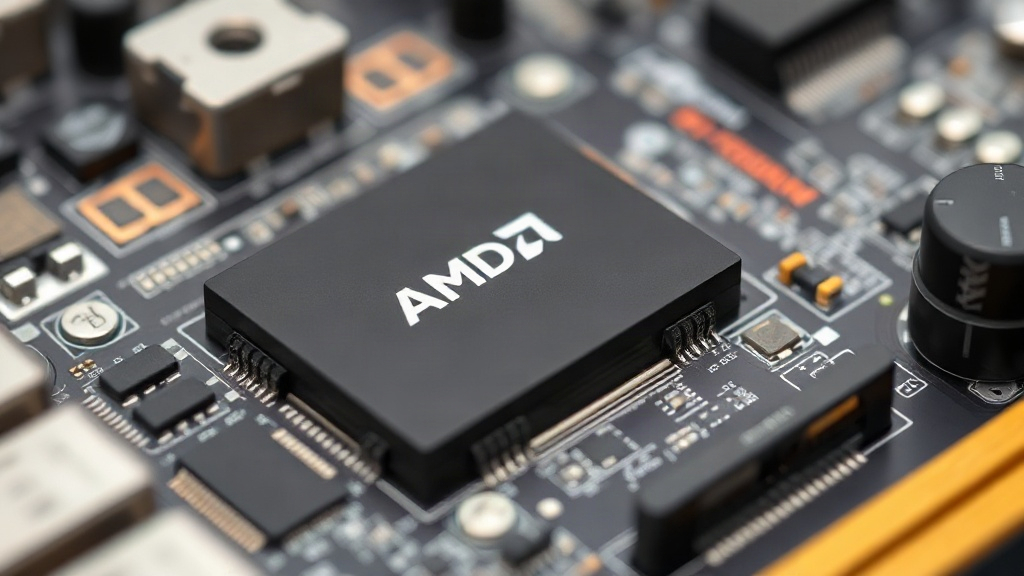
The core of this deployment is the AMD Instinct MI300X GPU. This accelerator is designed for high-performance computing and AI workloads, featuring 191.7 GiB of HBM3 memory. This substantial memory capacity is a key enabler for serving large models like Gemma 4 E2B, which can otherwise be constrained by VRAM limitations. The MI300X is part of AMD's CDNA 3 architecture, optimized for matrix operations fundamental to deep learning.
The hosting environment is provided by AMD's Developer Cloud, which, as the author notes, is underpinned by DigitalOcean. The specific instance used is a gpu-mi300x1-192gb-devcloud in the atl1 region. This instance is configured with 20 vCPUs, 240 GB of RAM, and 720 GB of disk space. A crucial, and perhaps surprising, detail is that the host workstation itself does not possess an AMD GPU. This highlights a cloud-native approach where the GPU is a dedicated, virtualized resource accessed remotely, abstracting away the physical hardware complexities for the end-user.
The cost of this setup is pegged at $1.99 per hour. This price point positions the MI300X as a competitive option for LLM serving, especially when compared to the often higher costs associated with comparable NVIDIA hardware. This accessibility is vital for startups, individual researchers, and smaller teams looking to experiment with or deploy advanced AI models.
Deployment Strategy: vLLM and Python MCP Tools
The deployment strategy hinges on vLLM, a popular open-source library for fast and efficient LLM inference. vLLM is known for its PagedAttention mechanism, which significantly improves memory utilization and throughput by managing attention key-value (KV) caches more effectively. This allows for higher batch sizes and, consequently, more requests to be processed concurrently, making it ideal for production serving scenarios.
To streamline the management of the vLLM deployment on the MI300X, a suite of Python MCP (Model Configuration and Provisioning) tools has been developed. These tools simplify the process of setting up, configuring, and managing the LLM service. The GitHub repository (github.com/xbill9/gemma4-dev/tree/main/gpu-vllm-mi300x-2b) provides the necessary scripts and configurations for replicating this setup. The guide emphasizes a step-by-step approach, making it easier for users to follow along and adapt the process to their specific needs.
The process involves setting up the environment, installing necessary drivers and libraries (including ROCm, AMD's open-source software platform for GPU computing), downloading the Gemma 4 E2B model weights, configuring vLLM for optimal performance on the MI300X, and finally, launching the inference server. The MCP tools abstract away much of the intricate configuration, allowing users to focus on model performance and deployment rather than low-level system management.
Performance and Cost Considerations
The primary appeal of this setup is the combination of performance and cost. The AMD MI300X, with its substantial HBM3 memory and CDNA 3 architecture, is capable of delivering strong inference performance for models like Gemma 4 E2B. While specific benchmarks are not detailed in the excerpt, the choice of vLLM suggests an aim for high throughput and low latency, critical metrics for serving LLMs in real-world applications.
The $1.99 per hour price tag is particularly noteworthy. This figure makes serving a capable LLM like Gemma 4 E2B economically viable for a much wider audience. For developers experimenting with fine-tuning or deploying custom LLM applications, this cost structure offers a significant advantage. It allows for more extensive testing and iterative development without the financial burden often associated with high-end GPU compute.
The author's setup, using a single MI300X card, is sufficient for many use cases, particularly for those who might have previously considered smaller, less capable GPUs or even CPU-based inference. The 191.7 GiB of VRAM on the MI300X is enough to load and run the Gemma 4 E2B model efficiently, avoiding the need for complex model sharding or quantization techniques that can sometimes degrade performance or accuracy.
Broader Implications for AI Infrastructure
This deployment on AMD hardware through a cloud provider like DigitalOcean signals a healthy diversification in the AI infrastructure market. For years, NVIDIA has dominated the GPU landscape for AI, often commanding premium prices. The emergence of capable alternatives like the MI300X, coupled with accessible cloud offerings, introduces much-needed competition and choice.
For developers, this means more options for cost-effective AI development and deployment. The ability to spin up powerful GPU instances on demand at a predictable price point democratizes access to cutting-edge AI capabilities. It lowers the barrier to entry for building and scaling AI-powered applications, potentially fostering a new wave of innovation.
The success of such deployments also highlights the maturity of AMD's ROCm software stack and the integration capabilities of cloud providers. The fact that the host system doesn't need an AMD GPU itself is a testament to robust virtualization and remote access technologies. This approach is more akin to how CPU resources are typically provisioned in the cloud, offering a familiar and scalable model for GPU compute.
What remains to be seen is how this cost-performance ratio holds up as more models and hardware configurations become available. The competitive pressure from AMD and other emerging hardware vendors will likely continue to drive down costs and improve accessibility for AI professionals. The $1.99/hour price point for serving a model like Gemma 4 on an MI300X is a strong indicator that powerful LLM inference is no longer the exclusive domain of large, well-funded enterprises.